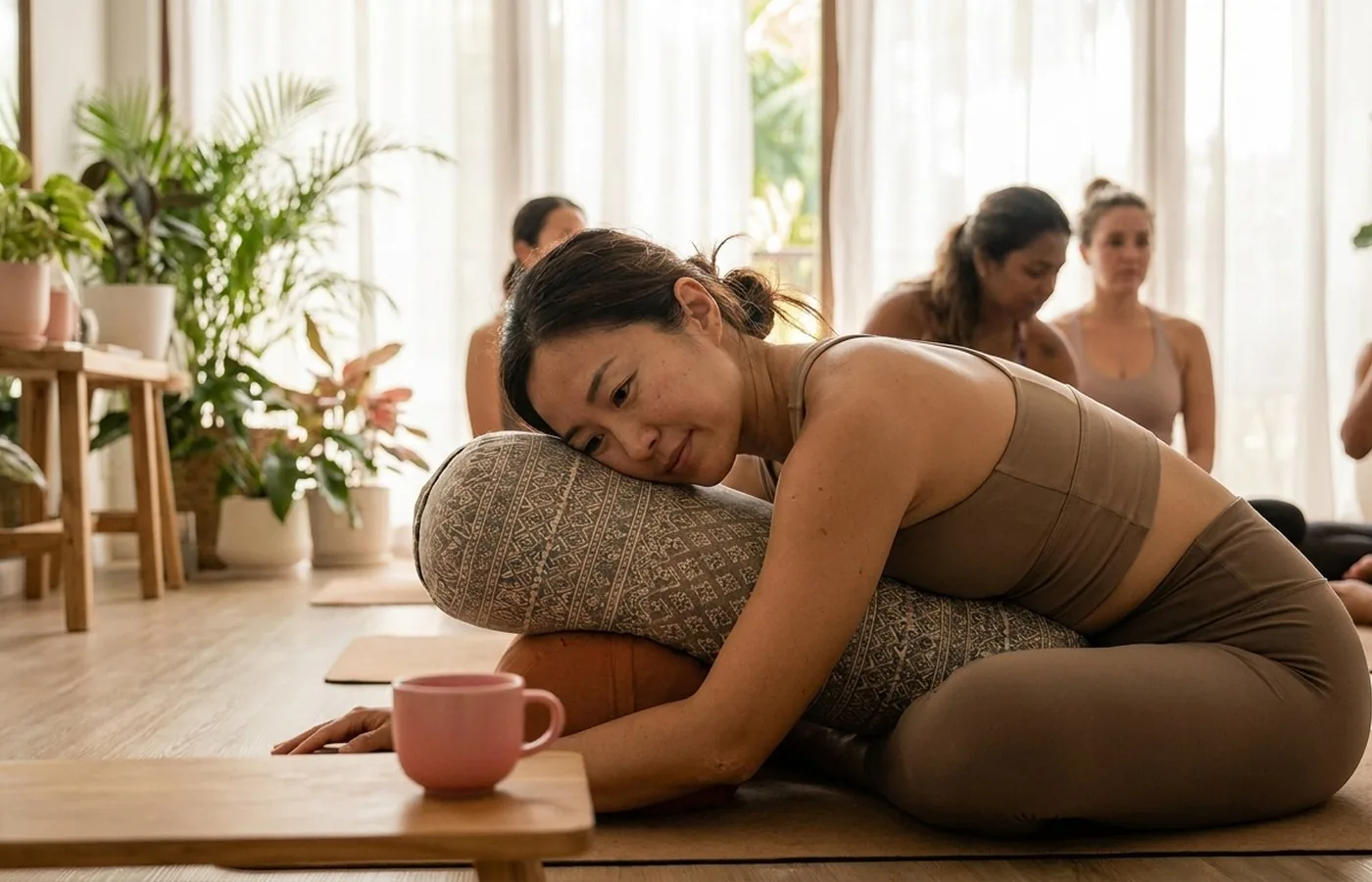
Womb yoga is one of those phrases that can sound either comforting or confusing depending on when you first hear it. Usually people mean gentle movement, breathing, and rest-focused poses aimed at helping the lower belly, hips, back, and nervous system feel less tense. That can be useful, especially around periods, stress, or general pelvic heaviness. But it helps to keep the promise real. Yoga can support comfort. It does not diagnose problems, treat serious pain, or replace proper care when something is clearly wrong.
Key points
- Womb yoga usually means gentle movement and breathing aimed at helping the pelvis, lower back, and belly feel less tense.
- It may help some people feel calmer and more comfortable during stressful or crampy times.
- It is support, not treatment, so strong pain, unusual bleeding, or worsening symptoms still deserve proper care.
- The best womb-yoga routine is slow, simple, and easy to repeat rather than dramatic.
What people usually mean by womb yoga
Most womb-yoga routines focus on soft movement, longer breathing, and positions that help the hips, low back, inner thighs, and belly relax a little. That might mean child’s pose, supported butterfly, gentle twists, pelvic rocking, or just lying with knees bent and breathing more slowly.
The reason people like it is not that they think a pose is magic. It is that the lower body often holds a lot of tension. Stress can show up there. So can period discomfort, long desk hours, and general body bracing. When movement is gentle enough, some people feel less clenched and more settled afterwards.
If your cycle often changes how movement feels, our menstrual-cycle exercise guide is a good next read because it looks at symptoms in a calmer, more practical way.
What womb yoga may help with and what it cannot promise
Womb yoga may help some people feel more comfortable during mild cramps, low-back tightness, stress, or the general heaviness that can happen during parts of the menstrual cycle. The breathing side can matter as much as the stretching side. When the body feels safer and slower, pain and tension sometimes feel less loud.
But this is where it is important not to oversell. Yoga is not a cure for endometriosis, fibroids, pelvic infection, or severe menstrual pain. It is not a reason to ignore symptoms that keep getting worse. If your pain is strong enough to stop work, school, sleep, or normal life, get proper medical advice.
Sleep and stress also shape how the whole pelvis feels. If nights have been rough, our sleep and recovery guide is worth reading because tired bodies often feel more pain and less patience.
Use this as a starting point, then adjust for your body, conditions and professional advice. A plan is useful only when it responds to you.
How to use womb yoga more safely and more honestly
The best place to start is with low pressure. Ten quiet minutes is enough. Use props if you have them. A pillow, folded towel, or wall support can make a big difference. The goal is not to prove flexibility. It is to create less strain.
Stop if a pose gives sharp pain, dizziness, or a strong pulling feeling that seems wrong. And if you are pregnant, recently postpartum, recovering from pelvic surgery, or dealing with a known condition, it is smart to check what kind of movement is suitable for you before copying random routines online.
If stress is part of why your pelvis and belly feel tight in the first place, our movement-for-stress guide fits naturally here. And if you want to make gentle movement a repeat habit instead of a once-a-month rescue move, the 7-Day Habit Planner can help.
How to think about womb yoga
The healthiest way to think about womb yoga is as a soft support practice. On a normal Wednesday, August 5, 2026, that can mean giving the lower body a little space to unclench instead of asking it to keep pushing through stress and discomfort all day.
If it helps you breathe more slowly, feel less tense, and understand your body a bit better, that is real value. If it does not help, or if symptoms are stronger than a gentle routine can reasonably touch, let that be useful information too. Support and proper care can sit side by side.
The health archive sets pelvic-comfort ideas beside clearer women’s health limits. Womb yoga is an appealing phrase, but the real lesson is simple: gentle movement can support pelvic comfort, as long as it is kept honest and used in the right place.
More on this topic from the archive: 8 Yoga Poses Will Calm You Down Bedtime and Best Yoga Poses Calm.
This article provides general education and is not a diagnosis or a substitute for personalised medical care. Stop exercise and seek appropriate help for severe, sudden or concerning symptoms.
Womb Yoga: questions answered
Can womb yoga cure period pain?
+
No. It may help some people feel more comfortable, but strong or worsening pain still needs proper care.
What kind of poses are usually included?
+
Usually gentle breathing, hip-opening, supported folds, and easy lower-back or pelvic movements.
When should I skip it and get advice instead?
+
Get advice if movement causes sharp pain, or if you have severe symptoms, recent surgery, pregnancy concerns, or unusual bleeding.