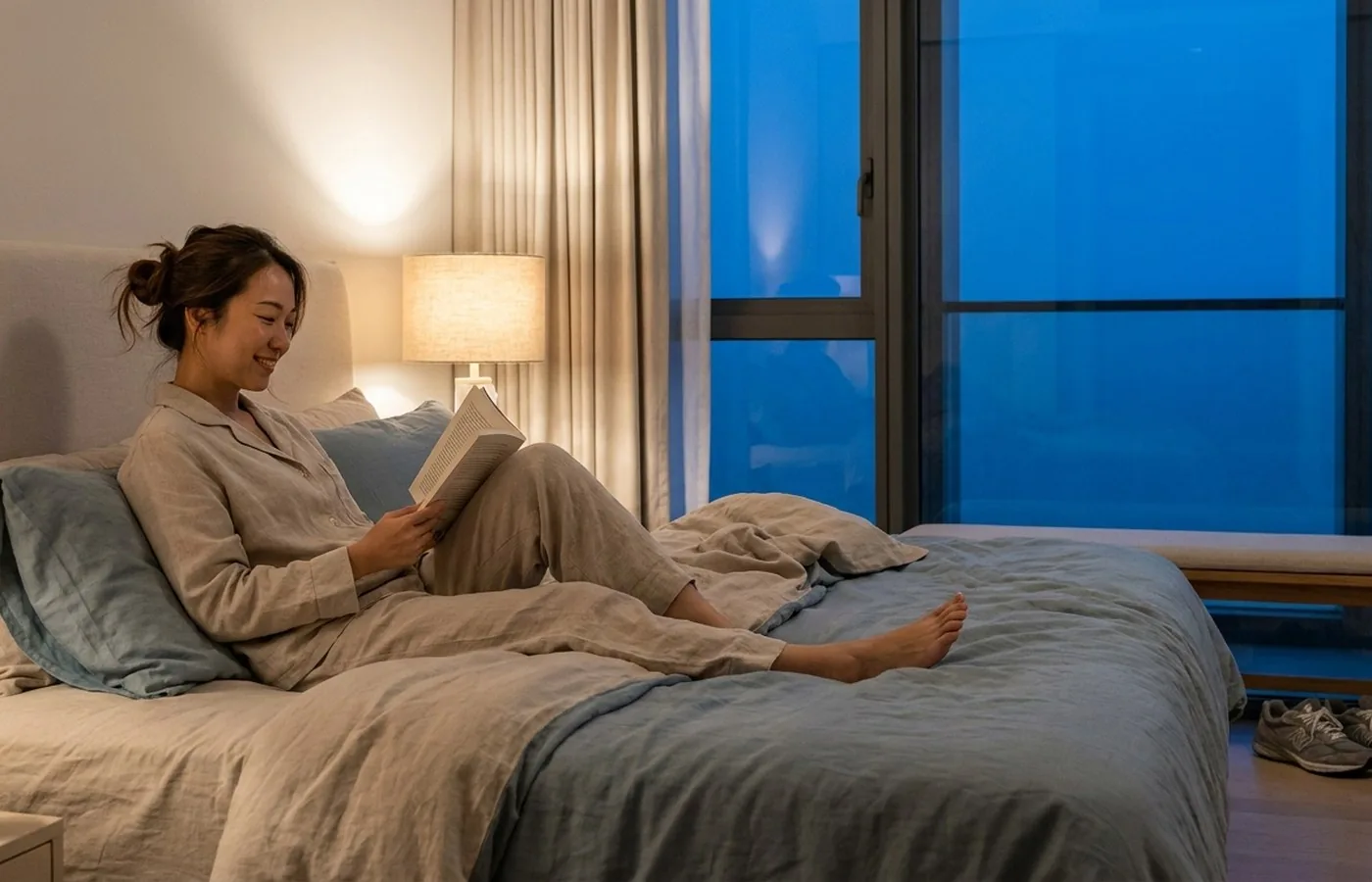
Bedtime yoga is helpful because it gives your nervous system a clear message: the busy part of the day is ending. The goal is not to stretch deeper than usual or to sweat before bed. The goal is to breathe, ease tension out of the back and hips, and make it easier to settle into sleep.
Key points
- Bedtime yoga works best when the poses feel easy, slow, and comfortable.
- Long exhales and quiet breathing matter as much as the stretches themselves.
- Pain, pins and needles, or dizziness are signs to stop and reset.
- A short routine you repeat most nights is more useful than a complicated one you avoid.
Why yoga can help you feel calmer before sleep
Many people get into bed with their bodies technically tired but their minds still racing. Work messages, screen time, late meals, commuting stress, and general mental noise can leave you feeling wired long after the day is over. Gentle yoga can help because it gives you something simple and physical to do while you slow the whole system down. It is less about flexibility and more about changing pace.
The best version of bedtime yoga is soft and undramatic. You are not trying to win anything. You are giving the neck, shoulders, spine, and hips a chance to loosen after hours of sitting or rushing around. You are also giving your breathing a chance to lengthen, which often helps the mind stop jumping from one thought to the next. If sleep has been rough lately, our sleep and recovery guide is a good companion read because it covers the bigger habits around rest too.
It also helps to keep expectations realistic. Yoga before bed will not solve every kind of insomnia, and it is not a treatment for ongoing pain, anxiety disorders, or breathing issues. What it can do is create a calmer bridge between activity and sleep. If stress is the main thing making your body feel loud, our movement-for-stress guide offers the same gentle, non-punishing idea from another angle.
8 yoga poses to use at bedtime
1. Child's pose: Kneel, sit back toward your heels, and let your arms rest forward or by your sides. This is a quiet place to start because it asks almost nothing from you except breathing.
2. Cat-cow: On hands and knees, move slowly between a rounded back and a gently arched one. Think easy movement, not big movement. This can help release some stiffness from sitting all day.
3. Thread the needle: From hands and knees, slide one arm under the other and rest your shoulder and head lightly. It gives the upper back and shoulder area a mild twist without much effort.
4. Seated forward fold: Sit with the legs comfortable, bend gently from the hips, and stop well before strain. You are looking for a settling feeling, not an intense hamstring stretch.
5. Supine twist: Lie on your back, bring one knee across the body, and let your shoulders stay heavy. This can feel especially good after a long day on your feet.
6. Figure-four stretch: On your back, cross one ankle over the opposite thigh and draw the legs in only if it feels easy. This opens the outer hip without turning the move into a wrestling match.
7. Legs up the wall: Place your legs on a wall or the edge of a bed and let the arms relax. Many people find this pose quietly soothing because it asks so little while still feeling restorative.
8. Corpse pose: End by lying flat or supported with pillows, arms loose, jaw soft, and breath steady. Stay for a minute or two. This final pause is where the routine often does its best work.
You do not have to do all eight every night. Even three or four can be enough if they help you feel heavier, slower, and less mentally busy. A bedtime routine is useful when it feels welcoming, not when it becomes another task you fail to complete.
Use this as a starting point, then adjust for your body, conditions and professional advice. A plan is useful only when it responds to you.
How to make bedtime yoga feel safe and easy
Go slowly enough that you can still breathe through your nose and talk if needed. If you are shaking, straining, or holding your breath, the session is probably too intense for bedtime. Use pillows, a folded towel, or the side of the bed whenever that makes a pose more comfortable. Support is not cheating. Support is usually what makes the routine repeatable.
It also helps to stack the habit onto something that already happens. Maybe the routine starts after you brush your teeth. Maybe it starts when you put your phone on charge outside the bedroom. If you need help turning that cue into a repeatable evening ritual, the 7-Day Habit Planner is a practical place to start. And if the bigger issue is finding a routine that survives busy weeks, our guide to building a fitness habit can help you think smaller, which is usually the smarter move here.
Stop and reassess if anything hurts sharply, makes you dizzy, worsens reflux, or brings on tingling. Pregnant people, people with recent surgery, and anyone with significant back, neck, or balance issues may need different positions or proper guidance. Bedtime yoga should leave you feeling more settled than when you started. If it leaves you irritated or overstimulated, shorten the session and choose simpler poses next time.
How these 8 yoga poses can calm you down at bedtime
The value of bedtime yoga is not that it looks peaceful on social media. The value is that it gives your body one last quiet signal before sleep. A few minutes of slower movement, longer exhaling, and less physical tension can make it easier to let the day go.
That is why the routine does not need to be impressive. If child's pose, a twist, legs up the wall, and two minutes lying still are enough to change your breathing and your mood, then that is enough. Calm routines usually look simple from the outside.
So if your nights feel busy in the head and tight in the body, these 8 yoga poses can be a kind place to begin. Keep the pressure low, keep the breathing soft, and let bedtime yoga be what it is meant to be: a way to settle, not another thing to achieve.
More on this topic from the archive: Best Yoga Poses Calm and Womb Yoga.
This article provides general education and is not a diagnosis or a substitute for personalised medical care. Stop exercise and seek appropriate help for severe, sudden or concerning symptoms.
8 Yoga Poses Will Calm You Down Bedtime: questions answered
Can bedtime yoga replace sleep treatment?
+
No. It can support relaxation, but ongoing insomnia, pain, or anxiety may need proper medical or mental-health care.
How long should bedtime yoga take?
+
Even five to ten gentle minutes can help if the routine feels calming and easy to repeat.
Should I do deep stretches before bed?
+
Usually not. Bedtime yoga works better when the poses feel mild, supported, and comfortable.