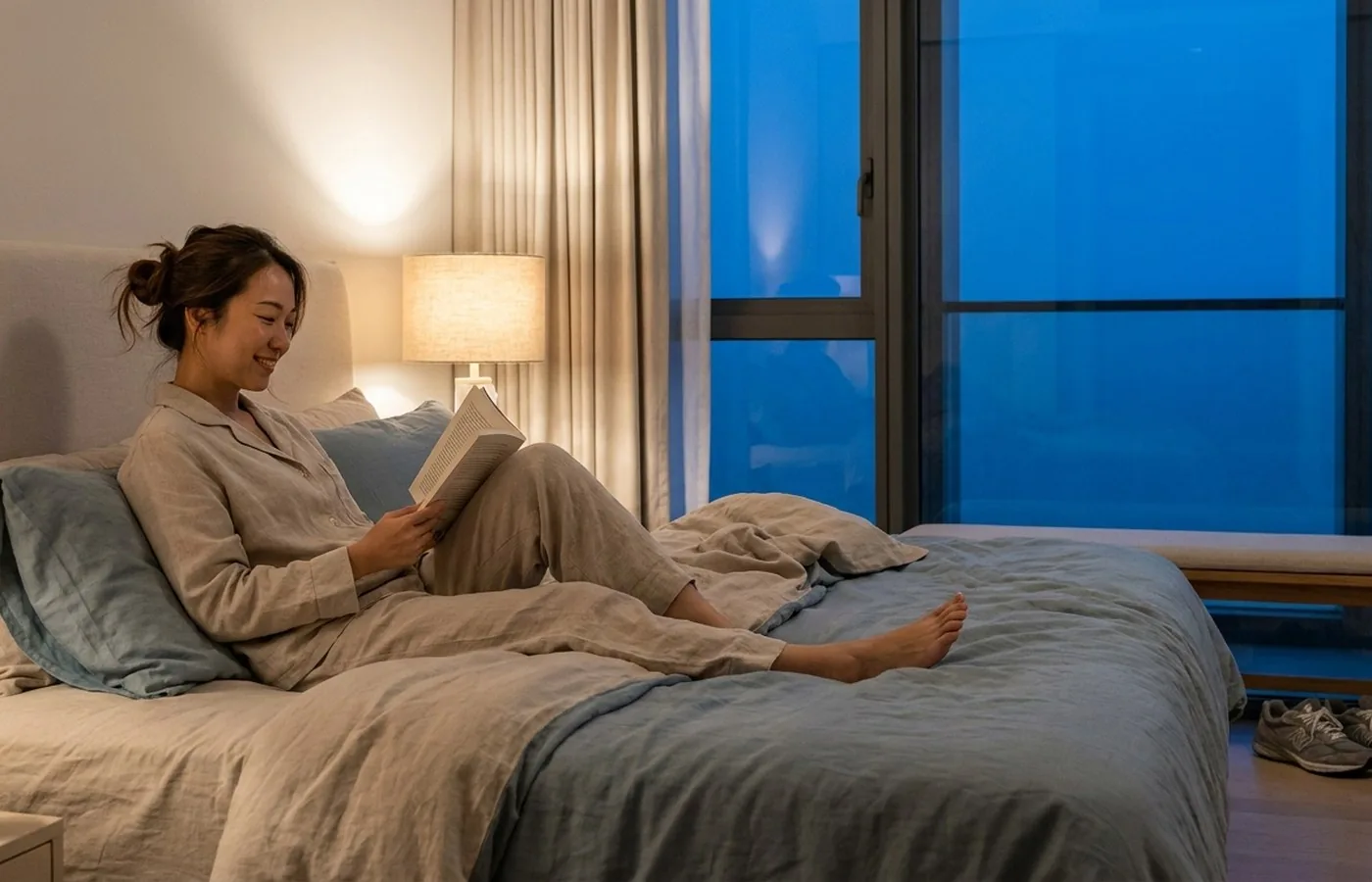
Sleep helps your brain and body recover from training. One bad night is manageable, but a long shortfall calls for a kinder plan.
Key points
- A consistent wake time anchors the body clock.
- Give sleep enough room in the diary before you try to improve its quality.
- Hard training and late caffeine can disturb some sleepers.
- Persistent sleep problems deserve proper care.
What sleep does for training
Sleep supports learning, immune function, mood and physical recovery. Skills you practised in a session get consolidated overnight, which is one reason a movement can feel smoother two days later than it did on the day. One poor night does not erase your workout, but a chronic shortfall makes effort feel heavier, patience shorter and decisions less steady. It shows up in ordinary ways long before it appears on any device: forgetting the second half of a session, snapping at someone on the train, finding a familiar weight strangely hard.
New movements are where you notice it first. If you are in the early weeks of learning the basic lifts, a run of short nights usually makes the technique feel clumsy well before it makes the weight feel heavy.
Give sleep somewhere to happen
Most sleep trouble in busy adults is arithmetic before it is anything else. Work backwards from the time you have to get up and see what window is left once the commute, dinner, the gym and an hour of scrolling have taken their share. If the answer is six hours in bed, no wind-down routine will rescue it. Protecting the window usually means giving something up: a later class, one more episode, the laundry until tomorrow. It is a scheduling decision, and it changes more than anything else here.
Some of what you give up can be a swap rather than a loss. Trading an evening class across town for a 20-minute home circuit hands back the journey at both ends, and that is often exactly the hour the sleep window was missing.
Use this as a starting point, then adjust for your body, conditions and professional advice. A plan is useful only when it responds to you.
Build the day for the night
Get daylight soon after waking, move during the day and keep caffeine earlier if you are sensitive to it. Alcohol helps many people fall asleep quickly and then breaks up the second half of the night, which is worth knowing before a big training day. A stable wake time is more workable than forcing an unrealistically early bedtime, because it is the part you directly control. Weekends can drift an hour without much cost. Three or four tends to leave Monday feeling like jet lag you did not travel for.
A bedroom that works in this climate
Heat is the local variable most people ignore. A room that stays warm and sticky makes falling asleep harder and waking at three in the morning easier, so a fan, air conditioning on a timer or lighter bedding all earn their place. Block the light you can and mask the noise you cannot, because lift lobbies, early deliveries and neighbours are part of flat living. Keep the bed for sleep where you can. After a long stretch lying awake, getting up and doing something dull in low light beats watching the ceiling.
A wind-down that fits a real evening
You do not need an hour of candles. What helps most people is a predictable, dimmer, slower last stretch of the day: a shower, lights down, the phone somewhere other than your hand. Screens matter less for their light than for what is on them, since a work message or an argument in a comment thread will keep anyone alert. Writing tomorrow's list before bed gets it out of your head. Late hard training leaves some people wired, so if evening sessions are your only option, allow a longer gap between finishing and lying down.
When the problem is a head still at work rather than a body that will not settle, a slow walk after dinner does more than a stricter bedtime. Our guide to using movement to take the edge off a hard day covers which options tend to settle people and which reliably leave them wired.
Adjust training, do not punish yourself
After a very short night, reduce intensity or choose technique work, walking and mobility. Coordination and judgement fade before strength does, which matters most for heavy lifting, road cycling and anything needing balance. The aim is to protect the habit while respecting reduced alertness, and a shorter easy session usually leaves you better off than either a hard one or a skipped one. A short afternoon nap suits many people; keep it brief and early, since a long late one makes the following night harder to start.
A steady conversational effort is the most forgiving thing to fall back on after a bad night. It asks almost nothing of your coordination, it still counts towards the week, and it leaves the hard session for a day when you have slept.
When to seek help
Talk with a clinician if insomnia persists for weeks, if you regularly gasp or stop breathing in your sleep, or if daytime sleepiness affects driving and work. Loud snoring alongside morning headaches and heavy daytime tiredness can warrant assessment for sleep apnoea, which is treatable and often goes undiagnosed. Restless, crawling sensations in the legs at night are worth mentioning too. Pain, shift work, medication, menopause symptoms, anxiety and low mood all disturb sleep in ways a bedtime routine cannot fix alone. Sleeping tablets and supplements are a conversation with a doctor or pharmacist.
Adjust training after a bad night without abandoning the week
One poor night does not erase fitness, but it can change coordination, effort and patience. If you feel safe to train, reduce one variable: use less load, complete fewer sets, shorten the run or keep the session easy. Avoid testing a maximum or learning a risky skill when you are struggling to stay alert. If sleep loss has stacked up for several nights, rest may be the productive choice.
Keep the next bedtime and wake time close to normal rather than trying to fix everything with a very long lie-in. Caffeine can improve alertness but may delay sleep again when taken late. Persistent insomnia, loud snoring with daytime sleepiness, breathing pauses or restless legs deserve medical attention. Training and sleep support each other when both are dosed well.
The goal is not to earn sleep through exhaustion; it is to create a week in which movement and recovery can coexist.
Use trends rather than one sleep score
Wearable sleep stages are estimates. Look at bedtime consistency, total sleep opportunity, daytime alertness and how training feels across several weeks. A low score after a night you felt rested does not require a recovery crisis. Repeated symptoms and function matter more than chasing a perfect number from one device.
Adjust the plan when recovery is low
Keep the habit while giving today's energy honest weight.
- Build a lower-energy workoutChoose a shorter or mobility-focused session.
- Protect the minimum habitTrack the small version instead of forcing intensity.
- Choose movement for an overloaded dayMatch activity to how stress feels.
This article provides general education and is not a diagnosis or a substitute for personalised medical care. Stop exercise and seek appropriate help for severe, sudden or concerning symptoms.
Sleep and Exercise Recovery: What Helps: questions answered
Can evening exercise ruin sleep?
+
Many people sleep well after evening activity, but very hard training close to bed can affect some individuals.
Should I take melatonin?
+
Discuss supplements with a pharmacist or doctor, particularly if you take medication, are pregnant or have ongoing symptoms.
Can I catch up on weekends?
+
Extra sleep can help, but large swings in schedule may make Monday mornings harder.
Is it better to skip a workout or sleep less to fit it in?
+
For most people, regularly cutting sleep to train is a poor trade. Move the session, shorten it, or accept a lighter week.