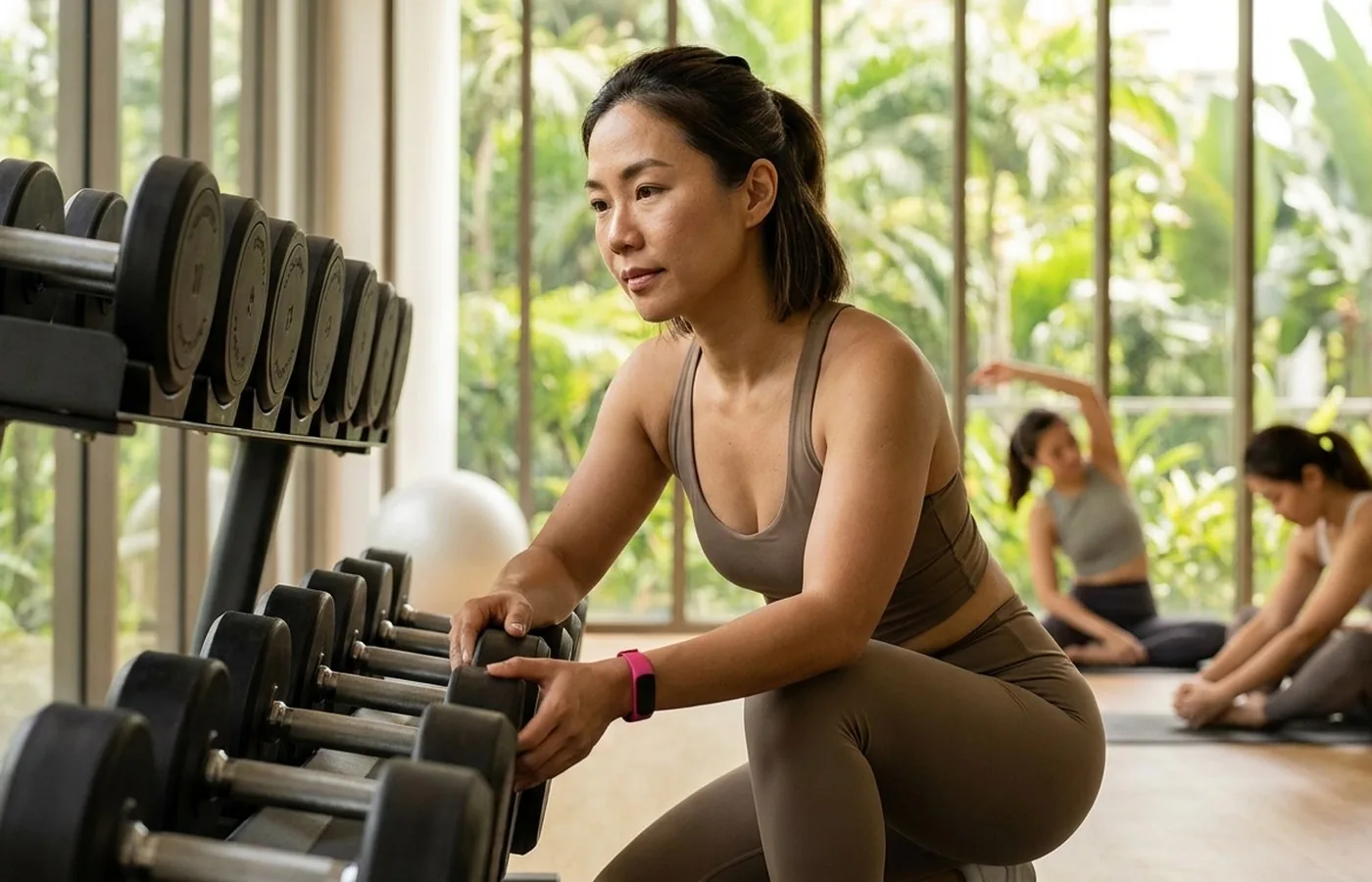
Cycle symptoms are personal. Track your own energy, pain and recovery before changing a programme that already works for you.
Key points
- Symptoms vary more than social-media charts suggest.
- Track your own pattern for a few cycles before changing a programme.
- Turning the dial down on a hard day is a skill, not a lapse.
- Pain that disrupts life is not something to simply train through.
What the research can and cannot tell us
Average hormonal patterns do not predict one person’s best workout on one day. Evidence for universal cycle-based programming remains mixed, and much of the research behind the popular charts is small and hard to compare. Sleep, work stress, iron status, contraception, illness and how you feel that morning can all have larger practical effects. None of this makes your cycle irrelevant. It means the honest starting point is your own record, not a colour-coded template that claims to tell every woman when to lift heavy.
Track useful signals
Keep the record small enough that you will keep it. One line a day, covering how you felt and how the session went, is enough; a phone note works as well as an app. What you are looking for is repetition, meaning the same thing turning up at roughly the same point across several cycles. A single rough Tuesday proves nothing, because a short night and a work deadline look identical to a hormonal dip on paper. Be willing to find no pattern at all. Plenty of women do not, and that is a result worth having.
Use this as a starting point, then adjust for your body, conditions and professional advice. A plan is useful only when it responds to you.
Training through period pain
Gentle movement eases cramps for some people and does nothing for others. Both are normal. Walking, easy cycling, swimming and slow mobility are all worth trying on a heavy day, and so are heat, rest and pain relief a pharmacist can suggest. Give yourself a real option to stop after ten minutes. What deserves questioning is the instinct to push through pain that has already stopped you concentrating at work. Period pain that regularly takes days out of your life is a medical matter rather than a discipline problem.
Adapt without disappearing
On a symptom-heavy day, keep the appointment and turn the dial down. Cut a set, drop the load, lengthen the warm-up or walk instead of running. On a good day, train as planned. Staying in contact with the routine matters more than hitting the numbers, because a difficult few days can quietly stretch into a fortnight away. Coaches use this adjustment constantly with athletes who have no cycle at all, so treat it as a general skill. Ten easy minutes still counts as a completed session.
Turning the dial down is easier when the week is written out in front of you, because you can see which set or which load to trim. Our four-week strength starter lays out the sessions and the rep ranges, which leaves you something specific to adjust rather than a vague intention to train.
The practical things training plans leave out
Part of what makes a heavy day hard has nothing to do with hormones. Keep spare products in your gym bag and desk drawer so a session is never cancelled by logistics. Darker leggings, a longer top or a second pair of shorts remove a worry that would otherwise sit at the back of your mind for an hour. Menstrual cups and period swimwear make pool sessions straightforward. When a long run or a race falls awkwardly, plan and pack for it rather than hoping. Preparation buys back attention.
Eating and sleeping across the month
Appetite often shifts through a cycle, and wanting more food in the days before a period is common rather than a failure of willpower. Eating too little around training tends to make symptoms and recovery worse, so keep meals regular. Sleep can be patchy in the days before bleeding starts, which changes how the next morning's session feels. Heavy bleeding month after month can contribute to low iron, and the flat, breathless fatigue that comes with it is easily mistaken for poor fitness. That one is worth a blood test rather than a harder training block.
Both halves of that are worth following up properly. Our guide to low iron and the tests that confirm it covers what to ask for at the appointment, and for the patchy nights, how to train after a short night is a more practical question than how to sleep perfectly in the week before a period.
Know when to get support
Some things need a clinician rather than a training tweak. Very heavy bleeding, pain that stops you working or sleeping, bleeding between periods, fainting, or cycles that stop unexpectedly all deserve proper assessment. So does a run of fatigue and declining performance, which has several causes worth ruling out. Periods that disappear in someone training hard are a signal to look at whether you are eating enough for your activity, and that conversation belongs with a doctor or sports dietitian. General guidance like this cannot examine you or read your history.
Cycles that arrive unpredictably are worth raising alongside anything else you have noticed rather than one symptom at a time. Our guide to how PCOS is assessed in Singapore sets out the tests and the questions that usually come up, which makes a first appointment shorter and less bewildering. When the pain itself is the main problem rather than the cycle around it, what endometriosis pain can look like is the better place to start.
Track your own pattern before changing the programme
For two or three cycles, record the first day of bleeding, symptoms, session type, effort and recovery. Look for a pattern instead of assuming every low-energy day is hormonal. Work stress, sleep, illness and food also matter. If the same symptoms repeatedly affect training, plan options: a lower-impact session, a lighter load or an extra rest day. Some people feel no meaningful change and do not need cycle-based programming.
Hormonal contraception, perimenopause, pregnancy and health conditions can alter bleeding and symptoms, so a generic phase chart may not apply. Severe pain, fainting, very heavy bleeding or a sudden cycle change needs clinical assessment. Missing periods can be linked to pregnancy, stress, medical conditions or low energy availability. Exercise should respond to useful information from your body, not create another monthly rule you are expected to follow perfectly.
Keep the training goal steady while options change
The exercise can change without abandoning the purpose. A heavy squat day might become lighter technique work; a hard run might become easy cycling. This is adjustment, not failure. If symptoms regularly remove several days from normal life, the next useful step is healthcare support rather than a more complicated cycle-synced plan.
Make cycle-aware training practical
Use flexible tools and wider health context rather than a rigid phase chart.
- Adapt today's workoutChoose honest time, energy and equipment inputs.
- Review women’s health checksKnow the difference between screening and symptom care.
- Train without body judgementKeep capacity and experience at the centre.
This article provides general education and is not a diagnosis or a substitute for personalised medical care. Stop exercise and seek appropriate help for severe, sudden or concerning symptoms.
Exercise Across Your Menstrual Cycle: Skip the Rules, Use the Signals: questions answered
Should I avoid lifting during my period?
+
No general rule requires it. Let symptoms and medical advice guide you.
Does hormonal contraception change the advice?
+
It can change bleeding and symptoms; individual response still matters.
What should I track?
+
Energy, sleep, pain, bleeding, perceived effort and performance are more useful than phase labels alone.
Can I swim on my period?
+
Yes. Tampons, menstrual cups and period swimwear all make this straightforward, so there is no need to sit out pool sessions unless you want to.