People treat this like a moral question, as if practicing alone at home is somehow more serious than showing up to a studio class. It is not. Both approaches build genuine skill and consistency, just through different mechanisms. Here is an honest comparison to help you figure out which one fits how you operate.
Key points
- Studio classes offer structure, correction, and social accountability that solo practice does not.
- Home practice offers flexibility and privacy that a fixed class schedule cannot match.
- Many experienced practitioners eventually use a mix of both rather than choosing permanently.
- The better option is whichever one you do consistently, not whichever sounds more disciplined.
What studio classes give you
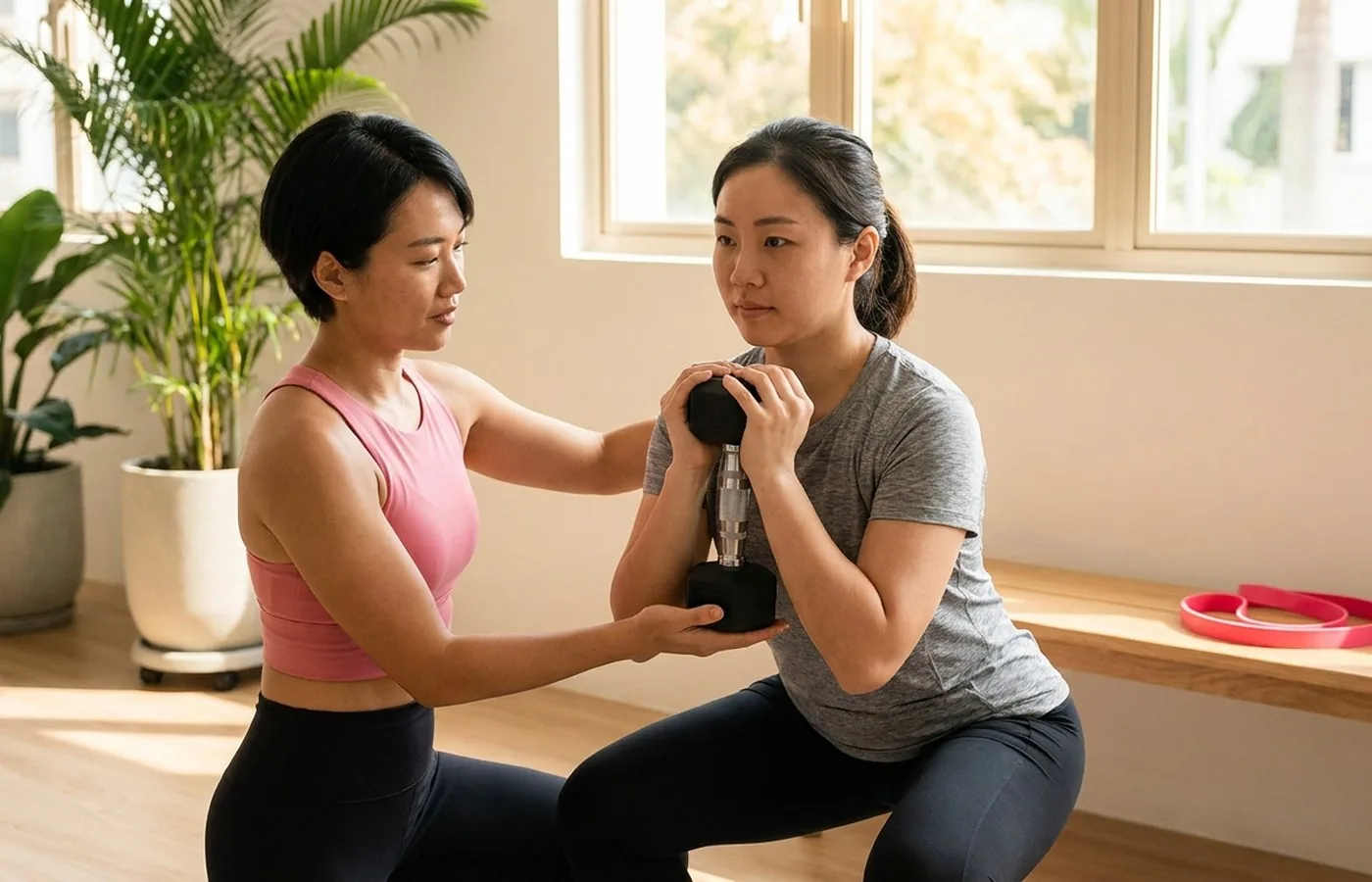
A studio class gives you a set time, a fixed location, and another person in the room correcting your alignment in real time. For beginners especially, that live correction is hard to replace. A teacher can see that your knee is collapsing inward during a lunge or that your shoulders are creeping toward your ears during a plank, things that are genuinely difficult to notice about your own body without outside eyes.
Studio classes also add social accountability. Booking a spot and knowing an instructor will notice if you do not show up is, for a lot of people, a stronger motivator than a self-directed intention to practice at home. If community and structure are what keep you consistent in general, that same pattern is likely to hold true for yoga specifically.
What home or self-practice gives you
Self-practice removes the scheduling constraint entirely. You can practice for ten minutes before work or fifty minutes on a lazy Sunday, without needing to match a class timetable. That flexibility matters a lot for people with unpredictable schedules, shift work, or caregiving responsibilities that make fixed class times hard to commit to.
It also builds a different kind of skill: the ability to listen to your own body without external cueing, and to build a sequence that responds to how you feel that particular day rather than following a set class plan. That skill takes longer to develop and usually benefits from having attended enough studio classes first to know proper alignment and a basic pose vocabulary.
If you are completely new to yoga, some initial studio time is genuinely useful before going fully solo, mainly for safety and form reasons. Mixing in some general strength work alongside yoga is also worth considering; our beginner strength guide covers how the two complement each other well.
Use this as a starting point, then adjust for your body, conditions and professional advice. A plan is useful only when it responds to you.
A practical way to combine both approaches
- Use studio classes early on to learn correct alignment for the poses you practice most.
- Once alignment feels solid, use home practice for the days a class does not fit your schedule.
- Keep at least one studio or class session a week if community and correction still matter to you.
- Use home practice for shorter, mood-based sessions and studio classes for longer, more structured ones.
- Revisit a studio occasionally even after building a strong home practice, since fresh cueing can catch habits that have crept in unnoticed.
If planning home sessions feels like the hardest part, the Workout Builder can help you structure a short flexibility or mobility routine on days a full class is not an option. Recovery matters here too; a hard flow practice still counts as training load, so our sleep and recovery guide is worth a look if you are practicing daily and feeling more drained than restored.
Choosing between self-practice and studio practice for your goals
Neither path is more legitimate than the other. Studio practice offers structure, correction, and community. Self-practice offers flexibility, privacy, and a chance to build a genuinely personal relationship with movement. Most long-term practitioners end up using some blend of both, shifting the ratio depending on life circumstances at the time.
If you are just starting out, leaning toward studio classes first is a reasonable default for safety and form. If you already have a foundation and your main barrier is scheduling, building a home practice may give you far more consistency than another class membership would. The fitness hub has more guides on building routines that fit around real life rather than an idealised one.
The honest answer to self-practice versus studio practice is: try both, notice which one you return to on a tired week, and let that answer settle the question for you.
More on this topic from the archive: How to Get Value From Free Online Studio Classes, 5 Big Benefits of Private Yoga Classes (and Why They Are Worth Considering) and Where to Find Yoga Classes Under $20 in Singapore.
This article provides general education and is not a diagnosis or a substitute for personalised medical care. Stop exercise and seek appropriate help for severe, sudden or concerning symptoms.
Self-Practice or Studio Classes: Which Fits Your Yoga Goals Better: questions answered
Is home yoga practice less effective than studio classes?
+
Not necessarily. It builds different skills, like body awareness, though live correction is harder to replicate at home.
How much studio experience should I have before practicing alone?
+
There is no fixed number, but attending enough classes to understand proper alignment on your most-used poses is a reasonable minimum.
Can I switch between the two approaches over time?
+
Yes, and many experienced practitioners do exactly that depending on their schedule and what they need that season.