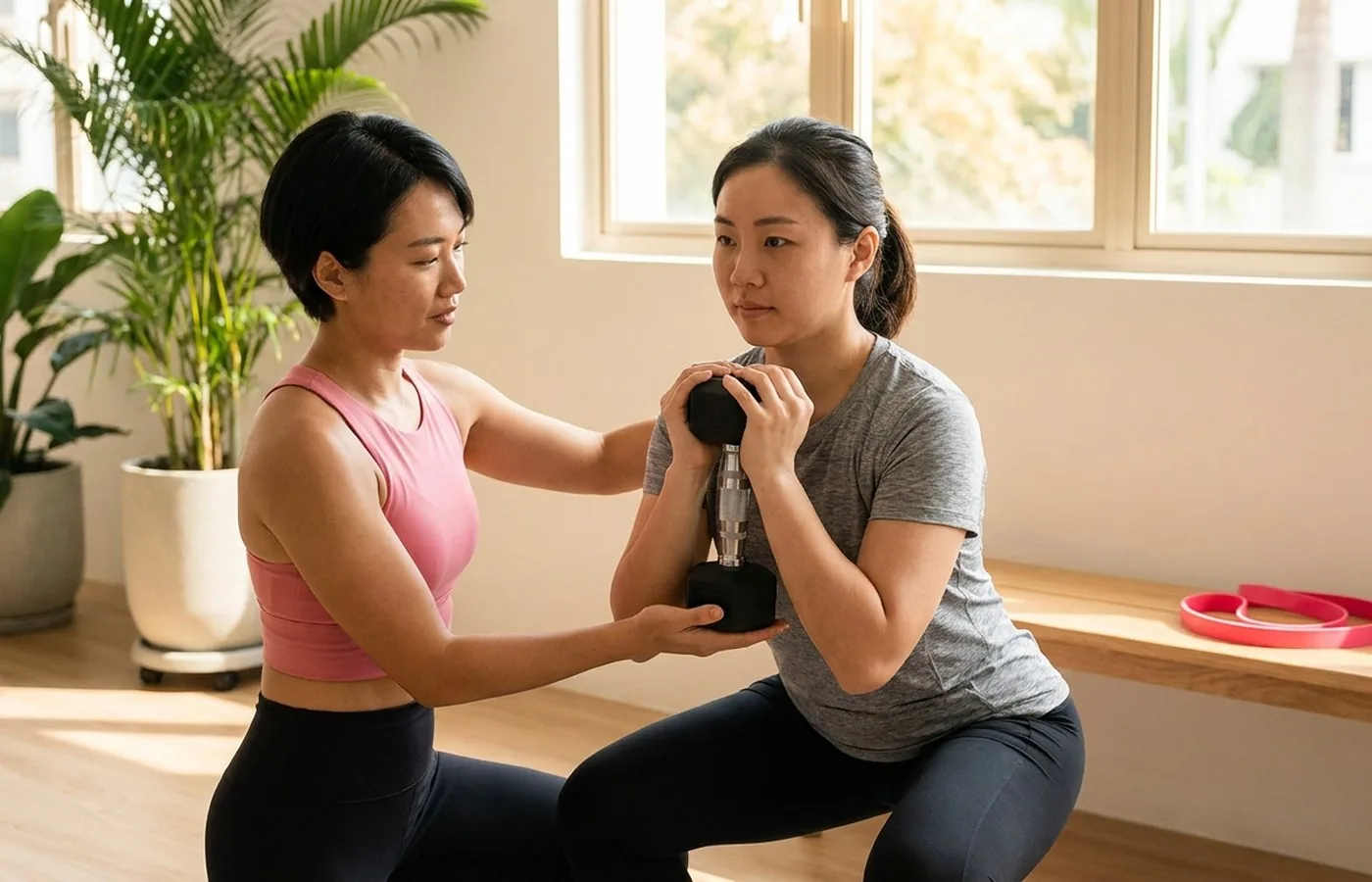
Group yoga classes are great until you spend the whole hour quietly wondering if your alignment is even close to correct. Private yoga solves that problem directly, trading the energy of a group room for an instructor whose full attention is on you. It is not for everyone or every budget, but the benefits go well beyond simple convenience.
Key points
- Private yoga allows genuinely individual correction, which is hard to get in a full group class.
- Sessions can adapt in real time to injuries, limitations, or specific goals a general class cannot.
- Scheduling flexibility often matters as much as the instruction itself for busy weeks.
- Private classes cost more, so they are best considered a periodic tool, not a full replacement for group practice.
Genuinely individual attention and correction
In a group class of fifteen or twenty people, an instructor can offer only brief, general corrections before moving on. In a private session, every cue is built around your specific body: your tightness, your habits, and the way your particular alignment tends to drift under fatigue. That level of feedback is hard to replicate anywhere else.
This matters most for people rebuilding a habit after time away from movement, or those new to structured exercise entirely. If a private class feels like a big first step, our first-gym-visit guide covers similar first-time nerves that apply well beyond the gym floor.
A private setting also removes a common source of self-consciousness: worrying that everyone around you can see your form clearly, which keeps some people from ever trying more advanced poses in a group setting at all. One-on-one, that pressure mostly disappears.
Real adaptation around injuries or specific goals
A private instructor can build a session entirely around a current injury, a specific mobility limitation, or a goal like preparing for a particular event, none of which a general class schedule can accommodate. Poses get modified in real time, not just offered as a generic alternative shouted across a crowded room.
This flexibility is especially useful if you are returning to movement after a break or an injury, where getting the pace right matters more than following a set sequence built for an average student who is not you.
It also means progress can be tracked far more precisely. An instructor working with you regularly will notice small improvements in a specific tight hip or a shaky balance pose long before a rotating group-class teacher ever would.
Use this as a starting point, then adjust for your body, conditions and professional advice. A plan is useful only when it responds to you.
Scheduling that fits your life
Private sessions can happen at a time, location, and pace that suits your actual week, rather than forcing your week around a fixed class timetable. For people with unpredictable schedules, that flexibility alone can be the difference between a consistent practice and one that quietly falls apart within a month.
If routine has always been your bigger obstacle rather than the exercise itself, our guide to building a fitness habit covers how flexible scheduling can support consistency generally, not just within yoga specifically.
Some instructors will even travel to a home or office, which removes the commute entirely from the equation. For a genuinely packed week, cutting out travel time can be the single change that makes a session happen instead of getting cancelled.
Whether private yoga classes are worth it for you
Private sessions cost meaningfully more per class than group options, which makes them a reasonable tool for a specific stretch of time rather than an automatic full replacement for group practice. Many people get real value from a few private sessions to correct form and build confidence, then move back into group classes with a stronger foundation underneath them.
A useful middle ground for a tighter budget is booking one private session every month or two, purely as a form check, while keeping the rest of your regular practice in group classes. That combination captures a lot of the individual-attention benefit without the ongoing cost of private-only training.
If you want to plan how private sessions fit around your broader training week, the Workout Builder can help you balance them with other strength and cardio work. The big benefit of private yoga is not the format itself, it is the individual attention, and that is worth genuinely considering if group classes have left you unsure whether you are doing it right.
Even a single private session before returning to a regular group class can shift how confident you feel on the mat afterward. That confidence alone, separate from any physical gain, is often reason enough to consider trying one.
More on this topic from the archive: Where to Find Yoga Classes Under $20 in Singapore, How to Find Good Free Online Yoga Classes and Self-Practice or Studio Classes: Which Fits Your Yoga Goals Better.
This article provides general education and is not a diagnosis or a substitute for personalised medical care. Stop exercise and seek appropriate help for severe, sudden or concerning symptoms.
5 Big Benefits of Private Yoga Classes (and Why They Are Worth Considering): questions answered
Are private yoga classes better than group classes?
+
Not automatically better, just different. Private sessions offer individual attention, while group classes offer energy, community, and a lower cost.
How many private sessions do I need to see a benefit?
+
Even a handful of sessions focused on form correction can meaningfully improve your confidence and alignment in group classes afterward.
Is private yoga worth it if I am already experienced?
+
Yes, often for refining specific poses, working around an injury, or preparing for a particular goal a general class cannot address.