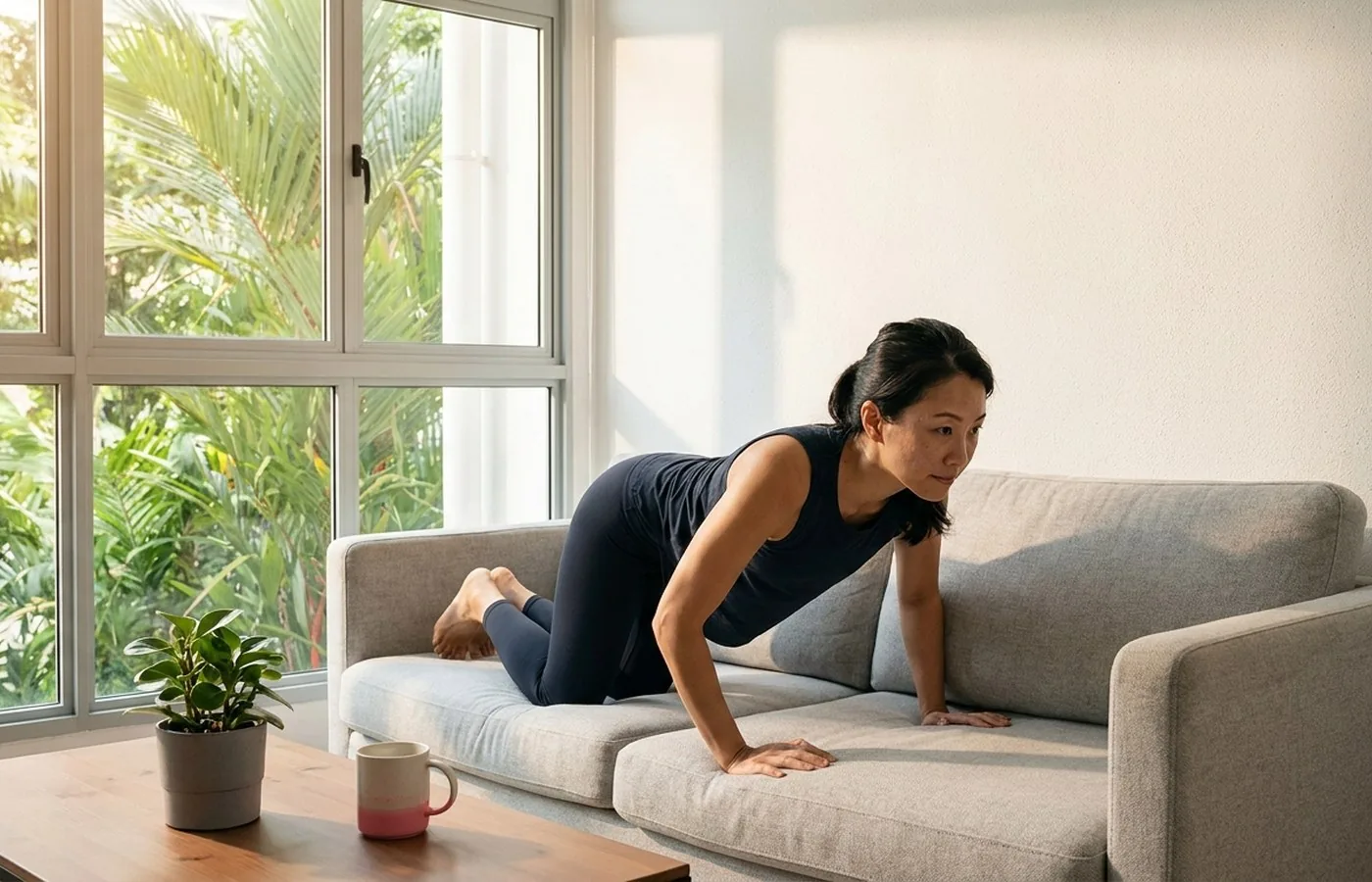
Home workout apps promise a lot: short sessions, no equipment, guided coaching, and a plan that adapts to you. Some deliver on that well. Others just repackage a generic routine with nicer video production. Rather than reviewing one specific app's current pricing or features, here is a neutral framework for judging any workout app before you hand over a subscription.
Key points
- The best workout app for you depends on your space, equipment, and available time, not just its ratings.
- Check whether workouts adapt to your fitness level or just repeat the same fixed program.
- Free trials are worth using fully before committing to an annual plan.
- An app is only as good as whether you open it on a tired Tuesday.
What most home workout apps are offering
Most apps in this category are selling some version of the same thing: short guided workouts you can do with minimal or no equipment, often structured around a set number of weeks, with video demonstrations and some kind of progress tracking. Some lean heavily into strength and toning formats, others focus on mobility, cardio intervals, or a mix of styles across a weekly calendar.
What varies most between apps is the coaching quality, how well the program scales up as you get fitter, and whether the workouts feel different from week to week or start to feel repetitive fast. None of that shows up clearly in app store screenshots, which is why a trial period matters more than star ratings when deciding if an app is worth paying for.
A checklist to run through before subscribing
- Does it ask about your equipment and space, or assume a full home gym?
- Can workout length be adjusted for a short day, or is every session a fixed 45 minutes?
- Does the plan visibly progress over weeks, or repeat the same moves at the same difficulty?
- Is there a real trial period long enough to try it on both a good day and a busy one?
- Can you cancel easily, or does it require finding a hidden settings menu?
Running through this list during a free trial takes maybe twenty minutes and can save you from an annual subscription you stop using by March. If you would rather skip the app search entirely for a while, the Workout Builder can generate sessions based on your own space and equipment without needing an account at all.
Use this as a starting point, then adjust for your body, conditions and professional advice. A plan is useful only when it responds to you.
Where an app can genuinely help, and where it cannot
A good app can genuinely help with the planning problem: deciding what to do today without having to think about it. That is a real barrier for a lot of people, and removing it can be the difference between working out and not. Apps are also useful for people who want structured progression but do not want or cannot afford one-on-one coaching.
What an app usually cannot do well is correct your form in real time or adapt on the fly to how your body feels that day, the way a good in-person coach or class instructor can. If you are newer to structured training, pairing app-based workouts with our beginner strength guide can help you catch obvious form issues that a screen alone will not flag.
Recovery also matters more than most apps emphasise. A program that pushes daily high-intensity sessions without built-in rest days is not automatically better, it may just be poorly designed. Our guide to sleep and exercise recovery is worth reading alongside any new app-based plan so you know when to take the rest day the app skipped.
Deciding if a workout app is worth keeping past the trial
The honest test is not whether the app looks good in the first week. It is whether you are still opening it in week six, on a day when motivation is low and the couch looks appealing. If the answer is yes even on those days, the app is doing its job regardless of how flashy its marketing was.
If you cancel a trial and go back to figuring out workouts on your own, that is a perfectly fine outcome too. The fitness hub has plenty of free guides and routines that do not require a subscription at all. The right tool is whichever one gets used, app or otherwise.
Subscriptions are easy to start and often forgotten once the initial motivation fades, so treat any free trial as a real test, not just a formality before the first charge hits your card.
Can an app replace a personal trainer?
For general fitness and consistency, often yes. For correcting specific form issues or injury history, in-person guidance is usually better.
Choose a shorter session you can repeat
A simple adjustable workout can help when a full class does not fit.
- Try the 20-minute home workoutUse a short, adjustable session when a full class does not fit.
This article provides general education and is not a diagnosis or a substitute for personalised medical care. Stop exercise and seek appropriate help for severe, sudden or concerning symptoms.
A Realistic Look at Home Workout Apps and What to Check Before You Subscribe: questions answered
Are paid workout apps worth it compared to free content?
+
It depends on whether the structure and adaptability genuinely help you stay consistent. Some people need that structure, others do fine with free videos.
How long should I trial an app before deciding?
+
Long enough to hit both a motivated day and a tired day, usually at least one full week.