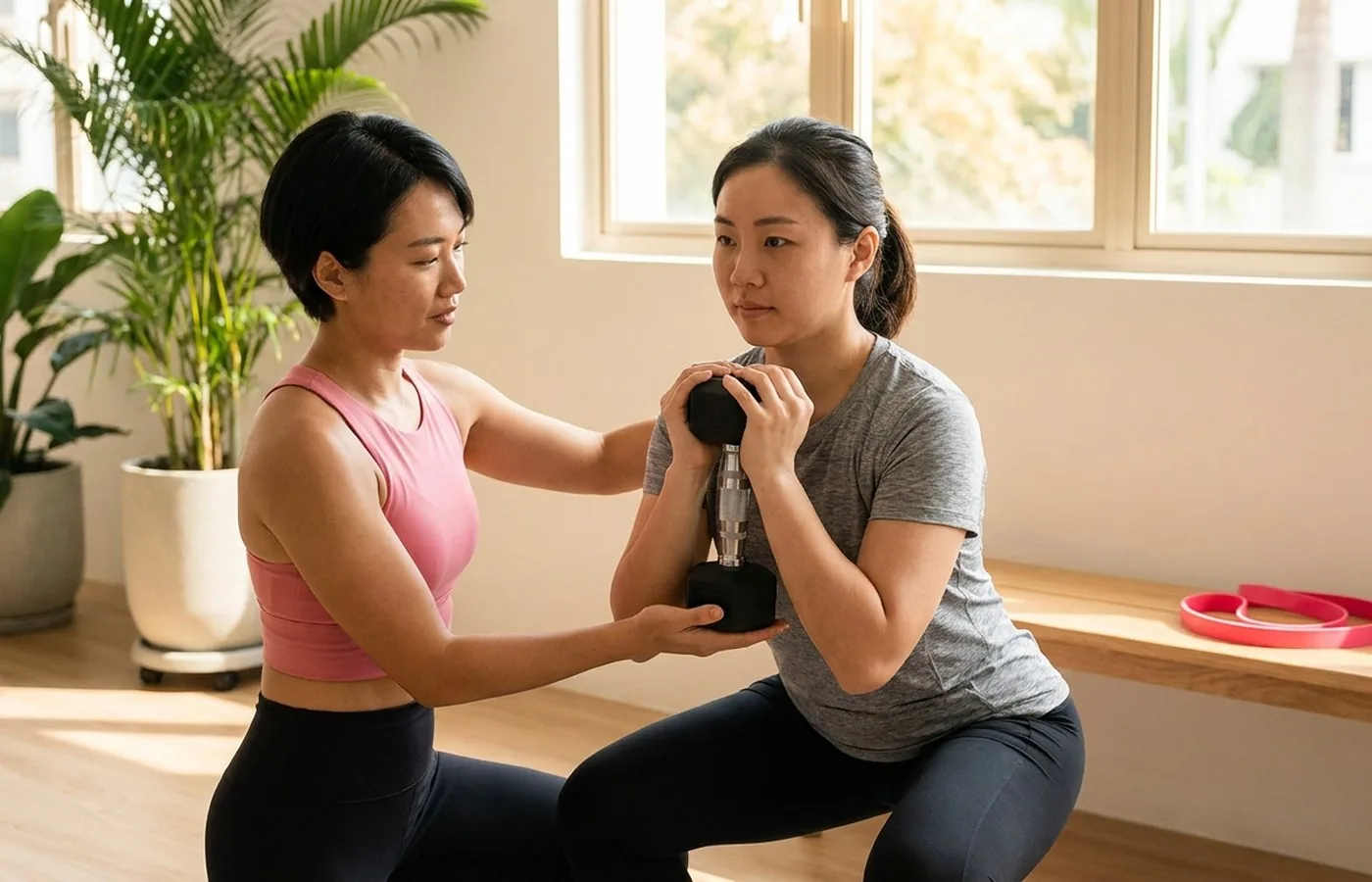
A plain forward lunge is a great starting point, but legs adapt quickly once a movement becomes familiar. Changing the angle, the load, or the tempo of a lunge keeps your legs working in new ways without needing a completely different exercise. The goal here is not a mythical leaner-looking leg from one exercise. It is building real strength and control through the hips, thighs, and calves.
Key points
- Lunge variations challenge balance, strength, and control in slightly different ways.
- Changing angle or tempo can be more useful than just adding more reps.
- Form matters more than depth or speed for getting real benefit.
- Stronger legs support daily movement, not just how they look.
Why lunges are worth mastering before you fancy them up
Lunges work the quads, glutes, hamstrings, and calves while also demanding balance and hip control, which is more than most machine-based leg exercises ask of you. That makes them useful for daily life too, since walking, climbing stairs, and getting up off the floor all use similar movement patterns.
Before adding variations, it is worth getting a standard forward lunge solid: knee tracking roughly over the foot, torso upright, and a controlled step rather than a stumble. Once that feels steady, variations become a way to keep challenging your legs without simply piling on more sets of the same move.
If you are still building a base level of strength, our beginner strength guide is a good companion to this one.
Lunge variations worth adding to your training
- Reverse lunge: Easier on the knees for many people and a good starting variation.
- Walking lunge: Adds a balance and coordination challenge across distance.
- Lateral lunge: Trains the inner and outer thigh in a direction most workouts ignore.
- Curtsy lunge: Targets the glutes from a slightly different angle.
- Deficit lunge: Stepping onto a low platform increases range of motion for more advanced training.
- Bulgarian split squat: A rear-foot-elevated lunge that adds serious single-leg strength demand.
You do not need to use every variation in one session. Rotating two or three across your week keeps the muscles working differently without overcomplicating your plan. The Workout Builder can help you slot a rotation like this into a week that already has other training in it.
Use this as a starting point, then adjust for your body, conditions and professional advice. A plan is useful only when it responds to you.
Form fixes that matter more than the variation itself
A wobbly lunge with poor knee tracking will not build leg strength efficiently no matter how advanced the variation looks. Keep your front knee roughly stacked over your ankle, brace your core, and control the lowering phase instead of dropping into it. If balance is a struggle, use a wall or chair lightly for support while you build confidence.
Recovery matters here too, since single-leg work can leave the legs more fatigued than people expect. If soreness is wrecking your next session, our sleep and recovery guide explains why rest is part of getting stronger, not a break from it.
If desk posture has left your hips tight, that tightness often shows up first in lunges. Our desk posture and mobility guide can help loosen things up before you add harder variations.
Uneven strength between your left and right leg is common and worth noticing rather than ignoring. If one side wobbles far more than the other, spend a little extra attention there instead of just pushing through more total reps. Single-leg work tends to expose imbalances that bilateral exercises like squats can quietly hide.
How lunge variations lead to longer, stronger-feeling legs over time
The idea of "longer, leaner" legs is really about strength, muscle tone, and posture working together, not about physically lengthening a bone. Lunge variations help by training the whole leg through a fuller range of motion, which tends to improve how the legs look and, more importantly, how they perform.
Rotate variations every few weeks, keep form as the priority over depth or speed, and let strength build gradually. That approach does more for your legs long-term than chasing a harder version before you have earned it.
Progress here shows up in how steady you feel on stairs, how easily you get up from the floor, and how your legs handle a long day on your feet, which is a much better measure than a single mirror check.
Pair lunges with some full-body strength and a bit of regular walking, and the legs tend to improve faster than they would from lunges done in isolation. Muscles rarely work alone, and a stronger, more mobile lower body usually comes from a few different movement patterns working together across the week.
How many lunge variations should I do per workout?
Two or three rotated through the week is usually enough. You do not need every variation in one session.
More on this topic from the archive: Lower Ab Exercises That Build a Stronger Core, Effective At-Home Workouts for Lean, Toned Legs and An 8-Minute Workout for Stronger, More Toned Arms.
This article provides general education and is not a diagnosis or a substitute for personalised medical care. Stop exercise and seek appropriate help for severe, sudden or concerning symptoms.
Lunge Variations That Build Stronger, More Capable Legs: questions answered
Which lunge variation is best for beginners?
+
The reverse lunge is usually gentler on the knees and a good place to build confidence first.
Can lunges make my legs longer?
+
No exercise changes bone length. Lunges build strength and muscle tone, which can change how your legs look and feel.
