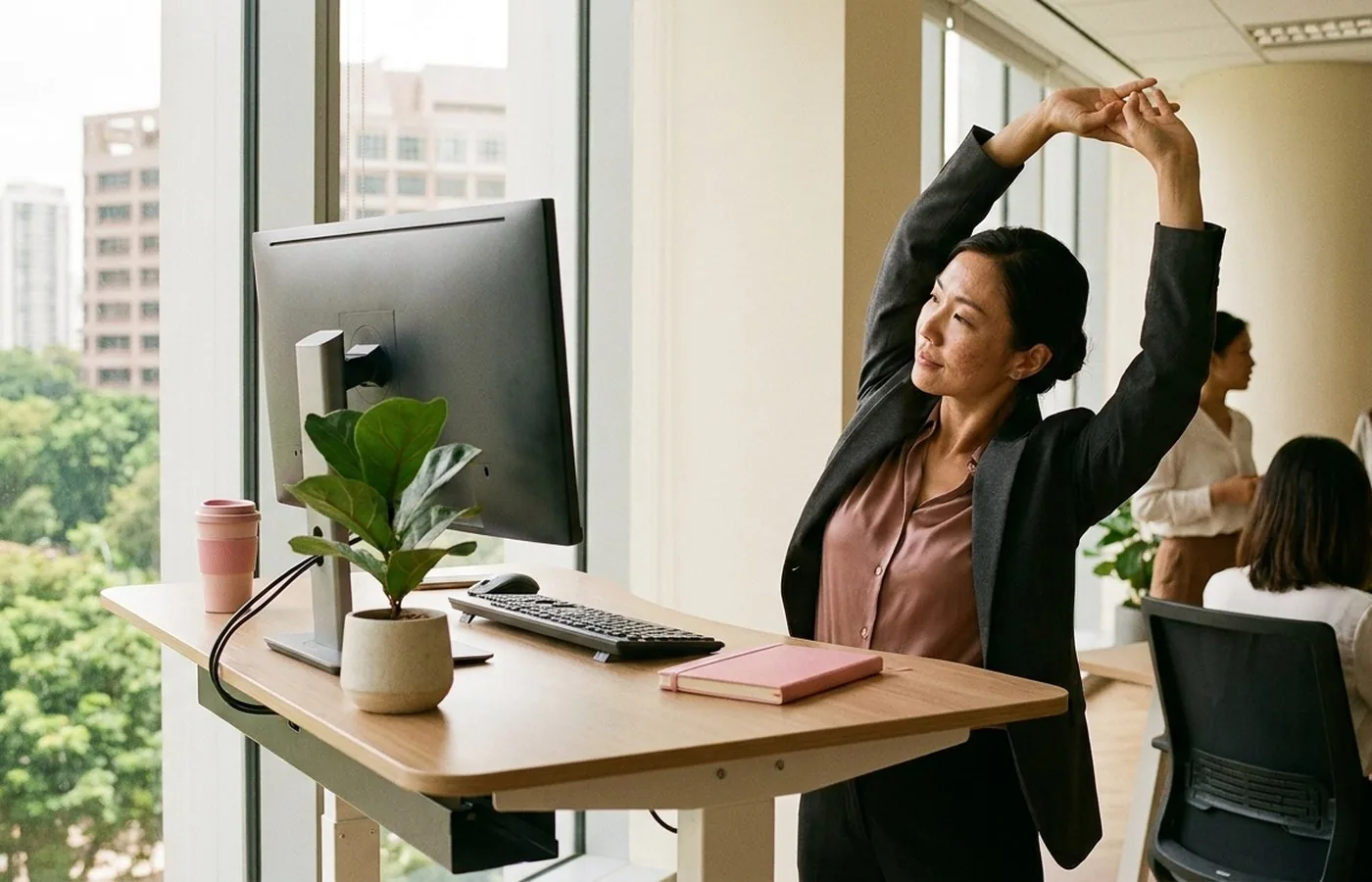
Your next position matters more than one perfect pose. Set up several comfortable options, then move before stiffness builds.
Key points
- No single posture prevents all pain.
- Change position before discomfort builds.
- Two minutes of movement beats one long stretch after work.
- Strength and general activity support desk comfort.
Retire the posture panic
Slouching briefly is not automatically harmful. Problems often arise when any position is held for too long, particularly alongside stress, low activity or a workstation that forces awkward reaching. Evidence has not identified one ideal spinal shape that protects everyone from back or neck pain, and people who sit very differently often report similar levels of comfort. What tends to matter more is how much you move, how well you sleep and how much load your body is used to handling. Treat posture as something that changes through the day, not a standard you keep failing to meet.
Set up for options
Place the screen around eye level, keep frequently used objects close and let feet rest on the floor or a support. The setup should make several comfortable positions available, not lock you into one. A separate keyboard and mouse turn a laptop into something you can look at without dropping your head, and a stack of books works as well as a stand. Chair height matters less than being able to change it easily. At a hot desk, spend two minutes adjusting things rather than accepting whatever the last person left behind.
Use this as a starting point, then adjust for your body, conditions and professional advice. A plan is useful only when it responds to you.
Working from the sofa, the bed or a kitchen table
Hybrid work means many of us type from places never designed for it. A short stint on the sofa is fine. A full day there usually is not, because low seating pushes the head forward and leaves you almost no way to shift. If the kitchen table is your office, raise the laptop and put a cushion behind your lower back. Decide in advance that you will change rooms after an hour. Rotating between two imperfect setups is often more comfortable than committing to one, even when neither looks like an ergonomics diagram.
Use movement snacks
Every 30 to 60 minutes, stand, walk to refill water or complete a few slow shoulder rolls and sit-to-stands. Short changes are easier to repeat than one long stretching session after work. Tie them to something that already happens: a call ending, a file uploading, the kettle boiling. Two minutes is enough to change the load on your back and hips and to give your eyes something distant to look at. When you keep forgetting, put a reminder in the calendar for a week until the rhythm sticks, then let it become ordinary.
Hanging a new behaviour on an event that arrives whether or not you remember it is the same trick that keeps any routine alive. Our guide to building a habit around cues you already have covers what to do when the reminder stops working after a fortnight, which it usually does.
Three moves worth learning for stiff days
Keep the list short so you use it. An upper-back rotation: hands crossed on the chest, turn slowly to each side and let the ribs move with you. A hip opener: step one foot back into a shallow lunge, tuck the tailbone gently and hold for a couple of slow breaths. A chest opener: forearm on a doorframe, then step through until you feel a stretch across the front of the shoulder. Move into a comfortable range and stop before anything sharp. These do not correct a posture; they give stiff tissue a different position.
Build the strength that makes sitting easier
Desk comfort is not only a desk problem. Bodies tolerate sitting better when they are generally stronger and more active, so two short strength sessions a week plus a regular walk usually help more than any chair. Work the legs, back and shoulders through their full comfortable range. Look for movement across the whole day as well: stairs instead of the lift, a walk at lunch, getting off one stop early. None of it needs to be hard training. It needs to happen often enough that sitting is not the only thing your body practises.
Both halves of that have a starting point. A twice-weekly beginner lifting plan covers the legs, back and shoulders in about half an hour, and our pick of places to walk near the office gives the lunchtime version somewhere to happen that is not a lap of the car park.
Pain needs context
Seek professional assessment for pain after trauma, progressive weakness, numbness, fever or bowel and bladder changes. Ordinary aches can also benefit from personalised physiotherapy when they persist. Look wider before deciding the chair is the cause: neck and back pain often track with sleep, workload, stress and a sudden drop in activity as closely as with any workstation detail. A short note of when discomfort appears and what you were doing helps a clinician far more than a description of your chair. General information cannot replace an assessment of your own back.
The workload half of that is worth taking seriously, since a stressful month often shows up as a tight neck before it shows up anywhere else. Our guide to moving on stressed and overloaded days covers the low-key options that fit into a week when the deadline, rather than the desk, is what changed.
Change the task, not just the shape of your spine
There is no single posture that stays comfortable for eight hours. Adjust the screen so you are not constantly twisting, keep frequently used items within reach and support the feet if they do not rest comfortably. Then vary the position. Stand for a call, move to another chair for a short task or take a brief walk while a document loads.
A timer can help, but natural cues such as finishing a meeting or sending a report may be easier to keep. Mobility drills should match what feels limited; they do not need to correct a supposedly bad body. Persistent numbness, weakness, pain after injury, fever or changes in bladder or bowel control need medical advice.
For ordinary stiffness, frequent small changes usually beat one intense stretching session at the end of a motionless day.
Make movement part of the work setup
Put the printer, water or rubbish bin far enough away that standing happens naturally. Use phone calls, calendar changes or completed tasks as movement cues. These small interruptions reduce the time held in any one position. They are easier to repeat than waiting until pain reminds you to move.
Put more movement into a desk day
Use a short plan and a reliable cue instead of waiting for stiffness.
- Build a mobility sessionCreate a short movement break for the space you have.
- Track a desk-day movement cueAttach it to lunch, a meeting or closing the laptop.
- Add a full-body home workoutBalance small breaks with a focused session.
This article provides general education and is not a diagnosis or a substitute for personalised medical care. Stop exercise and seek appropriate help for severe, sudden or concerning symptoms.
Desk Posture: The Best Position Is Your Next One: questions answered
Is standing all day better?
+
Not necessarily. Alternating sitting, standing and walking is usually more comfortable than any one position all day.
Do posture braces help?
+
They may cue position briefly but do not replace movement, strength or an appropriate assessment.
How often should I move?
+
Frequent short breaks are useful; choose an interval you can sustain without disrupting work.
What about neck ache from my phone?
+
The same idea applies. Raise the phone, take breaks and vary position instead of hunting for one perfect angle.