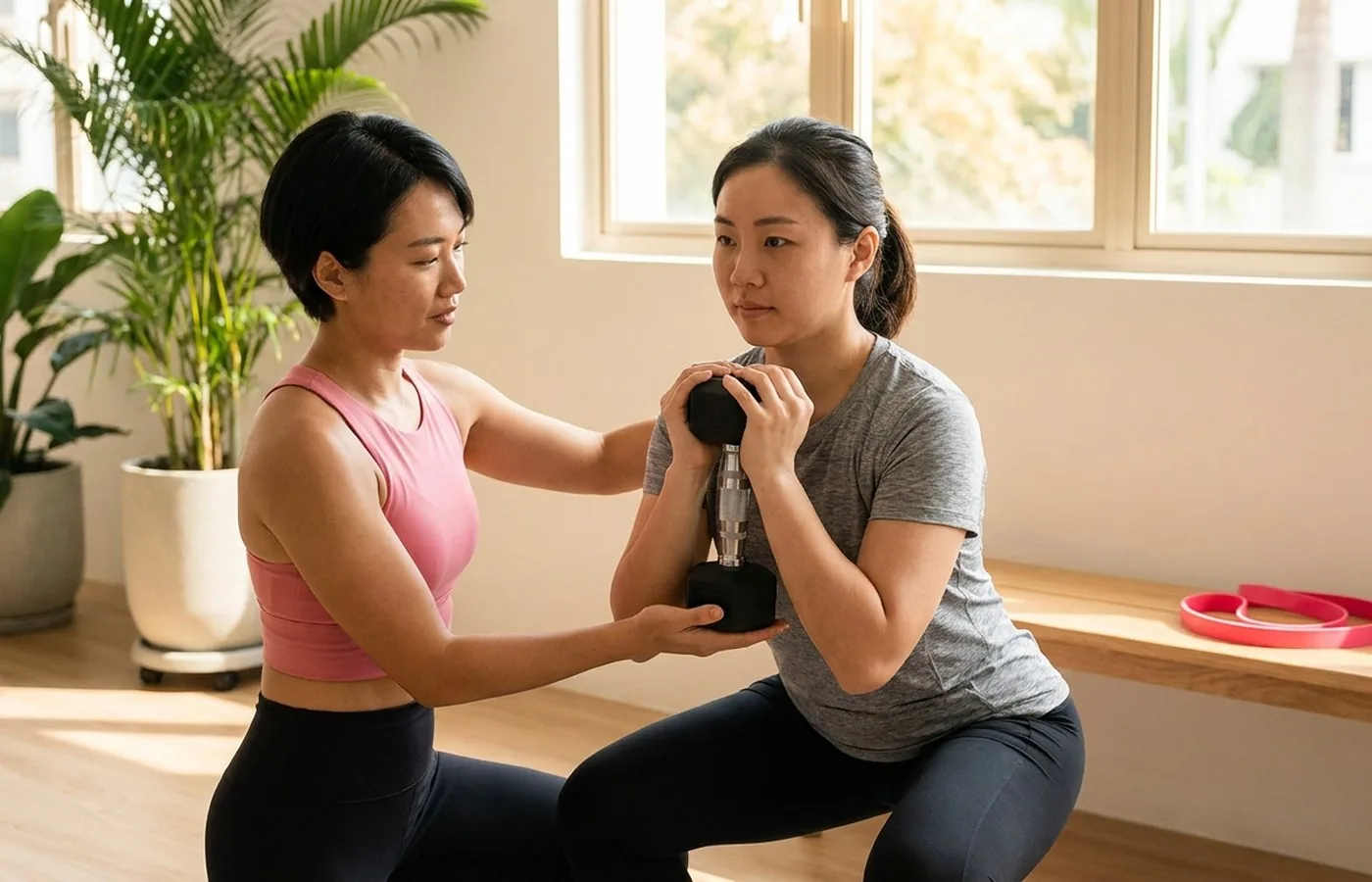
Toned is a fitness-marketing word more than a scientific one, and this workout is built around the honest version of it: real muscle work you can do at home with nothing but your own body weight. You cannot choose to lose fat only from your thighs, but you can build strength and shape in your legs while your overall routine handles the rest.
Key points
- Toned legs come from a mix of muscle definition and a leaner fat layer, not one magic move.
- You do not need weights to challenge your legs properly at home.
- Tempo and control matter more than speed for building real leg strength.
- Pair this workout with overall activity and steady eating habits for visible changes over time.
What toned legs means
Toned is a fitness-marketing word more than a scientific one. What people usually mean is legs with visible muscle shape and less soft covering over that muscle. You cannot choose to lose fat only from your thighs by doing enough lunges, no matter how tempting that idea sounds. What you can do is build real muscle in your legs and support fat loss across your whole body through your overall routine.
That means this workout is genuinely useful, but it works best as one part of a bigger picture that includes your general activity level and eating pattern. If you have not built a full home routine yet, our 20-minute home workout guide is a good companion piece to this one.
It also helps to remember that legs respond to the same basic rules as every other muscle group: enough tension, enough repetition, and enough recovery over weeks. There is no special toning switch hiding in one niche exercise or one specific rep range. The moves below simply give your leg muscles a real reason to adapt.
The at-home leg workout
Do three rounds of the following, resting about 30 to 45 seconds between exercises.
- Bodyweight squat: 15 reps, going as low as your knees comfortably allow.
- Reverse lunge: 10 reps per leg, keeping the front knee tracking over the foot.
- Glute bridge: 15 reps, squeezing the glutes hard at the top.
- Single-leg calf raise: 15 reps per side, using a wall for balance if needed.
- Side-lying leg lift: 15 reps per side, moving slowly rather than swinging the leg.
- Wall sit: 30 to 45 seconds, back flat against the wall.
This mix trains the quads, hamstrings, glutes, and calves without needing a single dumbbell. It also throws in a static hold, which builds a different kind of endurance than the reps alone.
If you only have time for a shorter session, keep the squat, the lunge, and the glute bridge and treat the rest as optional extras for busier days. Trimming a workout down is usually better than skipping it entirely because the full version felt too long today.
Use this as a starting point, then adjust for your body, conditions and professional advice. A plan is useful only when it responds to you.
How to make it harder or easier without weights
If bodyweight squats and lunges feel too easy, slow the tempo down: try a three-second lower on every rep instead of dropping fast and popping back up. You can also add small pulses at the bottom of a squat or lunge, or extend the wall sit by ten seconds each week. None of these tricks need equipment, just patience with a slower pace.
If the workout currently feels too hard, shrink the range of motion slightly, use a chair for support during lunges, or cut the reps and build up over a few weeks. The goal is clean form on every rep, not a fixed number you rush through. If you are new to structured training generally, our beginner strength guide covers how to progress safely without needing a gym membership yet.
Tempo tricks work because your muscles do not know how heavy a weight is, only how much tension they are under and for how long. A slow, controlled bodyweight squat can genuinely rival a rushed weighted one, which is good news if you have no equipment at home at all.
How this home leg workout supports lean, toned legs over time
Muscle change takes weeks, not one workout, so the honest plan is to repeat this circuit two to three times a week and let your legs adapt gradually. Pair it with regular walking or another form of cardio, and keep your meals reasonably balanced so recovery and energy do not drag behind your training.
If you want to plan this alongside upper-body and full-body days, the Workout Builder can help you build a complete week around it. More home training guides like this one live on the fitness hub. Lean, toned legs are less about one perfect video workout and more about showing up for this kind of session often enough that your legs simply adapt.
More on this topic from the archive: 5 Effective Cool-Down Exercises to Do After Every Workout and Lunge Variations That Build Stronger, More Capable Legs.
This article provides general education and is not a diagnosis or a substitute for personalised medical care. Stop exercise and seek appropriate help for severe, sudden or concerning symptoms.
Effective At-Home Workouts for Lean, Toned Legs: questions answered
Can I spot-reduce fat from my thighs with squats?
+
No, but squats build muscle that supports a leaner-looking leg over time.
Do I need weights for a real leg workout at home?
+
Not necessarily. Bodyweight moves done with control can be genuinely challenging.
How often should I do this leg workout?
+
Two to three times a week is a solid amount for most beginners and intermediates.