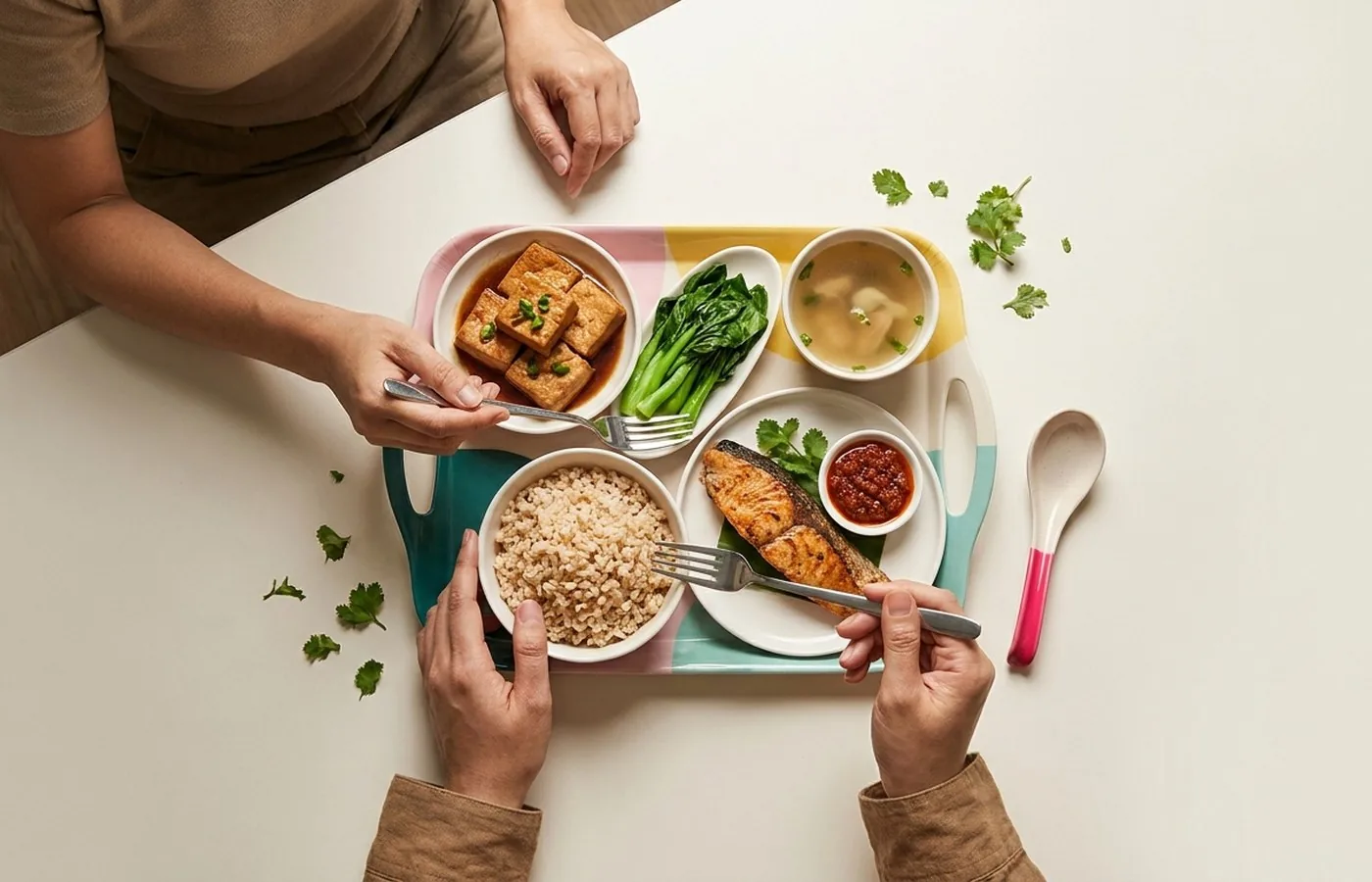
Four servings of fruit and vegetables a day is a reasonable target, but it can feel intimidating if you picture it as one giant salad. The easier way is to spread it across meals you already eat, so it becomes a habit rather than a project.
Key points
- A serving is smaller than most people imagine, roughly a fist-sized portion.
- Spreading servings across breakfast, lunch, dinner, and snacks makes the goal realistic.
- Frozen and canned produce count and can be more convenient than fresh.
- Consistency across most days matters more than hitting the number perfectly every single day.
What counts as a serving, really
A lot of people overestimate how much fruit or vegetables make up one serving, which makes the whole target feel out of reach. In practice, a serving is roughly the size of your fist for vegetables, or one medium piece of fruit, or about half a cup of chopped fruit. Four servings, then, is not four huge plates. It is closer to four modest additions spread across your day.
That reframing matters because it turns an intimidating number into something achievable. If your meals currently look thin on produce, the Balanced Meal Builder can help you visualise where fruit and vegetables should sit on a typical plate.
It also helps to remember why the target exists in the first place. Fruit and vegetables bring fibre, vitamins, and water content that most other foods do not offer in the same combination, and they tend to make meals more filling for relatively few calories. None of that requires perfection. It just requires showing up for a few small servings, most days, rather than treating produce as an occasional bonus.
A simple way to hit four servings without overthinking it
- Breakfast: add fruit to yoghurt, cereal, or toast. That is one serving down before 9am.
- Lunch: add a vegetable side or extra vegetables into a noodle soup or rice bowl. That is a second serving.
- Dinner: aim for at least one full vegetable dish alongside your main. That is a third serving.
- Snack: keep fruit, cut vegetables, or a small salad on hand for a fourth serving between meals.
Laid out this way, four servings is not one heroic effort. It is four small, repeatable habits attached to meals you are already going to eat anyway.
Use this as a starting point, then adjust for your body, conditions and professional advice. A plan is useful only when it responds to you.
Making it work with real, busy-life food
Fresh produce is great, but frozen and canned vegetables and fruit count too, and they are often more convenient. Frozen vegetables keep well, cook quickly, and do not go to waste in the back of the fridge the way fresh ones sometimes do. Canned fruit in natural juice, rather than syrup, is a fine option when fresh is not available.
Eating out does not have to derail the goal either. Hawker meals, rice bowls, and noodle dishes can often have a vegetable side added or swapped in. Our hawker-centre guide shows how to build these additions into meals you already order regularly, rather than treating vegetables as something separate from local food.
If busy weeknights are the main obstacle, our meal-prep guide can help you set up vegetables and fruit in advance so reaching for them takes less effort than reaching for something less useful.
It is also worth keeping a couple of low-effort backups around for the days when nothing else goes to plan. A bag of frozen mixed vegetables you can microwave in three minutes, or a bowl of pre-cut fruit in the fridge, often ends up doing more for your weekly average than a single ambitious salad you were too tired to make. Even a small side of frozen corn or peas added to a simple dinner counts toward the same daily total.
How eating four servings a day becomes a real habit
The goal is not a perfect scorecard every single day. It is a pattern that holds up most days across a normal week. Some days you will hit five or six servings without trying. Other days, a busy schedule might leave you at two or three. That is fine, as long as the overall pattern trends toward more, not less.
Start by picking one meal where produce is currently missing and add it there first. Once that becomes automatic, add another. If you want more practical, everyday nutrition guides like this one, the food hub is where older SHAPE content is being rebuilt with clearer, more useful advice for real routines.
Does fruit juice count as a serving?
Whole fruit is generally a better choice than juice, since juice lacks the fibre of whole fruit and is easy to overconsume.
More on this topic from the archive: 9 Fruits and Vegetables That Help You Feel Less Thirsty, Getting Seasonal Fruits and Vegetables Delivered to Your Door and 7 Singaporean Desserts That Are Less Than 200 Calories Per Serving.
This article provides general education and is not a diagnosis or a substitute for personalised medical care. Stop exercise and seek appropriate help for severe, sudden or concerning symptoms.
How to Eat Four Servings of Fruits and Vegetables Every Day: questions answered
Do frozen vegetables count toward my daily servings?
+
Yes. Frozen vegetables and fruit are nutritionally similar to fresh and count fully toward your daily intake.
What if I only manage two or three servings some days?
+
That is still progress. Consistency across most days matters more than hitting the exact number every single day.