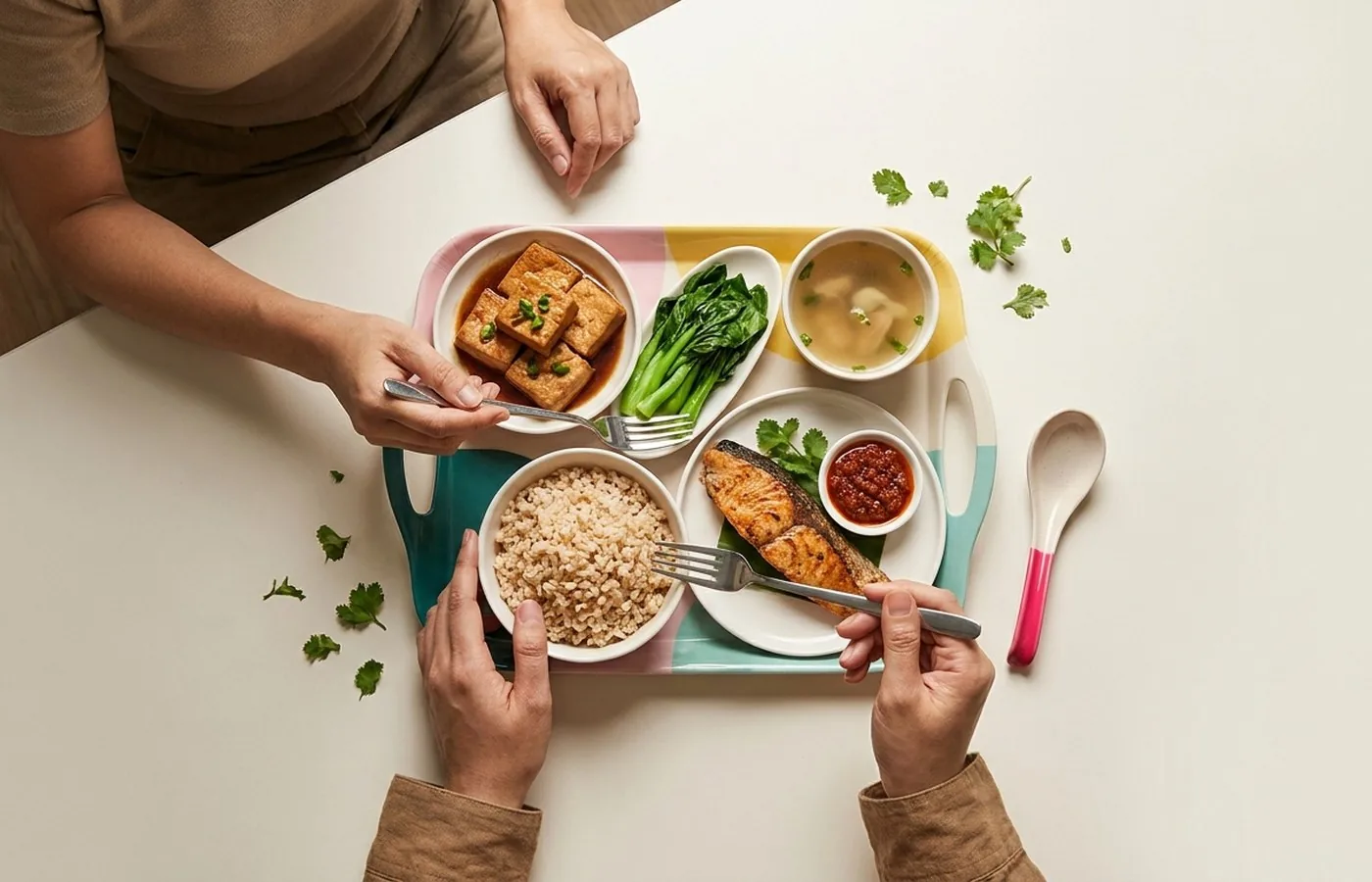
A balanced hawker meal does not need to be perfect. Look for a filling base, a useful protein and some colour you enjoy.
Key points
- Look for a protein source, vegetables and a satisfying carbohydrate.
- Gravy, drinks and sides can change a meal more than the main dish.
- Adding one item usually works better than removing a dish you enjoy.
- One meal does not define your diet.
Use a flexible plate
A practical target is roughly half vegetables or fruit, one quarter protein and one quarter wholegrains or other starch. Hawker meals rarely arrive in perfect sections, so use the idea as a direction rather than a scorecard. Plenty of dishes are built as a single bowl, and that is fine; the plate is a way to notice what is missing, not a rule about how food should be arranged. When a meal is heavy on rice and light on vegetables, the fix can be as small as adding a side of tau gay or kailan. Across a week, most of your meals will land near the shape you want.
If picturing that split is the hard part, the Balanced Meal Builder will put a plate together from local foods you already order, so the ratio is something you have seen before you are standing at the stall deciding.
Start with familiar favourites
For economy rice, choose one protein and two vegetable dishes, then ask for less gravy if you prefer. With noodle soup, add vegetables, tofu, egg or lean meat. For chicken rice, enjoy the dish and consider extra cucumber or a vegetable side. Yong tau foo lets you pick the mix yourself, and a soup base with more fresh pieces than fried ones is an easy default. Thunder tea rice, popiah, sliced fish soup and vegetarian bee hoon already carry a decent amount of vegetables. Beginning with food you order anyway tends to stick better than switching to dishes you do not enjoy.
The protein is the part most likely to come up short at lunch, particularly on days that end with a workout. Our guide to what a useful protein serving looks like works in palm and handful sizes rather than grams, which travels well to a tray of economy rice.
Use this as a starting point, then adjust for your body, conditions and professional advice. A plan is useful only when it responds to you.
Small asks that stallholders hear every day
You do not need a speech. Less rice, less gravy, less oil, chilli on the side, more vegetables and less sugar in a drink are all ordinary requests during a busy lunch. Say it early and keep it short. Some stalls cannot change a dish that is already cooked, and that is not a problem; take it as it comes and adjust the rest of the meal. If you are eating with colleagues, ordering one vegetable dish for the table means nobody has to negotiate their own plate in front of everyone else.
Where the fibre usually goes missing
Many hawker meals are generous with rice, noodles and protein but light on vegetables, fruit and wholegrains. Fibre helps with fullness, digestion and steadier energy through the afternoon, so it is worth adding on purpose. Ask for a vegetable side, choose brown rice where it is offered, pick a soup with greens in it, or keep fruit at your desk for later. Beans, tofu, lentils and wholemeal options at the same centre count as well. None of this asks you to give up a favourite dish; it usually means adding one item rather than removing one.
Drinks count, but pleasure counts too
Water, unsweetened tea or kopi-o kosong reduce added sugar. A sweet drink can also fit sometimes. The better question is what pattern helps you feel energised and satisfied across the week. Many stalls will make a drink less sweet if you ask, and the colour-coded sugar labels on packaged drinks give you a quick comparison. A large sweet drink beside every meal adds up quietly, mostly because liquid sugar does little for fullness. Treating drinks as a separate decision from the food often changes more than rearranging the meal itself.
How much you drink is the other half of that decision, and a humid commute asks for more than an air-conditioned afternoon does. Our guide to drinking enough in this climate covers what counts towards the day, including the soup and tea that arrive alongside lunch.
Eating out most days of the week
People who eat at hawker centres daily do not need a stricter version of this advice; they need variety. Rotate stalls so you are not getting the same salt, oil and vegetable profile every day. Follow a heavier lunch with a lighter dinner if that suits your appetite. Notice which meals leave you flat at three in the afternoon and which do not, then order accordingly. Anyone managing high blood pressure, diabetes, kidney disease or another condition can ask a dietitian to help build a rotation that fits medical needs without turning every lunch into a calculation.
Cooking two evenings a week widens that rotation faster than reordering lunch does. An hour of component prep on a quiet evening gives you a few dinners that are entirely yours to shape, which takes the pressure off every hawker order to balance itself.
Food safety in the heat
Choose busy, well-kept stalls, eat cooked food while it is hot and refrigerate leftovers promptly. If you have allergies, ask clearly about sauces, broths and shared equipment because ingredients may not be visible. Food that sits in a warm centre for a couple of hours is a genuine risk in this climate, so takeaway is best eaten soon or cooled quickly at home. Raw and lightly cooked items deserve more caution during pregnancy, in older age or with a weakened immune system. When something smells or tastes off, stop eating it.
Balanced hawker orders for different kinds of days
A balanced order can change with appetite and plans. Before an inactive afternoon, mixed rice with one protein, two vegetable dishes and a comfortable rice portion may work well. Before a long run, you may want more rice or noodles and a familiar lower-fibre choice that sits comfortably. After strength training, a meal with tofu, eggs, fish, chicken or legumes can help you meet protein needs.
Soup noodles can become more substantial with an egg, tofu or lean meat and an extra vegetable side. If a dish is salty, enjoy it and let later meals be normal; there is no need for a detox. People with diabetes, kidney disease, allergies or another clinical need may require different choices. The aim is not to identify the healthiest stall in Singapore.
It is to build a meal you enjoy, can afford and can repeat without feeling deprived or uncomfortably full.
Plan a balanced Singapore meal
Move from general plate advice to choices for your next meal and day.
- Build a hawker-centre mealChoose protein and a goal for the plate.
- Estimate a broad protein rangePut the meal's protein in daily context.
- Plan drinks for a hot dayMatch fluids to activity and conditions.
This article provides general education and is not a diagnosis or a substitute for personalised medical care. Stop exercise and seek appropriate help for severe, sudden or concerning symptoms.
How to Build a Balanced Hawker-Centre Meal: questions answered
Is hawker food unhealthy?
+
Hawker food is diverse. Balance depends on the dish, portion, sides and your wider eating pattern.
Must I avoid white rice?
+
No. Portion and overall meal balance matter more than labelling one staple as bad.
What is an easy first change?
+
Add a vegetable side or choose water with the meal you already enjoy.
How do I order a less sweet drink?
+
Ask for siu dai or kosong, or simply say less sugar. Stalls take these requests all day.
