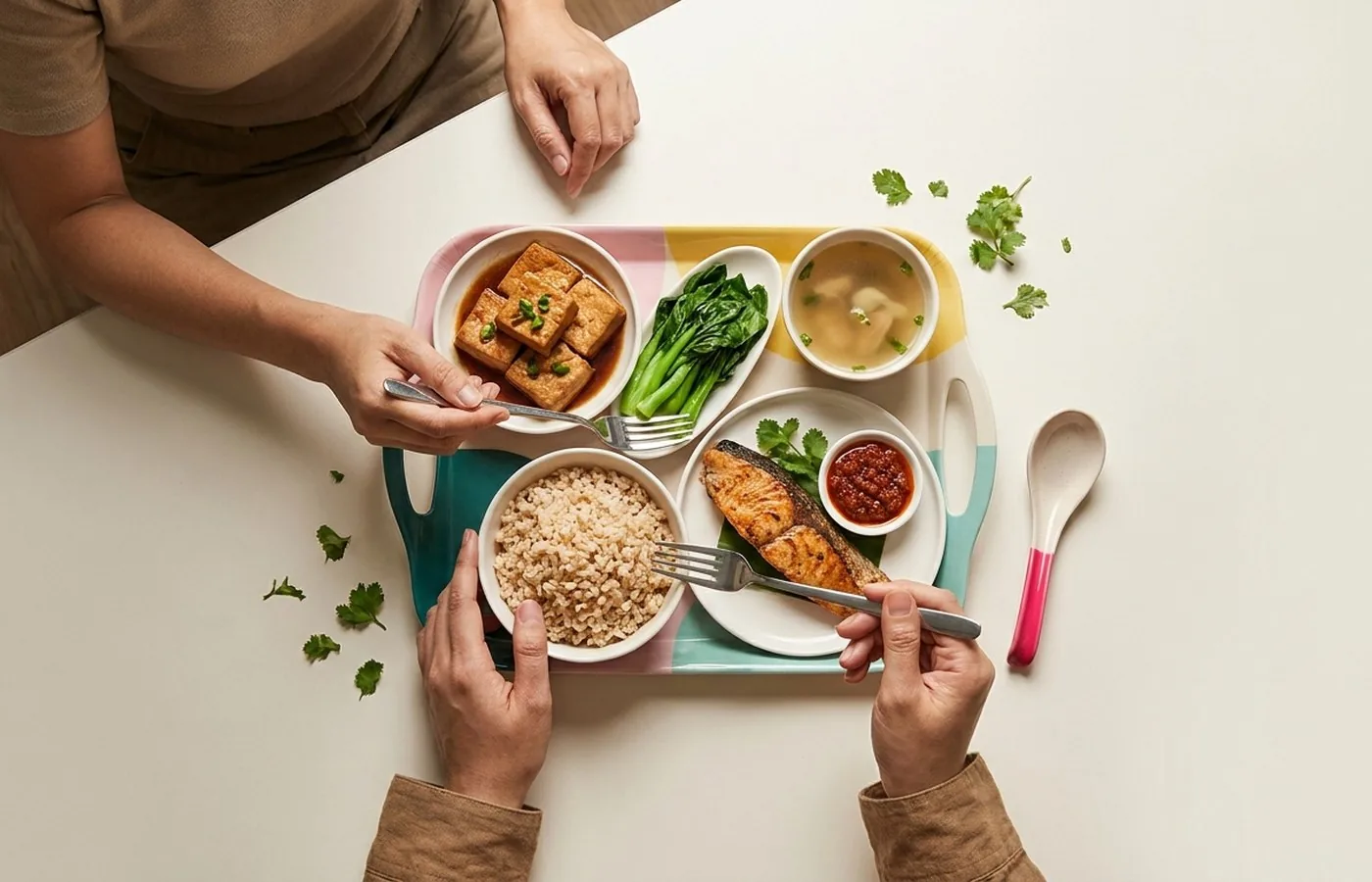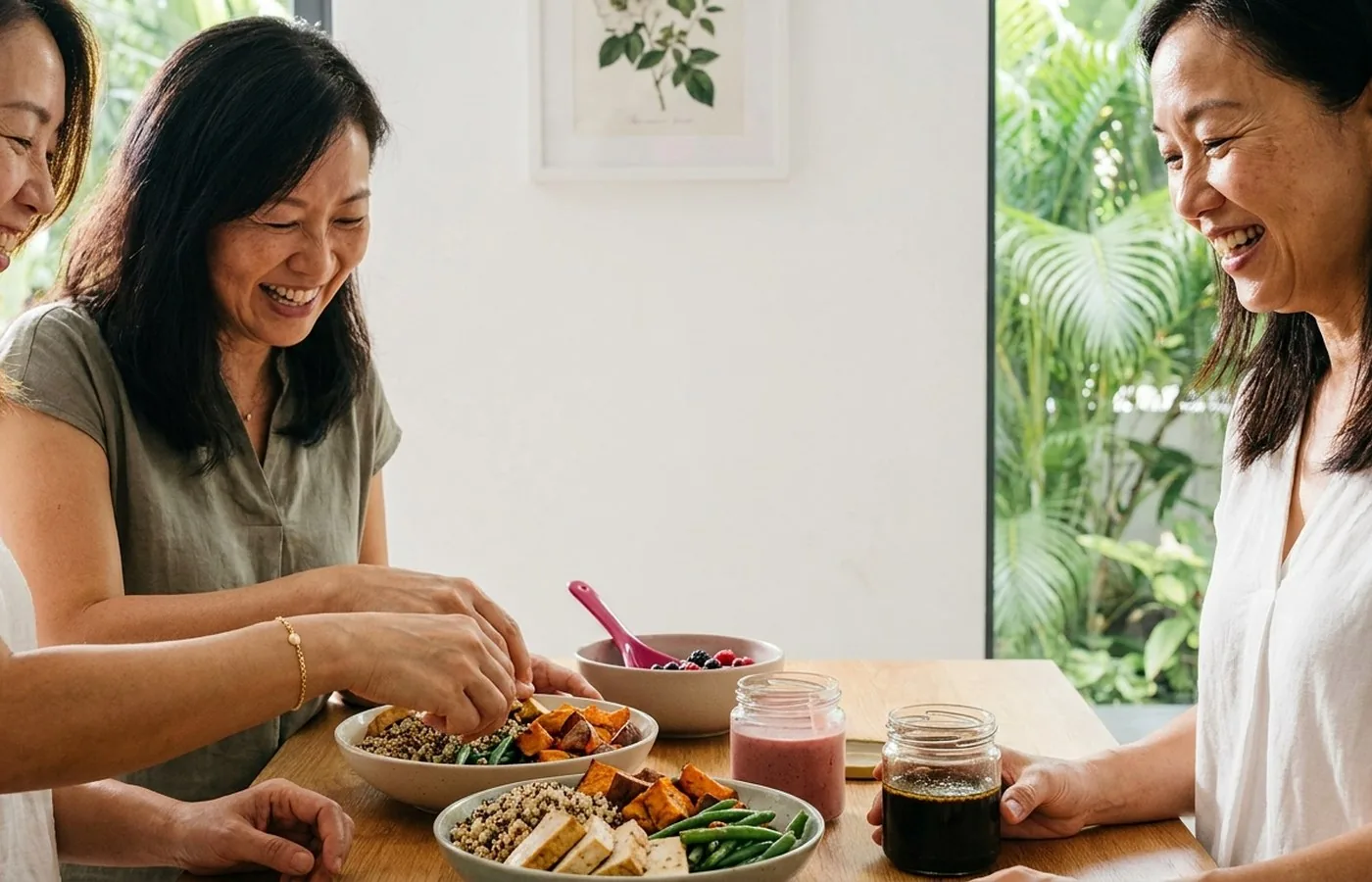
Meal prep should save time, not take over Sunday. Prepare a few flexible parts that can become different meals through the week.
Key points
- Prepare components instead of seven identical boxes.
- Cook once, season in different directions.
- One focused hour beats a plan that needs three.
- Cool and refrigerate food safely.
Pick four building blocks
Choose one protein, one grain or noodle, two vegetables and a quick sauce. Roast, steam or stir-fry in parallel. Keep strongly flavoured sauces separate so the same base can become a grain bowl on Monday, a wrap on Tuesday and a soup on Wednesday. Four is a deliberate limit. People who set out to prepare eight things tend to lose patience around the third pan and skip the whole exercise the following week. A short list you finish is worth more than an ambitious one that turns a Sunday afternoon into a shift.
Give the protein block the most thought, since it decides whether the week's lunches hold you until dinner. Our guide to how much protein active women need is worth a look if the same tray of eggs has been doing that job for a month.
Write the list before you touch a pan
Ten minutes with a pen saves an hour later. Decide the four blocks first, then write down only what those need, plus fruit and anything for breakfast. Check the fridge before you leave so you are not buying a third bottle of oyster sauce. Keep a standing shelf of things that make a meal possible on any evening: canned beans and tuna, frozen vegetables and dumplings, eggs, dried noodles, a jar of chilli. One trip is the target, because a plan that needs a second supermarket run midweek is the plan that quietly dies.
The list works for the same reason a training routine survives a bad month: the decisions get made while you are calm rather than at seven in the evening. That principle runs right through our guide to keeping a habit alive through a busy month, and it applies to a fridge as neatly as it does to a gym bag.
Use this as a starting point, then adjust for your body, conditions and professional advice. A plan is useful only when it responds to you.
Run the hour in the right order
Sequence is what turns two hours into one. Put the oven on before you take your shoes off and get the longest thing cooking first: vegetables roasting, rice in the cooker, eggs in a pot. Chop while those run rather than before. Use the waiting time for washing up so you are not facing a wrecked kitchen afterwards. Cook the quick things last, once everything else is already going. Keep one pan free for whatever you want to eat that evening, since cooking for an hour and then ordering delivery is a dispiriting way to finish.
Use convenience intelligently
Frozen vegetables, canned beans, rotisserie chicken, pre-cut fruit and microwave rice reduce friction, and friction is what ends most food plans. Vegetables are usually frozen soon after picking and hold their nutrients well; canned beans need only a rinse. Convenience is not a nutritional failure; it can be the difference between an adequate dinner and skipping the meal or ordering something you did not want at nine at night. Spend your effort where it changes the result and let the packet handle the dull part.
Buying the meal outright belongs in the same category. A well-ordered hawker dinner with a vegetable side does the job a box from home would have done, and it means the prep hour only has to cover the meals you want to cook.
What does not survive until Thursday
Some things are better cooked fresh. Dressed leaves collapse, anything fried loses its texture within a day, cut avocado browns and soft herbs turn to slime. Store those parts separately and combine at the last minute: dressing in a small jar, crunchy bits in their own container, herbs added to the bowl instead of the batch. Fish is usually better eaten within a day or two than kept at the back of the fridge. Knowing what to leave out of the prep matters as much as knowing what to include.
Make a two-minute formula
Fill a bowl with a carbohydrate, add protein and vegetables, then finish with texture and flavour such as sesame, lime, chilli, herbs or nuts. That finish is what stops the same ingredients feeling like a repeat performance. Temperature helps as well: a cold bowl at lunch and the same components in a hot soup at dinner do not read as one meal eaten twice. Keep one emergency freezer option for the night the plan collapses, because it will collapse, and that is the night takeaway habits get made.
When the same three combinations start to wear thin, the Balanced Meal Builder will suggest pairings from local ingredients, which is an easy way to find a fourth or fifth format for blocks you have already cooked.
Store it safely
Tropical kitchens are less forgiving than packet instructions assume. Move cooked food into shallow containers so it cools quickly, refrigerate promptly rather than leaving it on the counter for hours, and reheat until steaming hot the whole way through. Rice deserves particular care: cool it fast, refrigerate it and reheat it only once. Food that has been thawed should not go back into the freezer uncooked. When in doubt about how long something has sat out in tropical heat, discard it. A wasted portion costs far less than a bad night.
Build components that can become more than one meal
Choose one carbohydrate, one or two proteins, vegetables and a flavour base. Rice can become a grain bowl, fried rice or a side for curry. Roasted vegetables can go into wraps, noodles or eggs. Cooked chicken, tofu, beans or fish can change character with sambal, herbs, a soy dressing or a yoghurt sauce. This component method prevents the week from feeling like five copies of Sunday dinner.
Cool cooked food promptly, use shallow containers and refrigerate perishables within safe time limits. Label anything you freeze so it does not become an unmarked block at the back of the freezer. Midweek, check what needs using first and move a frozen portion to the fridge. Convenience food can fill gaps: bagged vegetables, canned beans, frozen fruit and ready-cooked grains are tools, not failures.
Prep should remove decisions from busy evenings without demanding that you spend the whole weekend cooking.
Keep the plan flexible by Wednesday
Leave one evening unassigned or keep a freezer meal ready. Plans fail when every portion has only one permitted use and an unexpected dinner creates waste. A flexible slot lets leftovers, social plans and appetite changes fit. The point of meal prep is fewer difficult decisions, not a refrigerator full of obligations.
Turn meal prep into flexible weekday food
Build components, then use tools that make each meal easier to assemble.
- Create a balanced meal combinationUse what you prepped with a flexible plate pattern.
- Use hawker food on the unplanned dayKeep eating well when the fridge plan changes.
- Check where protein fitsSpread useful sources across ordinary meals.
This article provides general education and is not a diagnosis or a substitute for personalised medical care. Stop exercise and seek appropriate help for severe, sudden or concerning symptoms.
The Low-Effort Meal Prep System for Busy Weeks: questions answered
How many days should I prep?
+
Many cooked foods are best used within three to four refrigerated days; freeze later portions.
Can meal prep include takeaway?
+
Yes. Add prepared vegetables, fruit or a protein side to make takeaway work for your needs.
What if I hate repetition?
+
Use neutral bases and two sauces, then change the format each day.
How long should the prep session take?
+
Around an hour once you have done it a few times. The first attempt runs longer because you are still working out the order.