Every year brings a fresh batch of fitness trends, and 2020 brought a strange one: a year when home workouts stopped being a niche and became the only option for a long stretch. Looking back now, some of that year's trends were genuine shifts. Others faded the moment a gym floor was available again.
Key points
- 2020 pushed home workouts, bodyweight training, and livestream classes into the mainstream.
- Some trends from that year, like short daily movement habits, held up well over time.
- Others, like constant online challenges, mostly faded once life reopened.
- The trends worth keeping are usually the ones that made consistency easier, not flashier.
Why 2020 changed what a workout trend even meant
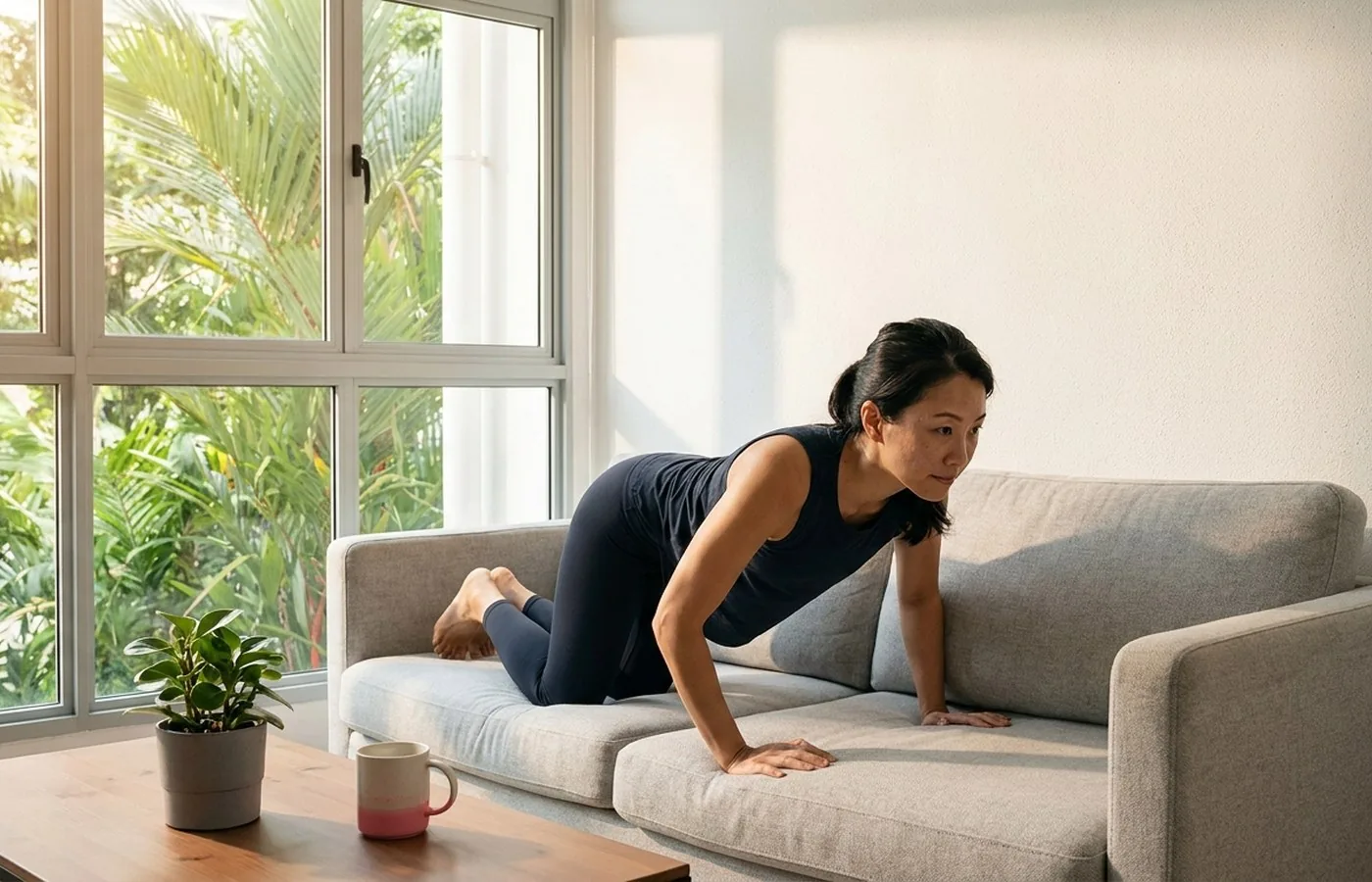
Most years, a fitness trend is a new class format or a new piece of equipment showing up in gyms. 2020 was different because gyms themselves became unavailable for stretches of time in many places, including Singapore. That forced a huge number of people to build a workout routine at home, often with nothing more than bodyweight moves and whatever furniture was on hand.
That shift is a big part of why home workouts stopped feeling like a compromise and started feeling like a real option. If you never built that kind of routine, our 20-minute home workout guide still reflects a lot of what worked well during that period: short, structured sessions that do not need a rack of equipment.
Livestream and on-demand classes also grew fast that year, for the same reason. People wanted the structure and energy of a class without needing to be in a studio.
Equipment habits shifted too. Resistance bands, single dumbbells, and jump ropes became common home purchases simply because they were compact and affordable compared to a full rack of gear. That small shift toward minimal, flexible equipment is still visible in how a lot of people train today, years after gyms reopened for good.
The trends that stuck around
| 2020 trend | Did it last? |
|---|---|
| Short daily bodyweight workouts | Yes, still common in home routines today |
| Online/livestream classes | Partly, now often a hybrid with in-person options |
| Daily step or movement challenges | Yes, in a quieter, more personal form |
| Constant public fitness challenges | Mostly faded once life reopened |
| Minimal-equipment training | Yes, still popular for busy schedules |
The pattern is fairly clear. Trends that made fitness easier to fit into a normal week held on. Trends that depended on group excitement or a temporary situation mostly disappeared once people had other options again. That is a useful filter for any trend, then or now: does it solve a real problem, or does it just feel novel for a season?
Use this as a starting point, then adjust for your body, conditions and professional advice. A plan is useful only when it responds to you.
What that year taught people about consistency
One underrated lesson from 2020 is how much people learned about what they could keep doing without a gym, a class schedule, or even much equipment. A lot of people discovered that a short daily session at home, even an imperfect one, beat an ambitious gym plan they rarely got to use.
That lesson still matters. If your week keeps getting in the way of long workouts, building a smaller, repeatable habit is usually more useful than planning the perfect session you will skip. Our guide to building a fitness habit covers how to make that kind of routine last past the first two weeks.
Recovery habits also got more attention that year, partly because people had more time at home to notice how sleep and stress affected their training. Our sleep and recovery guide picks up a lot of the same ground.
People also got more comfortable training alone, without a class or a training partner watching. That independence turned out to be a useful skill on its own, since it meant a missed class or a closed gym no longer had to mean a missed week of training entirely.
What the 2020 fitness trends mean for your routine now
Looking back at 2020's fitness trends is not really about nostalgia. It is a reminder that the workouts worth keeping are the ones that fit your actual life, not the ones that look impressive for a month before fading. Home workouts, short daily sessions, and flexible training options were not just a pandemic-era compromise. For a lot of people, they turned out to be a better fit than the gym routine they had before.
If you want a simple way to build a session around whatever space and equipment you have now, the Workout Builder can put one together in a few minutes. If you want to browse more of this kind of restored fitness content, the fitness hub is where the older SHAPE archive is being rebuilt.
The trends worth carrying forward from that strange year are the plain ones: move a little every day, keep the plan simple, and do not wait for perfect conditions before you start.
Do I need equipment to follow a 2020-style home workout?
No. Many of the most useful routines from that period used bodyweight moves and simple household items.
More on this topic from the archive: Looking Back at the Fitness (and Self-Care) Trends Everyone Talked About in 2018 and A Look Back at the Fitness Trends Everyone Was Chasing in 2017.
This article provides general education and is not a diagnosis or a substitute for personalised medical care. Stop exercise and seek appropriate help for severe, sudden or concerning symptoms.
The Fitness Trends of 2020 We Look Back On: questions answered
Are home workouts still worth doing now that gyms are open?
+
Yes, for a lot of people they remain a useful, flexible option alongside or instead of gym sessions.
What made 2020 fitness trends different from earlier years?
+
Necessity. Widespread gym closures pushed home and bodyweight training into the mainstream rather than a niche interest.