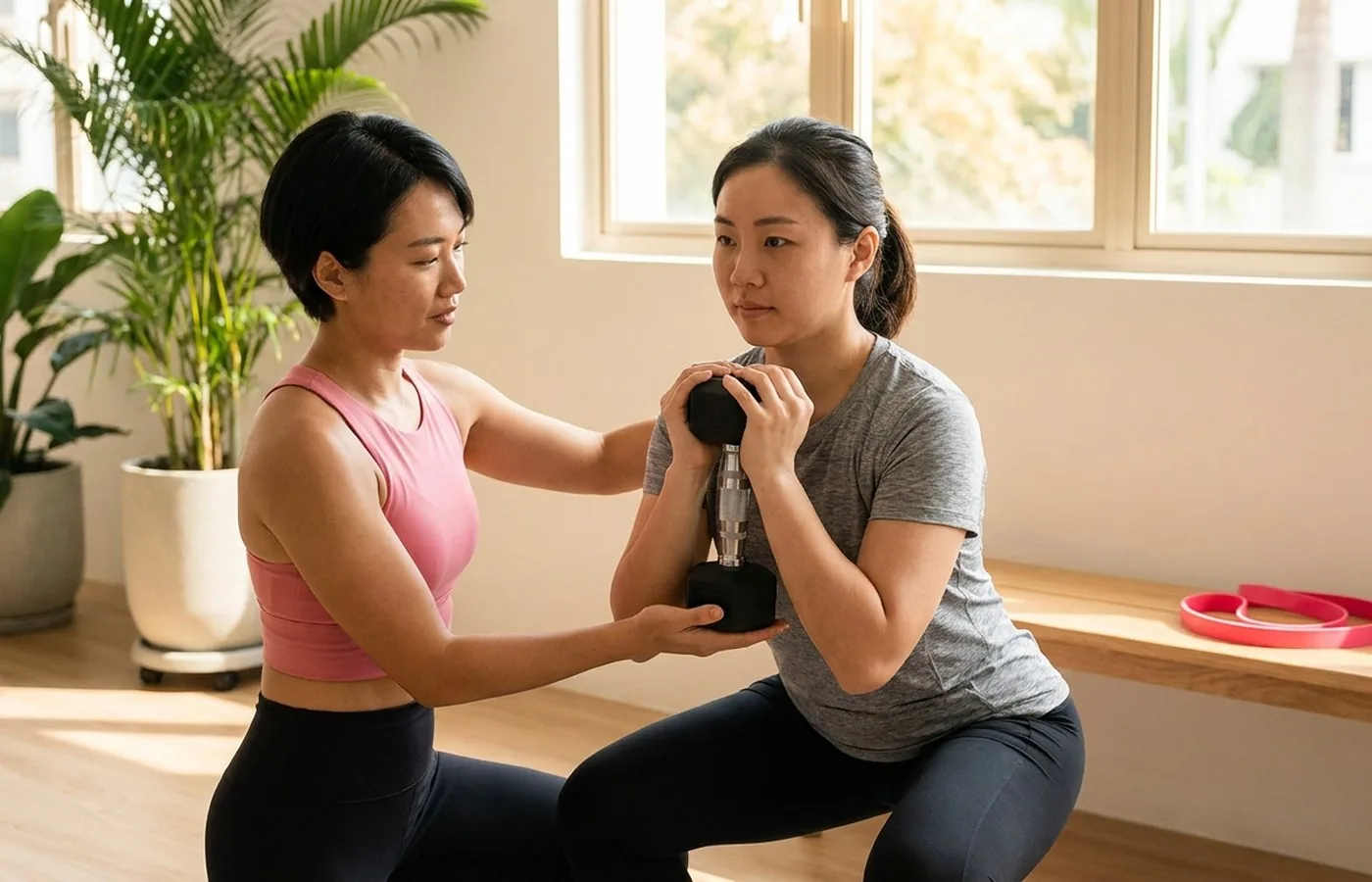
Pilates has a reputation for looking deceptively gentle right up until your body is shaking on the fifth rep of something with an unfamiliar name. Knowing roughly what to expect, what to wear, and what beginners usually get wrong can take a lot of the nervousness out of your first class.
Key points
- A beginner Pilates class focuses on control and alignment more than speed or intensity.
- You do not need special gear beyond fitted, non-slip clothing.
- Common first-class mistakes usually come from rushing or holding your breath.
- Arriving a little early to talk to the instructor makes the whole class easier.
What happens in a beginner Pilates class
A typical class starts with breathing and basic core activation before moving into a series of controlled exercises, either on a mat or on equipment like a reformer if the studio has one. Expect a lot of instruction around alignment: where your ribs should sit, how your pelvis should be positioned, and how to breathe through each movement rather than holding your breath.
The pace is usually slower than a typical gym class, which can be misleading. Slow does not mean easy. Many beginners are surprised by how much a controlled, small-range movement can challenge muscles they did not realise were weak. If group fitness classes generally make you nervous, our first gym visit guide covers those nerves more broadly.
Expect the instructor to spend real time on your setup before the exercises even start: where your pelvis sits, how your shoulders are positioned, how your feet are placed. That setup phase can feel slow if you are used to classes that jump straight into movement, but it is doing real work, since most of what makes Pilates effective happens in that quiet alignment before anything looks dramatic.
What to wear and bring to your first class
- Fitted, non-slip clothing, since loose fabric can get caught in equipment or bunch up during floor work.
- Grip socks, if the studio requires them, since bare feet can slip on mats or equipment.
- A small towel and water bottle, even though the class itself is lower intensity than cardio.
- A light layer, since some studios keep the room cooler than a typical gym floor.
Avoid baggy shorts or loose tops if you are doing anything on a reformer, since equipment straps and springs can catch on loose fabric more easily than you would expect.
Use this as a starting point, then adjust for your body, conditions and professional advice. A plan is useful only when it responds to you.
Common first-class mistakes and how to avoid them
The most common mistake is holding your breath during effortful moves, which makes the exercise harder and less effective. Instructors will often remind you to exhale on the exertion, similar to other strength training, so try to follow that cue rather than tensing through it silently.
Another common mistake is rushing the movement to keep pace with more experienced classmates. Pilates rewards control far more than speed, so slowing down usually improves your results rather than holding you back. If you are building this into a longer-term routine rather than a one-off try, the Habit Planner can help you set a realistic weekly target from week one.
A third common mistake is comparing your first class to someone else's tenth. The person next to you flowing smoothly through a sequence has simply repeated it more times, not necessarily worked harder or been naturally more capable. Give your own body the same patience you would give a beginner at anything else.
How to walk into your first Pilates class feeling ready
Arrive ten minutes early if it is genuinely your first time. Tell the instructor directly, mention any injuries or concerns, and ask where to set up if the room is not obvious. Most instructors appreciate that heads-up far more than watching you guess your way through the first few exercises.
Give yourself two or three classes before deciding how you feel about it. The first one is often mostly about learning the vocabulary and setup, and the real benefit tends to show up once the basic positions stop feeling unfamiliar. If posture from a desk job is part of why you are trying Pilates, our desk posture and mobility guide covers the bigger picture beyond the studio too. If you want more beginner-friendly training guides, the fitness hub is a good place to keep browsing.
Expect a slightly odd kind of soreness the next day, often in your deep core or your inner thighs rather than the big, obvious muscles a gym session usually targets. That is a normal sign the smaller stabilising muscles got real work, not a sign that anything went wrong in your first class.
More on this topic from the archive: How to Find a Pilates Class in Singapore That Strengthens Your Core, What to Know Before You Sign Up for Yoga Teacher Training and Inside the Multi-Studio Concept Bringing Cycling, Yoga, and Pilates Under One Roof.
This article provides general education and is not a diagnosis or a substitute for personalised medical care. Stop exercise and seek appropriate help for severe, sudden or concerning symptoms.
Everything You Need to Know Before Your First Pilates Class: questions answered
Do I need to be flexible to start Pilates?
+
No. Pilates builds flexibility and control over time rather than requiring it beforehand.
Should I eat before a Pilates class?
+
A light snack an hour or so beforehand usually works better than a heavy meal or an empty stomach.
Is Pilates enough exercise on its own?
+
It builds real core and postural strength, but many people pair it with cardio or other strength training for a fuller routine.