Your first gym visit is an orientation, not an exam. Learn the space, complete a short plan and leave knowing what to repeat.
Key points
- Tour the space before your first workout.
- Start with a short repeatable session.
- Wipe equipment and give others space.
- Ask staff before forcing a pin, lever or seat catch.
Before you arrive
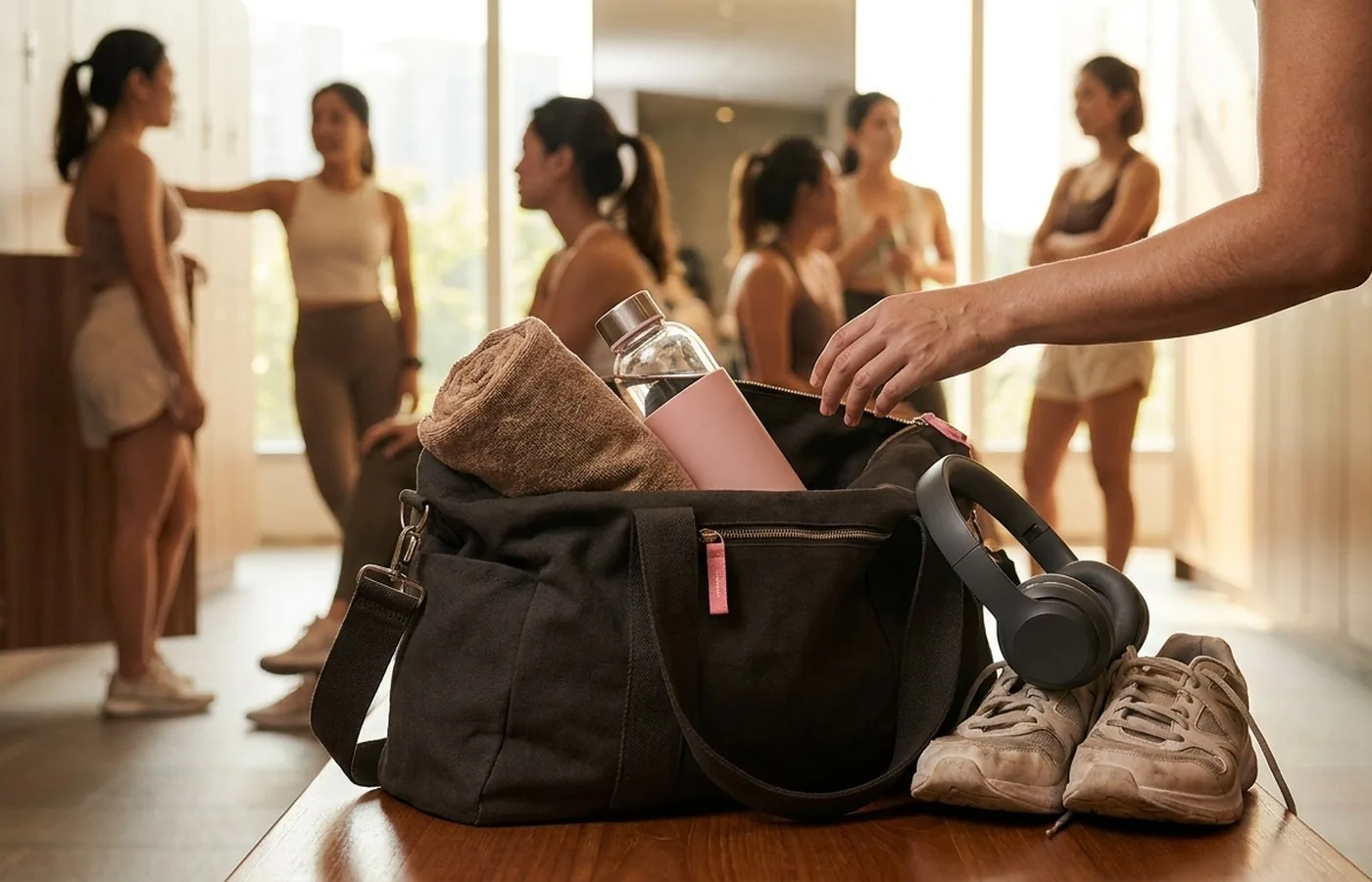
Check the basics on the website so nothing surprises you at the door: sign-in rules, whether clean indoor shoes are required, if you must bring your own towel and which hours are busiest. Mid-morning and early afternoon are usually calmer than the evening rush. Pack water, a small towel, a lock if the lockers need one and a dry change of clothes, because you will be damp by the time you leave. Write the session into your phone before you go. Standing on the gym floor inventing a workout is what makes first visits feel long.
If you do not have a session to write down yet, the Workout Builder will put one in order for the time you have and the equipment you expect to find.
Take a lap before you lift anything
Spend the first five minutes walking the floor. Find the toilets, the water point, the mats, the dumbbells and one cardio machine you know how to switch on. Notice where the free weights end and the machines begin, and where the quiet corners are. This is the cheapest confidence you will ever buy. Most of the awkwardness people describe comes from not knowing where things are, not from anyone watching them. Once the layout makes sense, the session is just exercises you already understand in an unfamiliar room.
Use this as a starting point, then adjust for your body, conditions and professional advice. A plan is useful only when it responds to you.
Do a five-move session
Keep the plan short enough to finish. Warm up for five minutes on a bike or treadmill, then work through a leg press or supported squat, a chest press, a cable row, a hip hinge and a loaded carry. One or two sets of each, at a weight you can control for eight to twelve repetitions, is plenty for a first visit. Rest as long as you need between sets. Five moves covers the whole body, takes about half an hour and leaves you with something to repeat rather than a session you can only survive once.
Those five are the squat, push, pull, hinge and carry patterns that our first four weeks of strength training is built around, so a first visit doubles as the opening session of a real plan rather than a look around.
How to approach a machine you have never used
Almost every machine carries a diagram on the frame showing the movement and the muscles it works. Read it, set the seat so the moving part lines up with the joint it is meant to move, and start with the lightest plate on the stack. Do two or three slow repetitions to see how it feels before choosing a weight. When a pin, lever or seat catch does not make sense, ask a staff member instead of forcing it. Setting a machine up wrong is the most common way beginners end up sore in places the exercise never meant to reach.
The free-weight area is not members-only
Racks and dumbbells can look like they belong to the regulars, but they are shared equipment and you are allowed to use them. Carry the pair you want to a clear patch of floor or a bench rather than standing directly in front of the rack. Start lighter than you think, since dumbbells ask more of your balance. Mirrors are there for checking your own technique. Nobody is keeping score of what you lifted, and the people who look most at home are usually the ones happiest to answer a short question.
A wall of mirrors is still a lot to stand in front of on day one. If that is the part you dread rather than the exercises, the body-neutral approach to training is a more useful read than any technique cue.
Shared-space etiquette
The rules are simple and mostly about the next person. Put weights back where they came from, wipe down anything you sweated on, and do not spread one session across three stations. Rest beside your equipment rather than in a walkway, and offer to share a bench or rack when someone is waiting. Do not film other people, and if you are recording your own sets, angle the phone so nobody else is in frame. Following those few things makes you an unremarkable gym member, which is the goal.
Leave while it still feels manageable
Finish before you are wrecked. A first visit is orientation, and walking out with energy left is what makes returning easy; struggling down the stairs afterwards is what makes people quietly cancel. Write down one thing that went well, one machine to try next and one question for staff. Expect some muscle soreness a day or two later, which usually settles. Sharp pain during a movement, chest pain, dizziness or breathlessness that does not match the effort mean stop and get proper advice rather than pushing through.
Weeks will come when you cannot get there at all. A 20-minute session at home covers the same ground with a chair and a loaded backpack, and it keeps the next gym visit from feeling like starting again.
Know what help gym staff can and cannot provide
Front-desk or floor staff can usually explain entry rules, show where equipment is and demonstrate how a machine adjusts. Ask before moving a pin or lever you do not understand. A personal trainer can provide more individual programming, but check qualifications, scope, fees and cancellation terms before buying a package. Tell the trainer about injuries, medical advice and movements that do not feel safe.
You do not need to agree to body measurements or transformation photos to receive useful instruction. During busy periods, have a substitute for each exercise so waiting does not derail the plan: a dumbbell row for a cable row, or a chair squat for a busy leg press. Keep valuables secure and follow the gym's towel and footwear rules.
Confidence grows from knowing how the space works, not from pretending you already know everything.
Plan the second visit before leaving
Save the same quiet time in your calendar and keep most of the first session unchanged. Familiarity lowers the mental load. Add one new machine or question, not an entirely new programme. A predictable second visit is usually more useful for confidence than making the first one long enough to need several recovery days.
Arrive at the gym with a simple plan
Use a ready-made session and beginner guidance to reduce guesswork.
- Build your first gym workoutChoose beginner level, time and available equipment.
- Learn the first four weeks of strengthUnderstand sets, repetitions and progression.
- Schedule the return visitAttach training to a stable weekly cue.
This article provides general education and is not a diagnosis or a substitute for personalised medical care. Stop exercise and seek appropriate help for severe, sudden or concerning symptoms.
Your First Gym Visit: A No-Awkwardness Guide: questions answered
What should I wear?
+
Comfortable clothes that allow movement and clean closed-toe training shoes are suitable for most gyms.
Will people judge me?
+
Most people are focused on their own session. A clear plan also reduces self-consciousness.
Do I need a personal trainer?
+
No, but a qualified trainer can help with technique, accessibility and programme design.
How sore should I expect to be?
+
Mild stiffness for a day or two is normal after new exercise. Pain that is sharp, one-sided or lasting more than a few days deserves a check with a clinician.