Arms and back tend to get neglected once life gets busy, mostly because a proper upper-body session sounds like it needs a full gym visit. It does not. A tight fifteen-minute circuit, done with just your body weight or a light set of dumbbells, can genuinely build strength and shape in these areas if you keep at it.
Key points
- Fifteen focused minutes can build real arm and back strength if the exercises are chosen well.
- Rows and pulling moves matter as much as pushing moves for a balanced upper body.
- Slow, controlled reps beat fast, sloppy ones for both safety and results.
- Consistency across weeks matters more than the length of any single session.
What a short arms-and-back session can realistically do
Fifteen minutes is not enough time to build a bodybuilder's back overnight, and nobody should promise you that. What it can do is build real strength over weeks of repetition, improve your posture by strengthening the muscles that pull your shoulders back, and give definition to arms that have been neglected during a season of only doing cardio.
The key is picking a small number of exercises that hit the front, back, and sides of your upper body, rather than doing endless variations of the same movement. If you want a broader structure around a session like this, the Workout Builder can help you build out a full week that includes this circuit alongside other training.
A lot of people avoid upper-body training because they associate it with heavy barbells and complicated machines. This circuit needs neither. It uses your own body weight, plus whatever light weights or filled bottles you already have at home, which makes it one of the more realistic sessions to repeat three times a week without excuses about equipment or gym access.
The 15-minute workout
- Push-ups (or knee push-ups): 40 seconds of work, 20 seconds rest. Keep your body in a straight line.
- Bent-over rows: Use dumbbells or filled water bottles. Squeeze your shoulder blades together at the top.
- Tricep dips off a sturdy chair: Keep elbows pointing back, not flaring out to the sides.
- Reverse fly: Light weights, slight bend in the knees, focus on the upper back squeezing together.
- Bicep curls: Slow and controlled, no swinging the weight up with momentum.
- Plank to downward dog: Move slowly between the two positions to challenge shoulder stability.
Repeat the full circuit twice for a fifteen-minute session. If it feels too easy by the second round, slow your tempo down rather than rushing through more reps.
Use this as a starting point, then adjust for your body, conditions and professional advice. A plan is useful only when it responds to you.
Form cues and how to progress over time
Keep your neck relaxed during rows and curls, since a lot of people quietly tense their neck instead of their target muscles under light fatigue. Breathe out on the effort part of each move, like pushing up or pulling the row toward you, rather than holding your breath through the whole set.
Once bodyweight push-ups and light dumbbell work start to feel easy, add a bit more weight or slow the tempo down further before adding more reps. Our beginner strength guide covers how progression should work if you are new to structured lifting, so you are not just guessing when to add load.
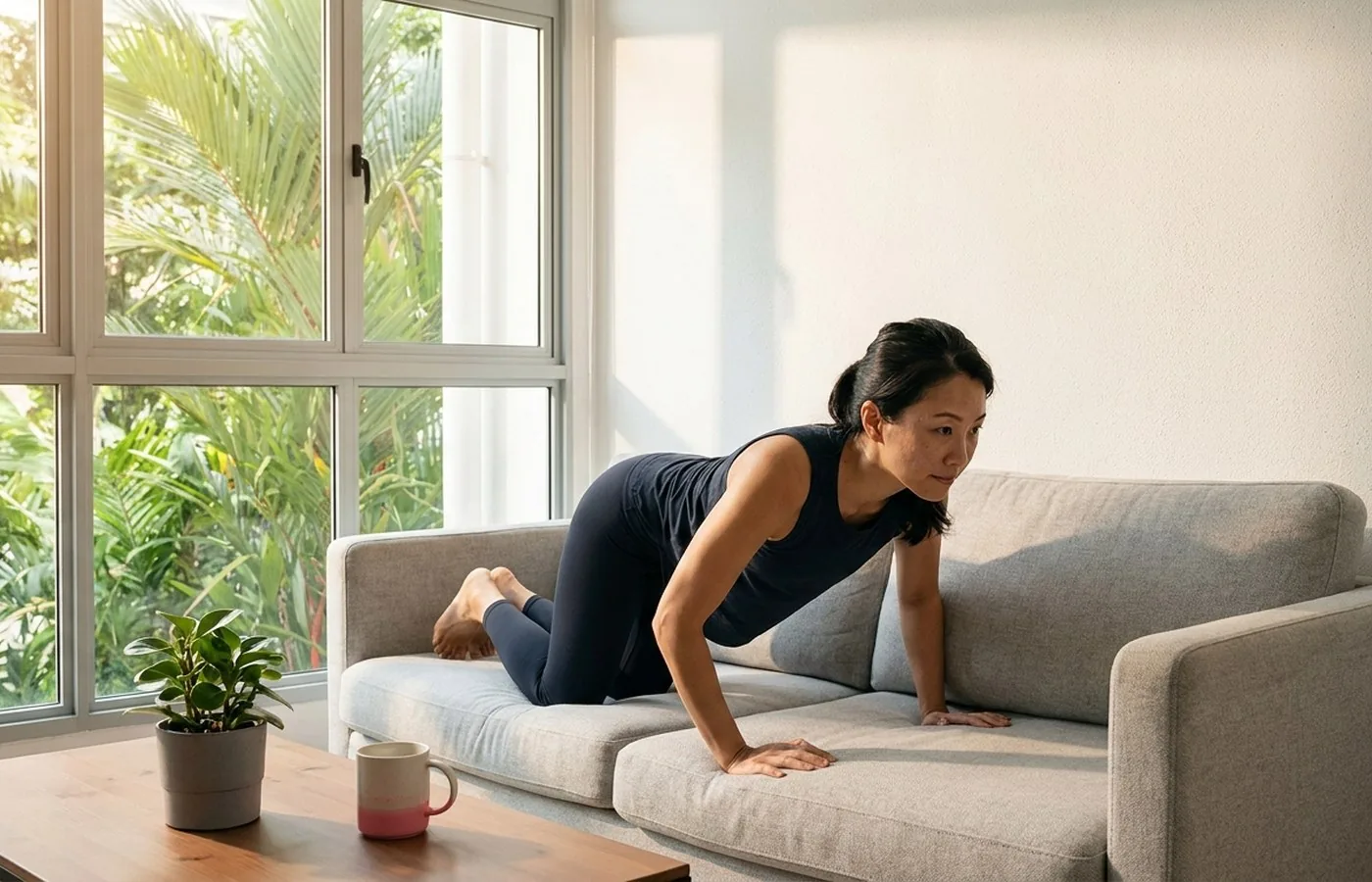
If a full push-up is still too much, drop to your knees rather than skipping the movement entirely. The knee version still trains the same muscles through the same range of motion, and most people move up to the full version faster than they expect once they stop avoiding push-ups altogether.
How this 15-minute workout builds stronger arms and a sculpted back over time
Visible arm and back changes take weeks of repetition, not one good session. Three sessions a week for a month is a realistic starting target, and most people notice their push-ups and rows feeling easier by then, even before the mirror shows much difference.
Pair this session with enough protein and recovery for the muscle to adapt. If sleep has been short, our recovery guide explains why the changes you are working for mostly happen overnight, not during the workout itself. And if you want another short session to alternate with this one, our 20-minute home workout covers the rest of the body in the same efficient style.
Track how the session feels rather than only watching the mirror. Once push-ups feel controlled instead of shaky, once rows start to feel light, that is real evidence of progress showing up before it becomes visible. The mirror usually catches up later, and it is a far less discouraging way to judge fifteen honest minutes of work.
More on this topic from the archive: An 8-Minute Workout for Stronger, More Toned Arms, Lower Ab Exercises That Build a Stronger Core and Bodyweight Moves That Spike Your Heart Rate in Under a Minute.
This article provides general education and is not a diagnosis or a substitute for personalised medical care. Stop exercise and seek appropriate help for severe, sudden or concerning symptoms.
Do This 15-Minute Workout for Stronger Arms and a Sculpted Back: questions answered
Do I need dumbbells for this workout?
+
No. Filled water bottles or bands work fine if you do not have dumbbells at home.
How often should I do this arms-and-back circuit?
+
Three sessions a week, with a rest day between, is a solid starting point for most people.
Will this workout alone give me a sculpted back?
+
It helps a lot, but overall body fat and full-body training also affect how visible the shape becomes.