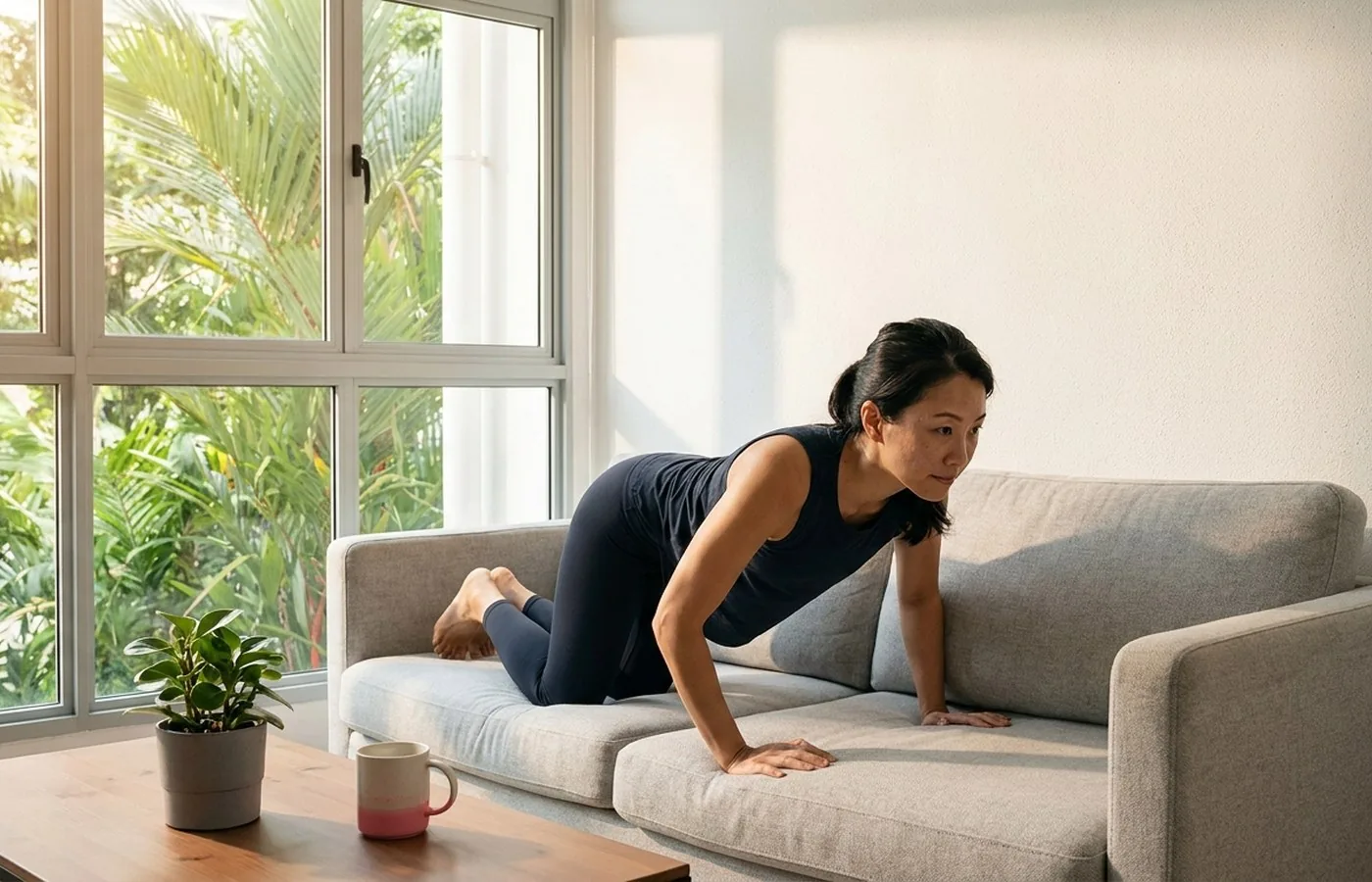
Pregnancy changes what your body needs from a workout, and yoga is one of the few forms of movement flexible enough to adapt through nearly every trimester. It is not automatically safe just because it looks gentle, though. A few clear dos and don'ts make the difference between a class that supports your pregnancy and one that pushes past what your body needs right now.
Key points
- Prenatal yoga can support strength, sleep, and stress through pregnancy when adjusted correctly.
- Deep twists, lying flat on your back for long periods, and hot yoga are common poses and settings to avoid.
- A teacher trained in prenatal modifications matters more than the studio's general reputation.
- Your own energy and comfort should always override a set sequence, especially as pregnancy progresses.
The dos: what helps most during a prenatal practice
Gentle, prenatal-specific classes tend to focus on hip opening, pelvic floor awareness, breathing practice, and building strength in a way that supports labour and recovery rather than chasing intensity. Consistency across the trimesters, adjusted as your body changes, tends to matter more than any single dramatic session.
Breathing work in particular carries over directly into labour, where controlled breathing is a genuinely useful tool. If sleep has become harder as pregnancy progresses, a short evening prenatal sequence paired with the basics in our sleep and recovery guide can help settle a restless night more than either alone.
Regular, gentle movement through pregnancy has also been linked to easier labour and faster physical recovery afterward for a lot of women, alongside better mood and lower stress. None of that requires an intense practice; a steady, adjusted one tends to matter far more than pushing hard on any single class.
The don'ts: what to skip or modify
A few adjustments matter enough to call out directly. This table covers the most common ones instructors flag during pregnancy:
| Common pose or habit | Why it needs adjusting |
|---|---|
| Deep belly twists | Can compress the abdomen; twist from the shoulders instead |
| Lying flat on your back (after first trimester) | Can reduce blood flow; prop up on an incline instead |
| Hot yoga or heated rooms | Raises core temperature more than is advisable during pregnancy |
| Deep backbends | Can strain a body already adjusting to a shifting centre of gravity |
| Holding your breath during poses | Reduces oxygen flow to you and your baby; keep breathing steady |
None of these bans are permanent or dramatic — they are simple swaps a properly trained instructor will build into class automatically.
Balance poses are another area worth extra care as pregnancy progresses, since a shifting centre of gravity can make familiar standing poses feel far less stable than before. Using a wall or a chair for support during balance work is a sensible modification, not a sign you are doing the pose wrong.
Use this as a starting point, then adjust for your body, conditions and professional advice. A plan is useful only when it responds to you.
Why the instructor matters more than the studio
A studio's general reputation says very little about whether a specific instructor understands pregnancy-specific modifications. Look for a teacher with actual prenatal yoga training, not just someone comfortable offering a gentler pace on request. Ask directly before booking if this is not clearly listed.
If you are unsure whether yoga is the right form of movement for your specific pregnancy, or you have any complications, a conversation with your doctor or a proper screening is worth having first. Our guide to women's health screenings covers what those check-ins typically involve and when they matter most.
It is also worth mentioning any specific concerns to the instructor before class starts, whether that is pelvic pain, low blood pressure, or a previous complication. A good prenatal teacher will adjust the whole class plan around that information rather than treating every student the same way by default.
How to make prenatal yoga's dos and don'ts work for your own pregnancy
Your own comfort should always outrank a set sequence, especially as pregnancy advances. If something feels wrong, painful, or simply off on a given day, skip it, modify it further, or rest instead. There is no version of "sticking to the plan" worth pushing through actual discomfort or pain for.
The wider goal is a body that feels supported, not conquered, through nine changing months. If you want more movement guidance around this stage of life, the fitness hub has a broader range of activity guides worth checking against your own doctor's advice. Prenatal yoga done well should leave you calmer and steadier, not more depleted, week after week.
Is yoga safe throughout all three trimesters?
Generally yes with the right modifications, though always confirm with your doctor, especially if you have any pregnancy complications.
Can I keep doing my regular yoga class while pregnant?
Only if the instructor is confident adjusting poses for pregnancy; a dedicated prenatal class is usually a safer bet.
What if a pose feels uncomfortable even with modification?
Skip it. Comfort and safety always matter more than completing a full sequence.
More on this topic from the archive: Aerial Yoga: What to Expect at Your First Class, Everything You Need to Know Before Your First Pilates Class and What to Know Before You Sign Up for Yoga Teacher Training.
This article provides general education and is not a diagnosis or a substitute for personalised medical care. Stop exercise and seek appropriate help for severe, sudden or concerning symptoms.
