Bones change throughout life even when you cannot feel it happening. Genetics, age, menopause, nutrition, medicines, periods, smoking, alcohol and activity all affect risk. Osteoporosis often has no symptoms until a fracture occurs. The useful response is not fear. It is to build strength, eat enough, understand personal risk and ask when screening is appropriate.
Key points
- Strength and weight-bearing activity support bones at every age.
- Calcium, vitamin D, protein and enough total food work together.
- Early menopause, missed periods and certain medicines can raise risk.
- Bone-density testing should follow individual risk and Singapore guidance.
What helps bones stay strong
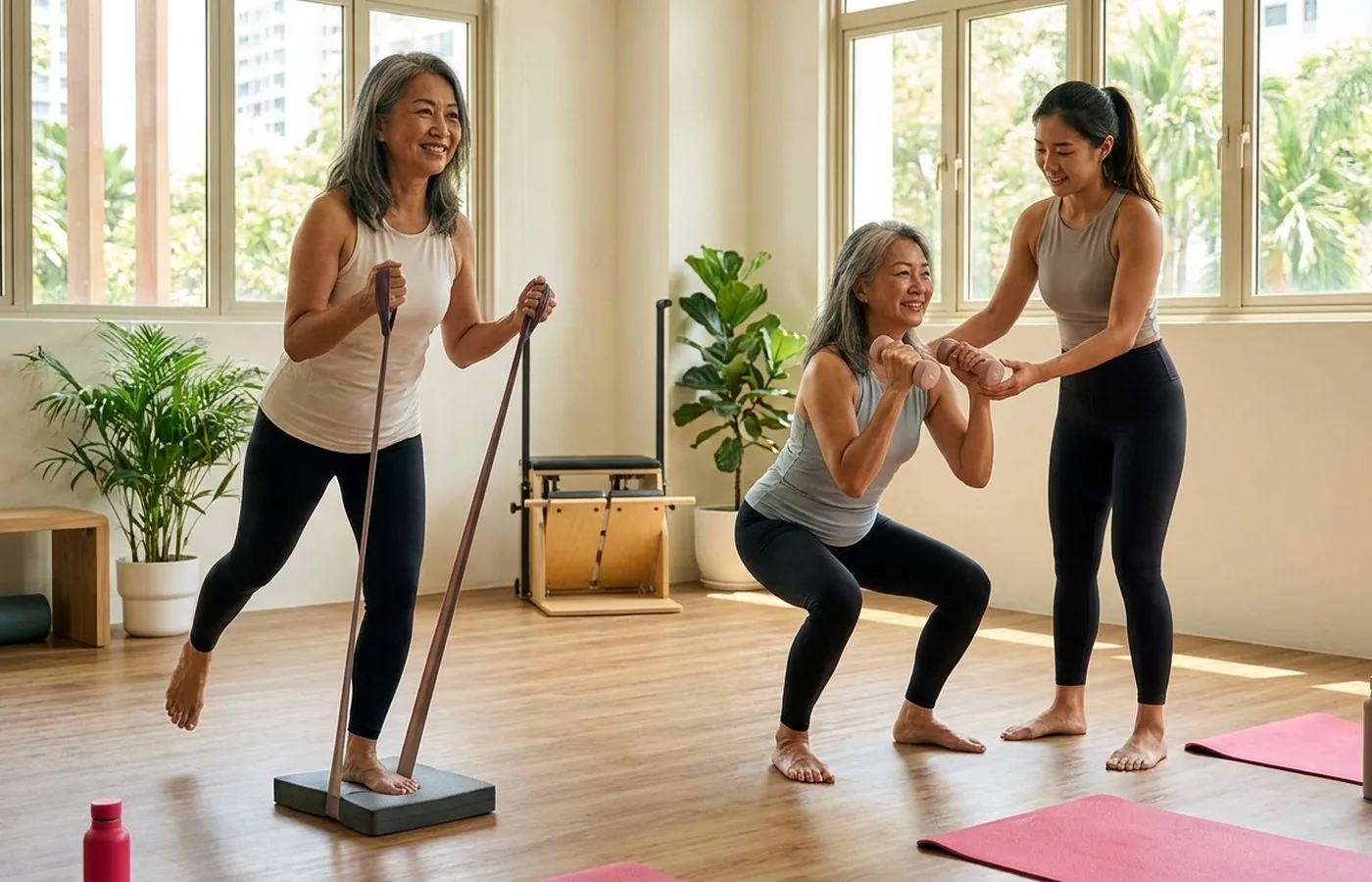
Bone responds to load. Strength training, brisk walking, stair climbing, dancing and selected impact activity can help maintain strength when they are appropriate for the person. Swimming and cycling support fitness but provide less weight-bearing stimulus, so mixing activities can be useful.
Start with the beginner strength plan and progress gradually. People with osteoporosis, previous low-impact fractures, major balance problems or significant pain need individual advice about safe loading and impact.
Food needs to provide building material
Calcium-rich foods include dairy, calcium-set tofu, fortified soy drinks, sardines with edible bones and selected vegetables. Vitamin D helps the body use calcium. Protein and enough total energy also matter, especially as muscle mass changes with age.
Use the protein guide and meal builder to make practical combinations. Supplements are not automatically better than food and can interact with health conditions or medicines. Ask what dose is appropriate before stacking products.
Use this as a starting point, then adjust for your body, conditions and professional advice. A plan is useful only when it responds to you.
How bone changes across adult life
Bone is living tissue that is broken down and rebuilt throughout life. Most of your bone is laid down during childhood and the teenage years, reaching its peak in early adulthood, after which the balance slowly tips towards loss. Around menopause, falling oestrogen speeds that loss up for a period of years before it settles into a slower decline.
None of this is a reason for alarm, and none of it is a deadline you have missed. Younger women are still building and protecting. The years around menopause are a sensible time to ask about personal risk. Later on, keeping strength and steadiness matters as much as the density itself, because most fractures follow a fall. Whatever your age, the same short list applies: load the skeleton, eat enough, and understand your own risk.
Periods, under-eating and bone
Training a lot while eating too little is one of the few bone risks that shows up in otherwise healthy young women. When the body is short of energy for long enough, periods can become irregular or stop, and bone often suffers alongside them, during the years when bone should be building rather than thinning.
Periods that disappear are a medical signal rather than a sign of being in good shape. See a doctor rather than waiting for them to return, and expect the conversation to cover food intake, training load, stress and other causes. Stress fractures, repeated bone injuries or a long history of restrictive eating are all worth raising in the same appointment.
Know the risks worth discussing
Risk can rise with age, menopause, family history, low body weight, smoking, higher alcohol intake, long periods without menstruation, eating disorders and some medicines such as prolonged corticosteroid use. A fracture after a minor fall is an important clue.
Bring these details to a GP rather than waiting for pain, because osteoporosis may be silent. The screening guide can help organise the conversation. Bone-density testing is not a general test that every young healthy person needs.
Balance and fall prevention belong in the plan
Strong bones matter, and avoiding a fall matters too. Train legs, practise balance near a stable support and check vision, footwear and trip hazards. Review medicines if dizziness or unsteadiness is a problem. A walking routine can support strength and confidence when the route and pace are suitable.
Progress balance tasks carefully. Standing on one leg beside a counter may be enough to start. Advanced unstable equipment is not required. Pain, repeated falls or new weakness need assessment rather than a harder internet challenge.
Make bone health a long-term habit
Choose two actions: two strength sessions a week and one reliable calcium-rich food each day, for example. Review the plan at life changes such as pregnancy, menopause, a new long-term medicine or a fracture. Bone health is built over years, so an extreme one-month programme offers little value.
The health hub keeps menopause, iron, screening and exercise guidance connected. Ask a clinician how your age, history and local screening recommendations apply. A good plan supports strength and independence without turning normal ageing into a disease.
Turn bone advice into a weekly routine
Choose actions that cover different jobs. Strength training challenges muscles and bones. Weight-bearing movement such as walking or stair climbing adds regular loading. Balance practice lowers fall risk, while food supplies protein, calcium and other nutrients. Sun exposure is not a simple vitamin D prescription in Singapore because skin type, clothing, time outdoors and skin-cancer risk differ; testing and supplements should be discussed when relevant.
Review the plan after a fall, fracture, long period of inactivity or major medicine change. Ask whether family history, early menopause, low body weight, smoking, heavy alcohol use or long-term steroid treatment changes your need for assessment. Sudden back pain, loss of height or a fracture after a small bump deserves medical attention rather than being treated as ordinary ageing.
This article provides general education and is not a diagnosis or a substitute for personalised medical care. Stop exercise and seek appropriate help for severe, sudden or concerning symptoms.
Bone Health for Women: Strength, Calcium and Screening: questions answered
Can walking improve bone health?
+
Weight-bearing walking can contribute, though progressive strength and suitable impact may provide additional stimulus.
Do I need a calcium supplement?
+
Not automatically. Food intake, age, health conditions and medicines determine whether a supplement is useful.
Does osteoporosis cause pain before a fracture?
+
It is often silent, which is why personal risk and appropriate screening conversations matter.