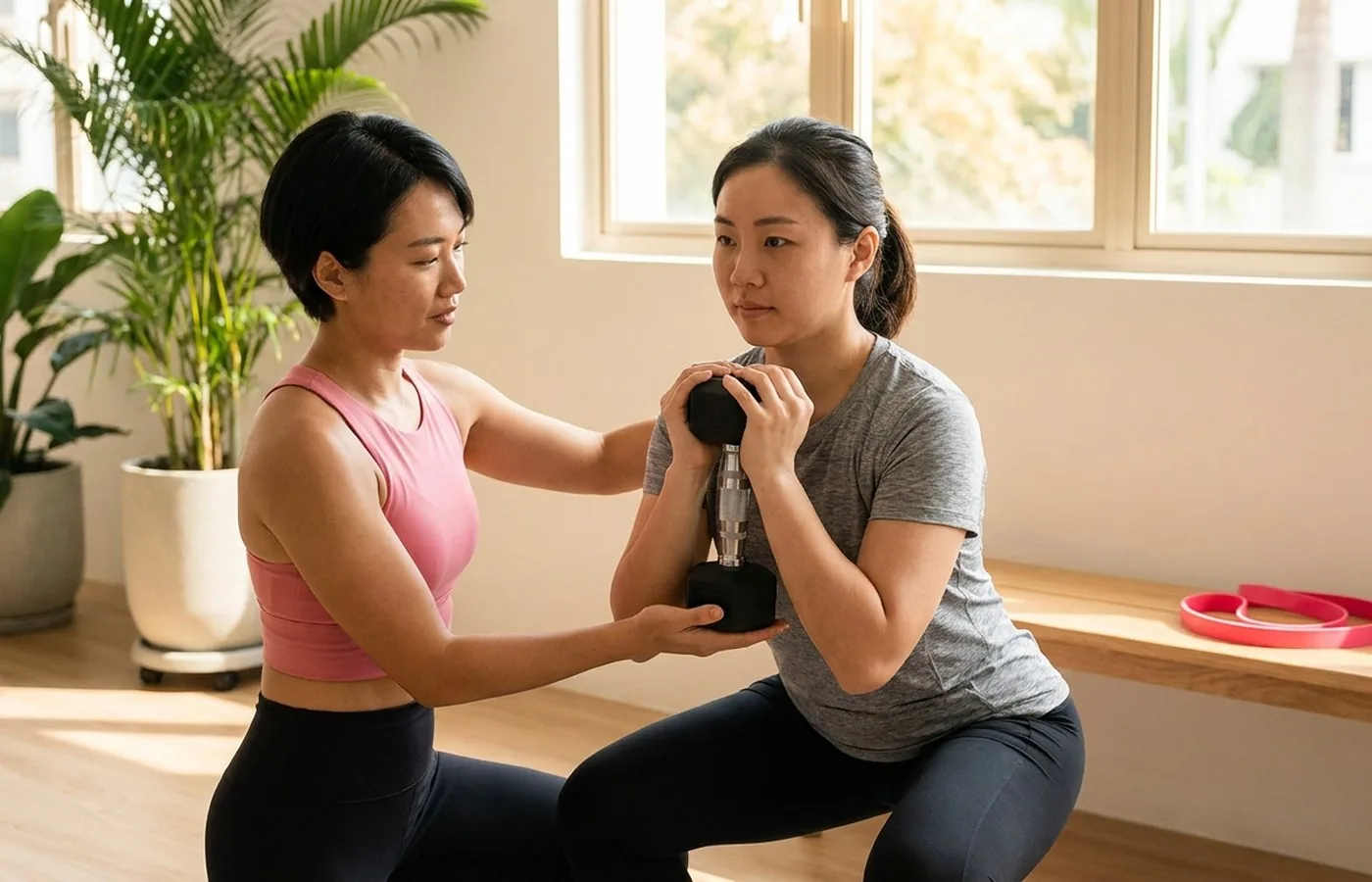
Somewhere between a one-on-one personal training session and a class of forty people doing the same moves at wildly different levels sits a format a lot of people overlook: the small-group workshop. It's usually four to ten people, a coach who can see your form, and a price that doesn't require choosing between it and rent. Here's why that middle ground works so well, and what to check before you sign up for one.
Key points
- Small-group workshops sit between costly one-on-one coaching and crowded, anonymous classes.
- A smaller group means a coach can watch and correct your form.
- The social element helps a lot of people show up when motivation alone would not.
- Not every workshop is run well, so a trial session is worth checking before committing.
What counts as a small-group workshop
The exact number varies, but most small-group formats sit somewhere between four and ten people per coach. That's small enough for the coach to notice if your squat depth is off or your deadlift form is drifting, but large enough to keep the price well below private one-on-one coaching. It's a different experience from a big group class, where one coach might be managing thirty or forty people and can only offer general cues to the room.
These workshops often run around a specific skill or goal: a strength fundamentals series, a short mobility block, a beginner's introduction to lifting, or a focused programme building toward a specific movement. That structure matters, because it gives the group a shared starting point instead of mixing complete beginners with people who have trained for years.
If you're not sure where you currently sit on that spectrum, our beginner strength guide is a useful gut check before choosing a format that assumes more experience than you have.
The real benefits of training in a small group
- A coach who can watch your technique, not just shout general instructions across the room.
- Enough people around you to create a bit of energy and accountability, without the anonymity of a huge class.
- A price point that sits well below private coaching, since the coach's time is shared across the group.
- A built-in reason to show up, since a small group tends to notice when someone stops coming.
- More room to ask questions than you'd get in a packed class, since the ratio is naturally friendlier.
This combination is a big part of why small-group formats tend to have better attendance rates over months than solo gym-going does for a lot of people. Motivation is easier to borrow from a group than to generate alone every single day.
Use this as a starting point, then adjust for your body, conditions and professional advice. A plan is useful only when it responds to you.
What to check before signing up for one
Not every workshop labelled "small group" runs that way in practice. Before committing to a block of sessions, it's worth asking a few direct questions: how many people are typically in a session, does the coach correct individual form or just lead from the front, and what happens if you're new to the specific movements being taught.
A trial class is the best way to answer these honestly. Watch whether the coach moves around the room, whether they adjust cues for people at different levels, and whether the pace feels rushed or genuinely coached. If your goal is general strength building rather than a specific skill, the Workout Builder can help you compare what a workshop is offering against what a simple self-directed plan would already cover.
It also helps to ask how the workshop handles injuries or limitations. A well-run small group should be able to offer a simple modification on the spot rather than expecting everyone to do the exact same movement regardless of how their body feels that day.
How a small-group workshop fits into your bigger fitness plan
A small-group workshop works best as one piece of a wider routine, not the entire routine by itself. It can be a great place to learn a skill properly, get consistent coaching feedback, and stay accountable for a few weeks or months. It's less useful as your only structure if your goals are broader than the specific block being taught.
If you're brand new to gym environments generally, our guide to a first gym visit can help you feel less lost walking in. For more restored content in this part of the archive, the fitness hub is where older SHAPE training pages are being rebuilt with more practical detail.
The right small-group workshop won't replace a full training plan, but it can be exactly the push a lot of people need to start one and keep it going.
Is a small-group workshop good for complete beginners?
Often yes, as long as the specific workshop is pitched at a beginner level rather than assuming existing training experience.
How long should I commit to before deciding if it's working?
Give it three to four sessions. That's usually enough to judge the coaching quality and whether the format suits how you like to train.
More on this topic from the archive: 6 Kinds of Mindfulness Workshops Worth Checking Out in Singapore, Looking Back on Guardian's Annual Beauty Awards Voting Format and Why Your Office Might Be Behind Your Sudden Breakouts.
This article provides general education and is not a diagnosis or a substitute for personalised medical care. Stop exercise and seek appropriate help for severe, sudden or concerning symptoms.
Why Small-Group Workshops Might Be the Fitness Format You're Missing: questions answered
How is a small-group workshop different from a bootcamp class?
+
Bootcamp classes often run with much larger numbers and less individual correction, while small-group workshops usually cap participants low enough for real coaching attention.