Takeaway is one of those modern habits that feels normal because it is normal. Busy day, late meeting, no groceries, one tap, dinner arrives. The problem is that convenience can hide a few different issues at once. Some are about nutrition. Some are about food safety. Some are about packaging and how hot food sits inside it. None of this means you need to panic every time you order dinner. It just means takeaway works best when you use a bit of judgement instead of treating every box and every reheated leftover as harmless.
Key points
- The main takeaway risks are usually poor food quality, oversized portions, unsafe storage, and very hot food in unsuitable packaging.
- The word “chemicals” sounds dramatic, but the real concern is limiting unnecessary exposure from damaged, low-quality, or overheated containers.
- If food sits out too long or is reheated badly, bacteria are often a bigger risk than packaging itself.
- Choose simpler meals, transfer very hot food out of plastic when possible, and cool leftovers quickly if you plan to eat them later.
What people usually mean when they worry about chemicals in takeaway food
The internet often talks about “chemicals” as if every takeaway meal comes with hidden poison. Real life is usually less dramatic. Food packaging is made from chemicals because all packaging materials are. The more useful question is whether the packaging is suitable for very hot, oily, or acidic food, and whether it is being used the right way.
For example, very hot soup or greasy food sitting in flimsy plastic for a long time is not the same as a dry, cooler item packed for a short trip. Reusing old disposable containers at home and microwaving them again can also be a worse idea than people realise. Damaged, scratched, or warped plastic deserves less trust than clean, stable containers designed for heat.
That said, packaging is only one part of the story. For many people, the more immediate health issue is that takeaway often means bigger portions, more salt, more oil, fewer vegetables, and more sweet drinks. If ordering in has become the default, the Balanced Meal Builder can help you compare what you usually buy with a more balanced plate that still feels realistic.
The bigger risk may be storage, not the box
A lot of food trouble starts after the delivery arrives. Hot food gets left on the counter for hours. Leftovers are sealed while still warm and forgotten. Rice, noodles, meat, and seafood are reheated unevenly the next day. In many homes, that is a more likely problem than trace packaging exposure.
If you know you are not eating everything, split the extra portion early and cool it properly instead of letting it sit out all evening. Reheat thoroughly once, not over and over. If the food smells odd, has been out too long, or you are honestly unsure how old it is, that is the moment to throw it away. Saving money is not worth a food poisoning weekend.
Hydration matters here too because salty takeaway meals can leave people bloated, thirsty, and sluggish. Water will not cancel out a poor meal, but it does help you recover from the usual salt load. The Hydration Planner is a good reset if your dinner routine has quietly become takeaway plus sugary drinks.
Use this as a starting point, then adjust for your body, conditions and professional advice. A plan is useful only when it responds to you.
How to order takeaway with less risk and less regret
The best takeaway order is usually the less exciting one. Choose grilled, steamed, soupy, or stir-fried dishes over the heaviest deep-fried set when you can. Add vegetables on purpose because they rarely appear by accident. If a meal comes with a sweet drink, swap it out. Small decisions like these matter more than trying to decode every rumour about food containers.
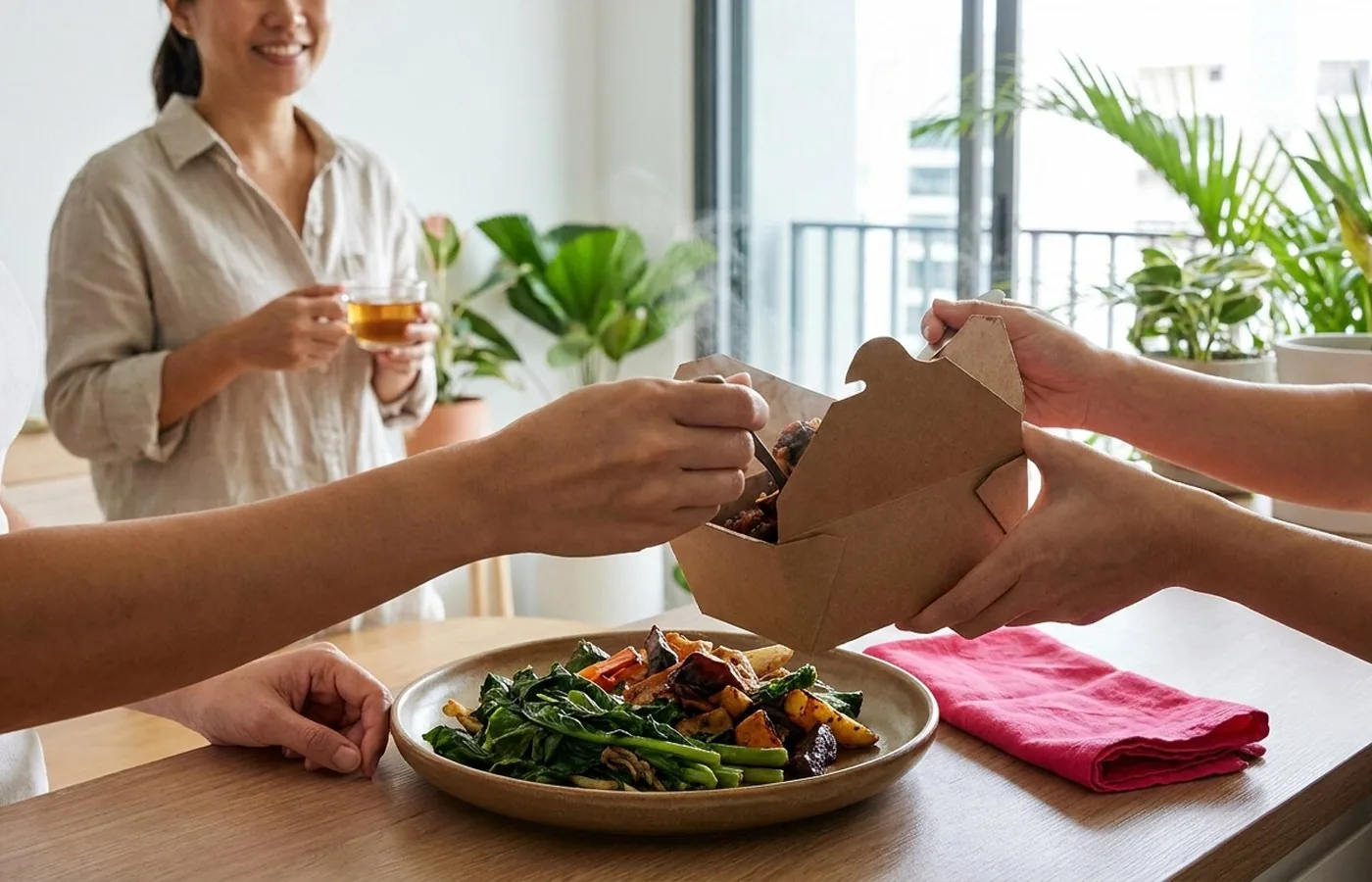
It also helps to transfer very hot food out of soft plastic if you are eating at home anyway. A bowl or plate is easy. The point is not to live in fear of one delivery box. The point is to avoid needless contact time between steaming food and packaging that was never meant to be your long-term serving dish.
If you often rely on local takeaway because life is busy, our hawker-centre guide gives practical ideas for choosing normal food without turning dinner into a health project. And if routine is the bigger issue, the 7-Day Habit Planner can help you spot how often “just tonight” happens in a week.
What to remember before buying takeaway tonight
Takeaway is not automatically bad for you. It becomes more of a health problem when convenience keeps stacking on convenience: richer meals, sweet drinks, hot food left in plastic, leftovers handled casually, and repeat orders that crowd out simpler home food. That is the pattern worth noticing.
If you want a calmer rule, use this one: order on purpose, eat the fresh portion promptly, move very hot food into proper dishes when you can, and store leftovers quickly and safely. That gives you a much better result than getting lost in scary language about “chemicals” while ignoring the very obvious problems sitting right in front of you.
For more grounded everyday health reading, the health archive is a useful next stop. Most health protection comes from small repeat decisions, not from one dramatic hack. Takeaway can stay in your life. It just should not be the part of your routine that never gets questioned.
More on this topic from the archive: Singapore Tap Water Really Safe Drink and Sleep Better Easy Ways.
This article provides general education and is not a diagnosis or a substitute for personalised medical care. Stop exercise and seek appropriate help for severe, sudden or concerning symptoms.
Is Takeaway Packaging Safe? Heat, Storage and Food Tips: questions answered
Is takeaway food unhealthy every time?
+
No. The main issue is the overall pattern, portion size, ingredients, and how safely the food is stored and reheated.
Are plastic takeaway boxes dangerous?
+
Not always, but it is sensible to avoid keeping very hot food in flimsy or damaged plastic longer than necessary.
What is the biggest safety mistake with takeaway leftovers?
+
Letting them sit out too long before chilling and then reheating them poorly the next day.