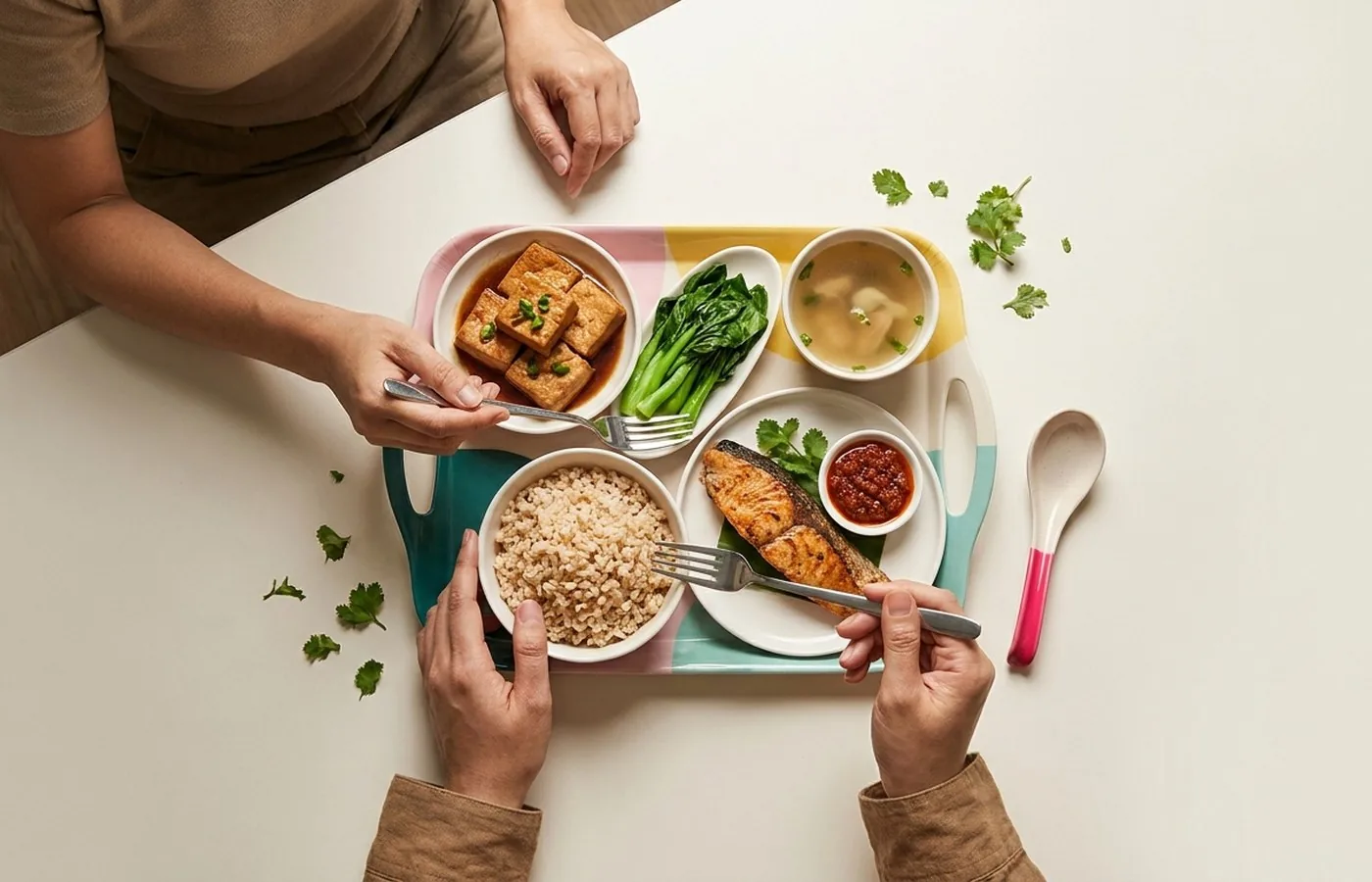
Confinement food carries a lot of tradition, and a lot of pressure to get it right. The good news is that nourishing and tasty are not opposites. With a few adjustments, you can honour the older wisdom behind confinement meals while making food that a tired, recovering new mother genuinely wants to eat.
Key points
- Confinement food traditions often focus on warmth, iron, and gentle digestion.
- Bland does not have to mean healthy. Herbs and aromatics can add flavour without heaviness.
- Protein and fibre matter just as much during confinement as at any other time.
- A new mother's appetite and energy should guide the plan, not rigid rules alone.
What confinement food is trying to do
Traditional confinement food, whether Chinese, Malay, or Indian in origin, tends to focus on a few shared goals: replacing iron and blood lost during birth, supporting milk supply, keeping the body warm, and being gentle on a digestive system that has just been through a lot. That is a reasonable set of goals, even outside of any specific tradition.
The tricky part is that many confinement recipes lean heavily on repetition and blandness, which can make weeks of meals feel like a chore rather than something to look forward to. A new mother recovering from birth, often on very little sleep, deserves food that is both nourishing and genuinely enjoyable to eat. If you want a simple way to check that meals are staying balanced across the day, the Balanced Meal Builder is a useful reference point.
How to make confinement food taste better without losing the nourishment
- Layer aromatics instead of relying on salt alone. Ginger, garlic, sesame oil, and rice wine can add real depth to soups and braises that might otherwise taste flat.
- Keep protein varied. Chicken, fish, eggs, and tofu can all rotate through the week instead of repeating the exact same dish daily.
- Add vegetables generously. Many confinement menus are light on vegetables. Leafy greens, mushrooms, and root vegetables can be cooked gently and added to soups and stir-fries without disrupting tradition.
- Use herbs with a purpose. Herbal soups built around ingredients like red dates, wolfberries, and dang gui can be flavourful when balanced properly, not just medicinal-tasting.
- Vary the cooking method. Braising, steaming, and gentle stir-frying all suit confinement eating and offer different textures across a week of meals.
The idea is not to abandon tradition. It is to cook it with the same care you would give any meal you want to sit down and enjoy.
Use this as a starting point, then adjust for your body, conditions and professional advice. A plan is useful only when it responds to you.
Building confinement meals around real nutrition needs
New mothers, especially those breastfeeding, need steady protein, iron, and calories to support recovery and milk production. A confinement plan that is mostly rice porridge and thin soup may follow tradition but fall short on actual nourishment. Building meals with a clear protein source, a vegetable side, and a wholegrain or rice portion each time helps cover those bases more reliably.
Fibre also matters more than people expect during this period, since some confinement diets are quite low in it, which can make digestion harder rather than gentler. Including cooked vegetables, fruit, and whole grains where tradition allows can support this without contradicting the general spirit of confinement eating.
Fluids matter too, particularly for mothers who are breastfeeding, since milk production draws on the body's water reserves more than people expect. A warm soup-heavy confinement diet often helps here naturally, but it is still worth paying attention if thirst or dark urine become noticeable signs of falling behind.
If a new mother's own diet outside of confinement has generally been on track already, our guide on protein needs for active women gives a useful general baseline, even though postpartum needs shift somewhat from typical activity-based guidance.
How to cook confinement food that a new mum will enjoy
The best confinement food plan blends respect for tradition with genuine attention to taste and appetite. A tired new mother is more likely to eat, and to eat enough, if meals taste good and offer some variety across the weeks. Bland food eaten reluctantly does less good than flavourful food eaten with real appetite.
Involve the new mother in what she enjoys where possible, rotate proteins and vegetables through the month, and lean on aromatics rather than excess oil or salt for flavour. If you want more practical food content in this same spirit, the food hub is where older SHAPE nutrition guides are being rebuilt with clearer, more useful advice.
Should vegetables be limited during confinement?
Not usually. Many traditional plans are light on vegetables, and adding more can support digestion and overall nutrition without breaking tradition.
More on this topic from the archive: A Tasty, Healthy Overnight Oats Recipe You'll Make Again, 8 Smart Kitchen Tips Every Home Cook Should Know and Vegetables You Can Cook Fast Without Making a Mess of Dinner.
This article provides general education and is not a diagnosis or a substitute for personalised medical care. Stop exercise and seek appropriate help for severe, sudden or concerning symptoms.
How to Cook Tasty, Nourishing Confinement Food: questions answered
Does confinement food have to be bland to be healthy?
+
No. Aromatics like ginger, garlic, and sesame oil can add real flavour without undermining the nourishing intent behind confinement meals.
How important is variety during confinement?
+
Quite important. A new mother is more likely to eat enough if meals rotate through different proteins, vegetables, and cooking styles rather than repeating one dish for weeks.