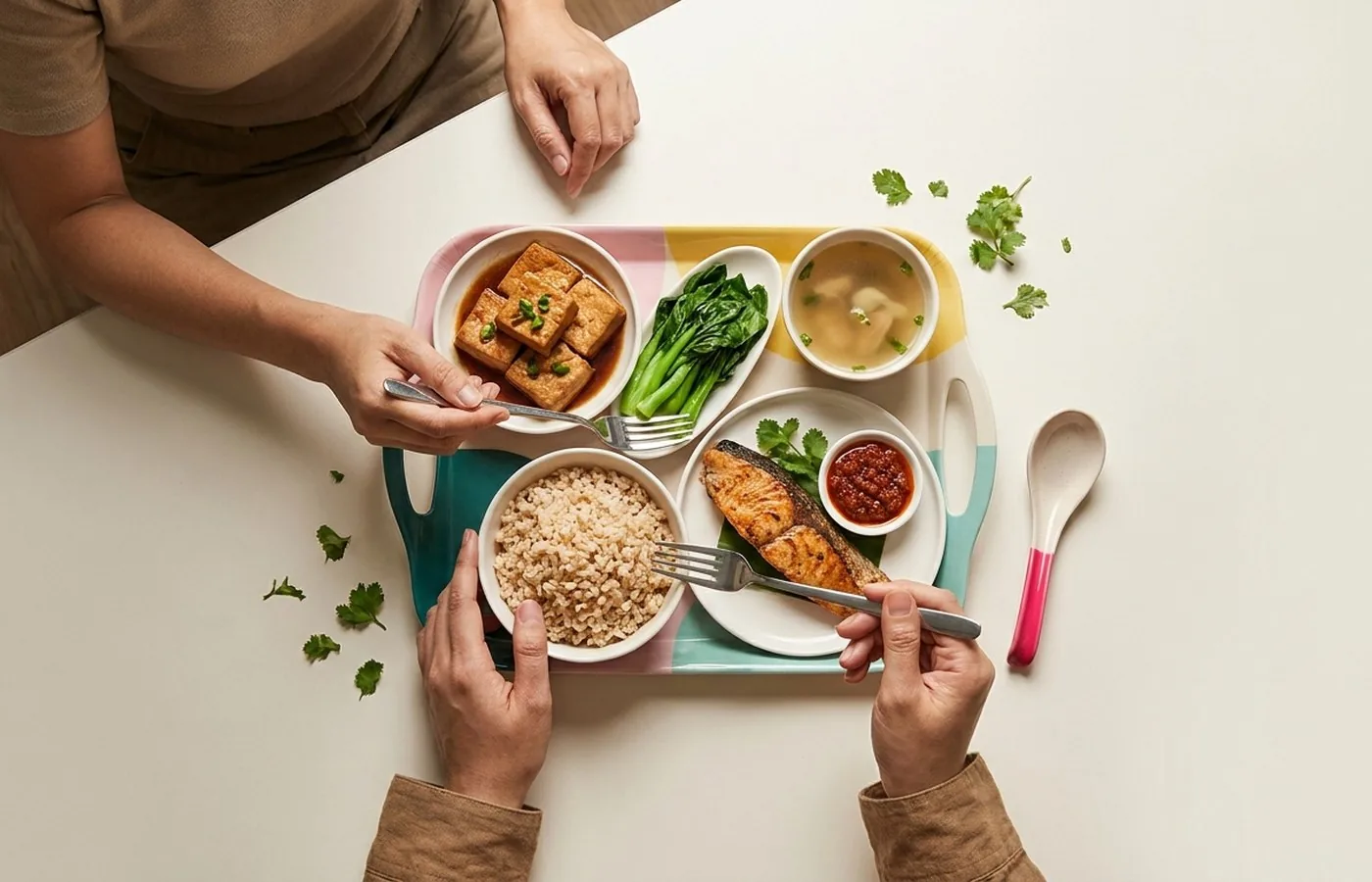
Most people do not need a perfect fibre score. They need a few more plants showing up in familiar meals. That can mean fruit, beans, oats, vegetables, wholegrains, or seeds. Start where the food already fits.
Key points
- Add fibre by building onto meals you already eat.
- Small daily changes work better than one giant healthy shopping trip.
- Water matters too, especially if you suddenly eat much more fibre.
- Local food can carry fibre well when you make a few smart swaps.
Why fibre helps more than people think
Fibre helps with fullness, digestion, blood sugar control, and keeping meals more steady. For some people, it also makes weight management easier because food feels more satisfying for longer. That matters a lot if you are always hungry two hours after eating.
The good news is that you do not need to become a totally different eater. You can start with normal meals and add one useful fibre source at a time. If meal balance is your weak spot, the Balanced Meal Builder can help you see where fibre is missing without making you count every gram.
People often think fibre means salads only. It does not. Oats, fruit, beans, lentils, nuts, seeds, vegetables, and wholegrains all count. The trick is to stop treating fibre like a special health task and start treating it like a normal part of food.
The five easiest ways to add more fibre
1. Add fruit to one meal a day. Bananas, berries, apples, pears, and guava are easy wins.
2. Double the vegetables in meals you already like. Soup noodles, rice bowls, omelettes, and wraps can all handle more veg.
3. Use beans, lentils, or tofu more often. These add fibre and protein at the same time.
4. Swap one refined carb for a higher-fibre option. Oats, wholegrain bread, brown rice, and higher-fibre noodles can help if you enjoy them.
5. Keep one fibre snack around on purpose. Roasted chickpeas, fruit, yoghurt with seeds, or edamame beat wandering through the kitchen hoping a better idea appears.
Do not try all five in one day if your stomach is not used to it. Build slowly, and drink enough fluid while you do it. The Hydration Planner can help you avoid the “healthy but suddenly bloated” problem that happens when fibre goes up and water does not.
Use this as a starting point, then adjust for your body, conditions and professional advice. A plan is useful only when it responds to you.
Easy fibre wins at the hawker centre and supermarket
At the hawker centre, add vegetables to noodle soup, choose one extra vegetable side with economy rice, or order fruit later instead of treating lunch like the only food event of the day. Our balanced hawker-centre guide walks through this in a very practical way.
At the supermarket, look for foods that lower friction: frozen vegetables, ready-washed salad, fruit you like, canned beans, microwave brown rice, oats, and wholegrain wraps. Convenience helps. It is not cheating.
If weeknights keep falling apart, our meal-prep system helps you set up flexible building blocks so fibre has somewhere to land.
You can also stack fibre into foods you already buy. Stir seeds into yoghurt. Add beans to soup. Mix fruit into cereal. Add extra vegetables to fried rice. These are not fancy nutrition hacks. They are just easy ways to make normal meals work a little harder for you.
How to sneak more fibre into your meals without making food feel like homework
The easiest fibre plan is the one that matches your normal life. Add fruit to breakfast. Add beans to lunch twice a week. Add one vegetable side at dinner. That is already meaningful. You do not need to become the kind of person who talks about chia seeds all day.
Also remember that fibre is not a moral badge. Some days you will eat lower-fibre food and move on. The goal is a better average, not a perfect record. If you want more old food topics restored as proper pages, the food archive hub now keeps those original SHAPE URLs live while we rewrite them for the new site.
Make fibre easier, and your meals often get better in three ways at once: fuller, steadier, and less snacky later. That is a very good trade.
If you are far below where you want to be right now, do not leap from zero to perfect. That is when stomach complaints show up and people decide fibre does not suit them. Build slowly, drink enough, and give your body a week or two to settle. Gentle changes usually stick better than dramatic ones.
Do I need a fibre supplement?
Some people use one, but food is a good first step unless a clinician tells you otherwise.
More on this topic from the archive: 8 Healthy Seeds Worth Adding to Your Meals, What to Look For When Buying Home-Cooked Meals Through an App and What Makes a Reasonably Priced Omakase Meal Worth It.
This article provides general education and is not a diagnosis or a substitute for personalised medical care. Stop exercise and seek appropriate help for severe, sudden or concerning symptoms.
5 Easy Ways to Sneak More Fibre Into Your Meals: questions answered
What if more fibre makes me bloated?
+
Increase it slowly, drink enough water, and notice which foods feel best for you.
Is fruit too sugary to count?
+
No. Whole fruit can absolutely be part of a fibre-rich diet.