Runner's knee is one of the most common complaints among people who run regularly, and it rarely shows up out of nowhere. It usually builds slowly from a mix of training load, weak supporting muscles, and habits that are easy to overlook until the ache becomes hard to ignore. Here is what helps prevent it.
Key points
- Runner's knee is usually caused by overload, weak hips and glutes, or a sudden jump in training, not bad luck.
- Strengthening the hips and glutes does more for kneecap pain than stretching the knee itself.
- Ramping up mileage too fast is one of the most common and preventable triggers.
- Catching early warning aches matters more than pushing through them.
What runner's knee is
Runner's knee, known more formally as patellofemoral pain syndrome, is an ache that usually sits around or behind the kneecap. It tends to show up during running, going down stairs, or sitting for a long time with your knees bent. It is not usually a sign of serious damage. It is more often a sign that the kneecap is tracking slightly off its groove, putting uneven pressure on the joint as it moves.
That off-track movement is often driven by muscles further up the chain, especially weak or under-used hips and glutes, rather than a problem in the knee itself. That is why fixing runner's knee is rarely about the knee alone. If you are building or rebuilding a running routine, our guide to running in Singapore's heat covers pacing and load alongside the climate side of things, which matters just as much for injury prevention.
The habits that prevent it
- Build mileage gradually. A common guideline is to raise weekly distance by no more than about 10 percent, though the exact number matters less than avoiding sudden jumps.
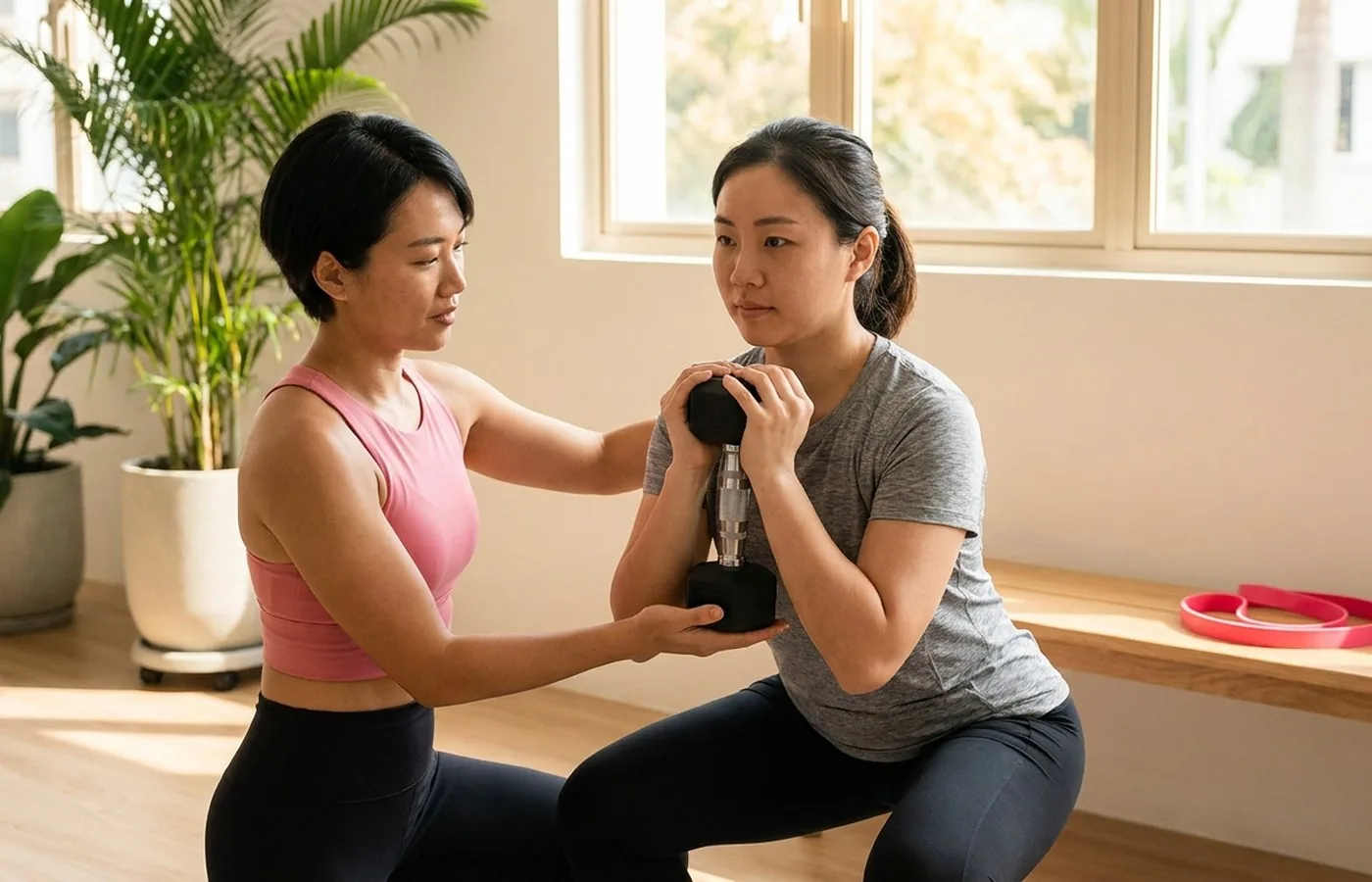
- Strengthen your hips and glutes. Side-lying leg raises, clamshells, and single-leg glute bridges directly target the muscles that keep your kneecap tracking properly.
- Check your running surfaces. Rotating between road, track, and softer trail can reduce repetitive strain on the same joint angles.
- Replace worn shoes. Shoes that have lost their cushioning no longer absorb impact the way they did when new, which shifts more load onto your joints.
- Warm up with movement, not just stretching. A few minutes of leg swings, walking lunges, and easy jogging prepares the joint better than static stretches alone.
If you want a simple way to build hip and glute strength into your week without overhauling your whole schedule, the Workout Builder can help you slot short strength sessions between running days.
Use this as a starting point, then adjust for your body, conditions and professional advice. A plan is useful only when it responds to you.
Warning signs worth listening to early
Runner's knee rarely appears as a sudden sharp pain. It usually starts as a mild ache after longer runs, then slowly shows up earlier and earlier in each session as weeks go by. Catching it at the mild-ache stage is far easier to manage than waiting until it hurts on every single step.
If you notice discomfort building over a few runs in a row, it is worth cutting mileage back for a week rather than pushing through and hoping it resolves on its own. Pair that easier week with the strength work above, and most mild cases settle down without needing to stop running altogether.
Recovery matters here too. Running on legs that never fully recover between sessions raises injury risk across the board, not just for the knees. Our guide to sleep and exercise recovery explains why rest days are not wasted training time, they are part of the training.
Hydration plays a smaller but real role as well, especially on hot, humid runs where fatigue sets in faster and form starts to slip. The Hydration Calculator can give you a rough daily target to work from.
Building a running routine that keeps your knees out of trouble
Preventing runner's knee is mostly about respecting how load builds up over weeks, not just how hard any single run feels. A steady increase in mileage, regular hip and glute strength work, decent shoes, and paying attention to early aches will handle most cases before they become a real problem.
If knee pain has already started to interrupt your training, it is worth easing back on volume and leaning on strength work for a couple of weeks before ramping running back up. The fitness hub has more guides on training smart around common injuries like this one, so you are not stuck choosing between running and staying pain-free.
Most runners who take these steps seriously find that runner's knee becomes a rare visitor rather than a recurring one. The knee itself is usually fine. It is the whole system supporting it that needs the attention.
How long does it take to prevent or fix runner's knee?
Consistent hip and glute strength work over four to six weeks, alongside sensible mileage, is a realistic timeline for most people.
More on this topic from the archive: 3 Knee Injuries That Trip Up Singapore Runners Most Often and 5 Strength Training Moves Every Runner Needs to Do.
This article provides general education and is not a diagnosis or a substitute for personalised medical care. Stop exercise and seek appropriate help for severe, sudden or concerning symptoms.
How to Prevent Runner's Knee Before It Sidelines Your Training: questions answered
Can I keep running with mild runner's knee?
+
Some people can with reduced mileage and added hip strength work, but persistent or worsening pain is a signal to see a physiotherapist.
Do knee braces prevent runner's knee?
+
They may offer some support during recovery, but they do not replace fixing the underlying strength and load issues.