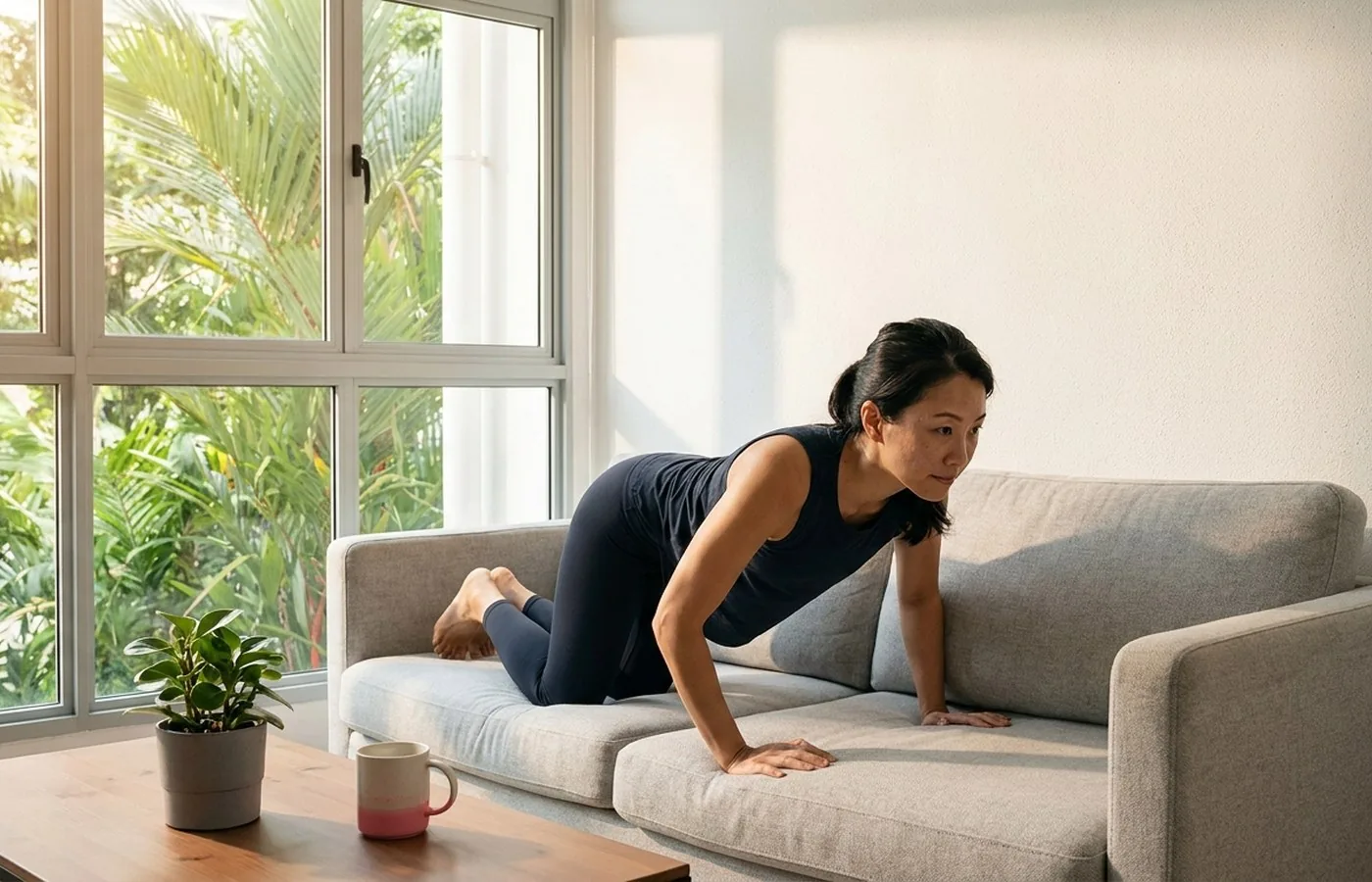
On-demand workout classes let you train on a proper instructor-led session without matching your schedule to a studio's timetable, which matters a lot in a city where work hours and commute times can eat the exact window a class was scheduled in. The format works well, but only if you treat it with the same structure you would give an in-person class instead of letting it become background noise.
Key points
- On-demand classes remove the scheduling barrier that stops a lot of people from training.
- A good platform offers clear structure, varied intensity, and real instruction, not just a video playing.
- Treating on-demand sessions with the same seriousness as in-person classes matters for results.
- On-demand training works well alongside occasional in-person sessions, not necessarily instead of them.
Why on-demand training took off
A lot of people who want to train consistently are not short on motivation. They are short on a schedule that lines up with a studio's fixed class times. On-demand workouts remove that friction entirely, letting you train at 6am, during a lunch break, or late at night after the kids are finally asleep, without needing the studio to be open at that exact hour.
That flexibility matters more than people give it credit for. A workout you can fit into your day beats a better workout you keep missing because the timing never works. If your main obstacle to training has always been the schedule itself, our guide to building a fitness habit covers why removing friction like this tends to matter more than finding the perfect programme.
What to look for in a good on-demand platform
- Clear structure: A proper warm-up, main workout, and cool-down, not just a stream of random exercises.
- Range of intensity: Options for beginners and more advanced trainees, not one level for everyone.
- Real instruction: Cues on form and technique, not just an instructor demonstrating while you follow along blindly.
- Variety across the week: A mix of strength, cardio, and mobility sessions rather than the same format every time.
- Realistic equipment needs: Sessions that match what you have space and gear for at home.
If you are new to structured training generally, our 20-minute home workout guide is a useful starting point for what a well-built session should contain.
Use this as a starting point, then adjust for your body, conditions and professional advice. A plan is useful only when it responds to you.
How to structure a week using on-demand classes
Treat on-demand sessions the way you would treat a booked class: pick your days in advance, block the time, and show up for it rather than deciding in the moment whether you feel like it. Sessions you can start anytime are also the easiest to keep postponing indefinitely if you do not treat them as fixed appointments.
A simple week might include two strength-focused sessions, one cardio session, and one mobility or recovery-focused session, adjusted to your current fitness level. The Habit Planner can help you build this into a repeatable weekly rhythm rather than a plan that only survives the first excited week.
Recovery still matters just as much with on-demand training as with in-person classes. Our sleep and recovery guide is worth reading if you are ramping up frequency quickly just because the sessions are convenient.
It also helps to clear a small space before pressing play, rather than trying to squat around a coffee table mid-workout. A few minutes spent moving furniture or rolling out a mat properly tends to prevent the kind of rushed, cramped session that makes people quietly give up on the format after a week or two.
How on-demand classes fit alongside in-person training
On-demand workouts do not need to replace every in-person class you enjoy. Many people use on-demand sessions on busy weekdays and save an occasional in-person class for the social element or specialised coaching that a video simply cannot replicate, like hands-on form correction in a strength or combat class.
If you want to build a broader week that includes both, the Workout Builder can help you plan around whichever mix of on-demand and in-person sessions fits your schedule and goals.
Cost is worth weighing too. A single on-demand subscription is often cheaper than several in-person class packages combined, which can free up budget for the occasional specialised session that really does benefit from a coach in the room with you.
The real value of on-demand workout classes in Singapore is not that they are better than in-person training. It is that they remove the single biggest reason a lot of people stop training altogether: a schedule that never quite lines up.
More on this topic from the archive: Where to Find Yoga Classes Under $20 in Singapore and Bored of Your Workout? Try These New and Exciting Fitness Classes.
This article provides general education and is not a diagnosis or a substitute for personalised medical care. Stop exercise and seek appropriate help for severe, sudden or concerning symptoms.
A Practical Guide to On-Demand Workout Classes in Singapore: questions answered
Are on-demand workouts as effective as in-person classes?
+
They can be, especially for strength and cardio training, as long as the platform offers real structure and instruction rather than just a video playing.
How much equipment do I need for on-demand classes?
+
This varies widely by platform, but many offer bodyweight-only sessions alongside options that use dumbbells or resistance bands.
Can on-demand training replace a gym membership completely?
+
For some people, yes. Others prefer a mix, using on-demand sessions on busy days and in-person classes when schedule allows.