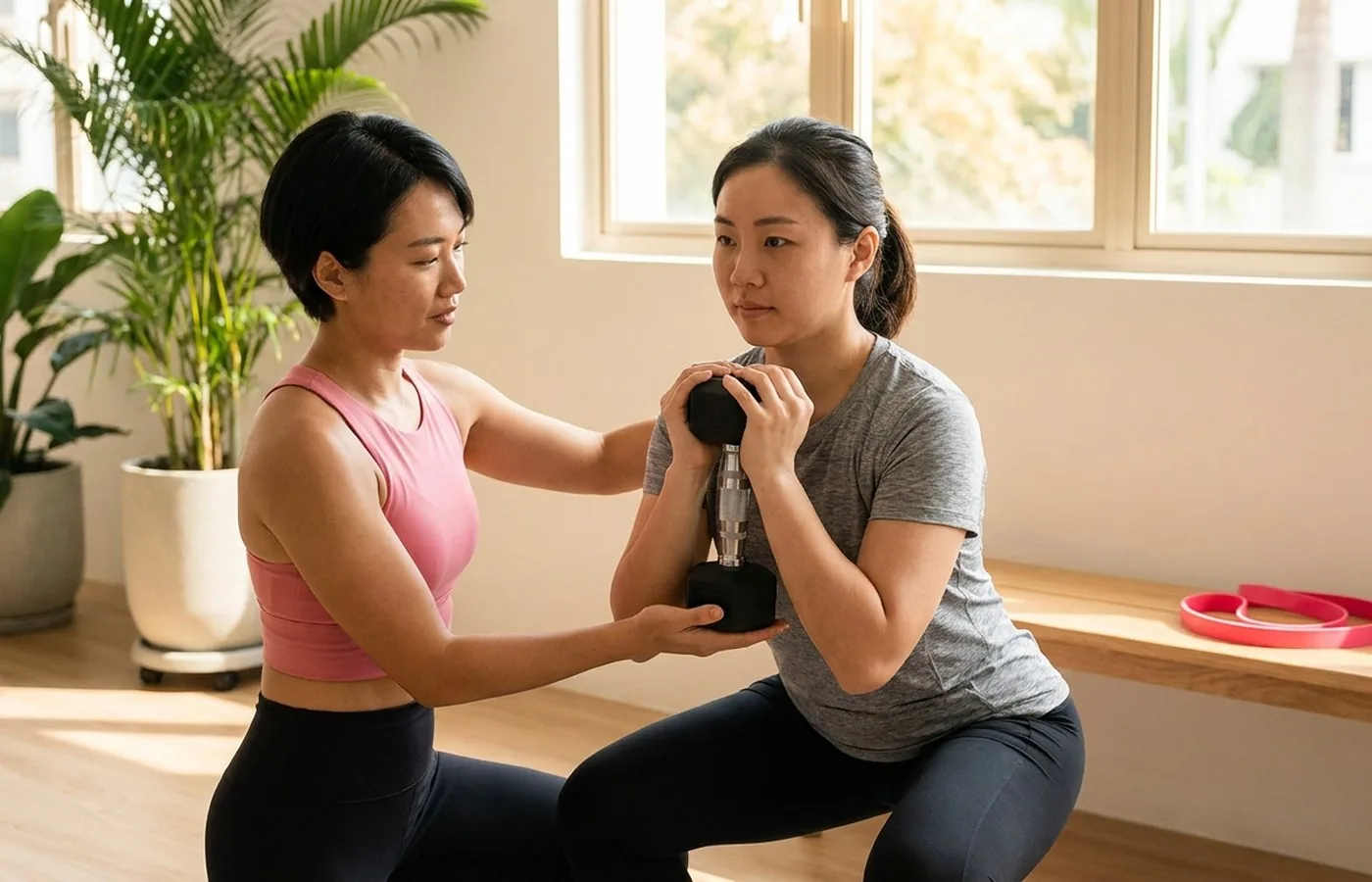
Pregnancy stretches and reorganises the core in ways that do not simply snap back once the baby arrives. Rebuilding strength there takes patience, the right starting exercises, and realistic expectations about timeline. The goal worth chasing is not a flat stomach on a deadline. It is a core that works well again for lifting, carrying, and everyday movement with a newborn.
Key points
- The core changes structurally during pregnancy and needs a proper rebuild, not a quick fix.
- Gentle, targeted exercises usually work better early on than jumping into intense ab training.
- Diastasis recti and pelvic floor issues are common and worth checking for.
- A stronger postpartum core supports daily life with a baby more than it changes your appearance alone.
What changes in the core after pregnancy
As the uterus grows during pregnancy, the abdominal muscles stretch and the connective tissue between the left and right sides of the rectus abdominis, the "six-pack" muscle, can separate. This is called diastasis recti, and it is extremely common. The pelvic floor also carries extra load through pregnancy and delivery, and it needs its own attention during recovery.
None of this means something has gone wrong with your body. It means the core has been through a major structural change and needs a rebuild, not a return to old habits on the same timeline as before. Rushing back into intense ab work before that foundation is solid can make things feel worse, not better.
If you are unsure where your recovery currently stands, our guide to women's health screenings in Singapore covers the kind of postnatal checks worth booking before you return to harder training.
A safer way to start rebuilding core strength
Early postpartum core work usually starts small and slow, often before a full workout even makes sense.
- Diaphragmatic breathing: Learning to breathe in a way that engages the deep core again.
- Pelvic tilts: Gentle, controlled movement to reconnect with the lower core.
- Heel slides: A low-load way to challenge core control without straining the midline.
- Modified bridges: Building glute and core strength together without heavy abdominal load.
- Bird dog, gentle range: Introduces coordination between the core and limbs at a manageable pace.
Once these feel steady and any diastasis has closed enough to progress safely, more traditional core training can be layered back in gradually. The Workout Builder can help you plan sessions that scale up as your recovery allows.
Use this as a starting point, then adjust for your body, conditions and professional advice. A plan is useful only when it responds to you.
Signs it is worth getting checked before pushing harder
A visible gap or doming down the middle of the stomach during a crunch or sit-up can be a sign of diastasis recti that has not closed enough for that kind of movement yet. Leaking, heaviness, or discomfort in the pelvic area are signs worth mentioning to a doctor or pelvic floor physiotherapist rather than pushing through.
Recovery also depends heavily on sleep, which is famously in short supply with a newborn in the house. Our sleep and recovery guide is worth reading with realistic expectations for this season, since even a small improvement in rest can make training feel more manageable.
Getting checked is not about finding something wrong. It is about training with information instead of guessing, which tends to get people back to full strength faster and safer.
It also helps to remember that a C-section birth brings its own recovery timeline, since the incision needs to heal properly before any core loading makes sense. There is no shame in a slower return here. The body has been through major surgery on top of pregnancy, and rushing rarely pays off.
How rebuilding your core supports life after baby, not just how your tummy looks
A stronger postpartum core makes lifting a car seat, carrying a baby on one hip, and getting up off the floor after nap time noticeably easier. That functional payoff matters more day to day than how flat your stomach looks in a mirror, even though the two often improve together over time.
If body image feels tender during this stage, our body-neutral fitness guide can help you approach this rebuild with less pressure and more patience for a body that has done something enormous.
Give the process months, not weeks. A properly rebuilt core after baby is a genuine achievement, and it is one that serves your daily life with a newborn far more than any deadline for a flat tummy ever could.
Some weeks will go backwards, especially around growth spurts, sleep regressions, or a stretch of illness passing through the house. That is normal, not failure. A rebuild like this is rarely a straight line, and returning to the plan gently after a rough patch matters far more than any single missed week.
Is it normal for my stomach to look different than before pregnancy?
Yes. Skin, muscle, and tissue changes after pregnancy are normal, and a flatter look usually comes gradually with patience, not a fast timeline.
More on this topic from the archive: How to Find a Pilates Class in Singapore That Strengthens Your Core and Why Aqua Boxing Is Having a Moment in Singapore.
This article provides general education and is not a diagnosis or a substitute for personalised medical care. Stop exercise and seek appropriate help for severe, sudden or concerning symptoms.
How to Rebuild Core Strength After Having a Baby: questions answered
How soon after birth can I start core exercises?
+
This varies a lot by delivery type and recovery, so check with your doctor before starting anything beyond gentle breathing work.
What is diastasis recti?
+
It is a separation of the abdominal muscles that is very common during and after pregnancy and often improves with the right progression of exercises.