Liv Lo has built a public profile around yoga, movement, and founding a fitness studio, while also being a visible parent. It is easy to look at a life like that and assume the balance comes easily. It almost never does. What is more useful than the highlight reel is the general lesson underneath it: training and parenting compete for the same hours, and the people who keep both going tend to protect a few habits fiercely instead of trying to do everything well every single day.
Key points
- Public fitness figures usually show the result, not the daily trade-offs behind it.
- Balancing training with family life is a habit problem, not a willpower problem.
- Short, protected sessions tend to survive busy seasons better than long, ideal ones.
- Borrowing the theme of someone's story is more useful than copying their exact routine.
Why a story like this looks easier than it is
When someone is known for both a fitness career and a visible family life, it is tempting to picture a smooth system running quietly in the background. In reality, most people who manage to keep movement and parenting going at the same time are not doing it perfectly. They are doing it imperfectly, on repeat, for years. That distinction matters, because it changes what you should try to copy.
A founder in the yoga or fitness space also has to run a business, show up for classes, and make decisions all day, on top of caring for a family. None of that removes tiredness or short tempers or the days when a workout simply does not happen. What it usually does build is a stronger sense of which habits are non-negotiable and which ones can slide without much cost.
If your own week is being pulled in six directions at once, the Habit Planner is a useful place to figure out which one or two habits deserve that kind of protection first.
The real trade-offs behind training and parenting at the same time
Anyone who has tried to fit a workout around a young child's schedule knows the maths rarely works out cleanly. Naps end early. School runs eat the morning. Evenings belong to dinner, baths, and the last stretch of a long day. A public fitness figure faces the exact same maths, just with an audience watching the outcome instead of the process.
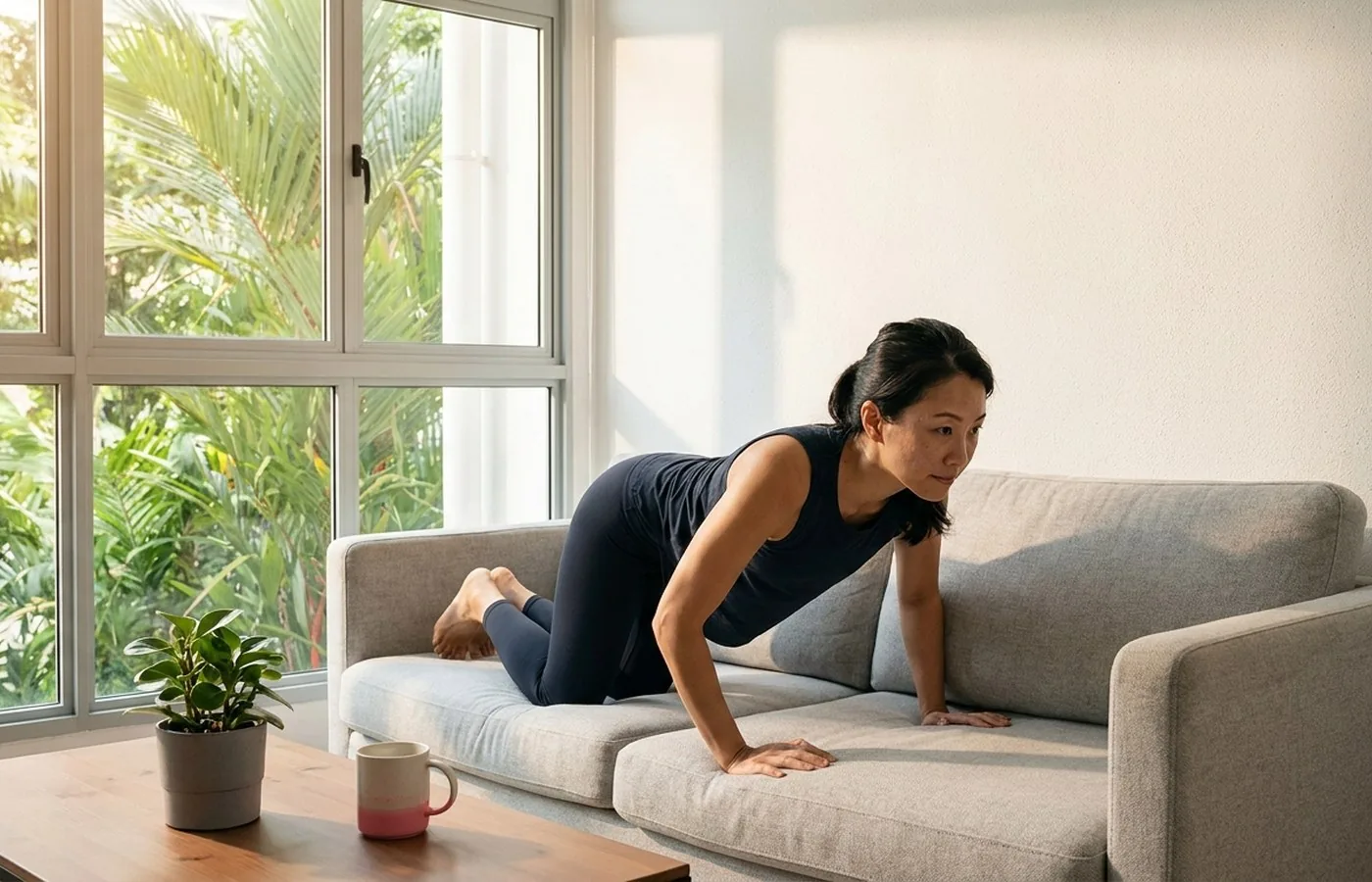
What usually gets sacrificed first is not the workout itself but the length and polish of it. A one-hour session becomes twenty minutes. A studio class becomes a home routine squeezed in before anyone else wakes up. That is not a downgrade. It is often the only version of training that can survive a season with young kids in the house.
If your own sessions keep needing to shrink, our guide to building a fitness habit is built exactly for that kind of compression, where the goal is keeping the habit alive, not keeping the workout impressive.
Use this as a starting point, then adjust for your body, conditions and professional advice. A plan is useful only when it responds to you.
What you can borrow from a story like this
Rather than trying to copy anyone's exact schedule, borrow the underlying theme: movement does not need to be dramatic to matter, and a short, honest session done often will usually beat a perfect plan that only exists on your best days. Yoga in particular tends to travel well through busy seasons because it can flex from a full class down to ten quiet minutes on a mat at home.
It also helps to separate identity from output. Someone who teaches movement for a living is still allowed to have inconsistent weeks. The lesson is not "never miss a session." The lesson is "keep coming back to the mat, even in a smaller way, because that is what built the habit in the first place."
If stress is part of why your own sessions keep slipping, our guide to movement for stress can help you use short sessions as a reset instead of one more task on the list.
How Liv Lo's fitness-and-family story applies to your own routine
You do not need a studio, a public profile, or a perfect schedule to take something useful from a story like this. You need a version of movement that fits the family life you have, not the one you wish you had more time for. That might mean a shorter practice, an earlier alarm, or accepting that some weeks will simply look thinner than others.
What matters is the pattern over months, not any single week. If you want more restored fitness content in this same reflective vein, the fitness archive is where older SHAPE profile pieces are being rebuilt with more honesty and less highlight-reel gloss.
The real takeaway from any public balancing act is rarely the specifics. It is the reminder that training and family life are both allowed to be a little messy, as long as you keep showing up for both.
Is yoga a good fit for parents short on time?
It can be, because it scales well from a full class down to a few quiet minutes at home.
More on this topic from the archive: What Themed Race Weekends Like The District Teach Us About Running for Fun, Old List, Useful Lesson: How to Find New Fitness Classes Worth Trying and Liv Lo, Fitsphere, and the Idea of Turning a Personal Practice Into a Community.
This article provides general education and is not a diagnosis or a substitute for personalised medical care. Stop exercise and seek appropriate help for severe, sudden or concerning symptoms.
What Liv Lo's Fitness-and-Family Balancing Act Can Teach the Rest of Us: questions answered
Did Liv Lo really balance a fitness career and family perfectly?
+
This piece is a reflection on the general theme her public story represents, not a verified account of her private routine or results.
What is the easiest way to protect a fitness habit during a busy family season?
+
Shrink the session before you cut it completely. A short, repeatable version usually beats an ambitious one that never happens.