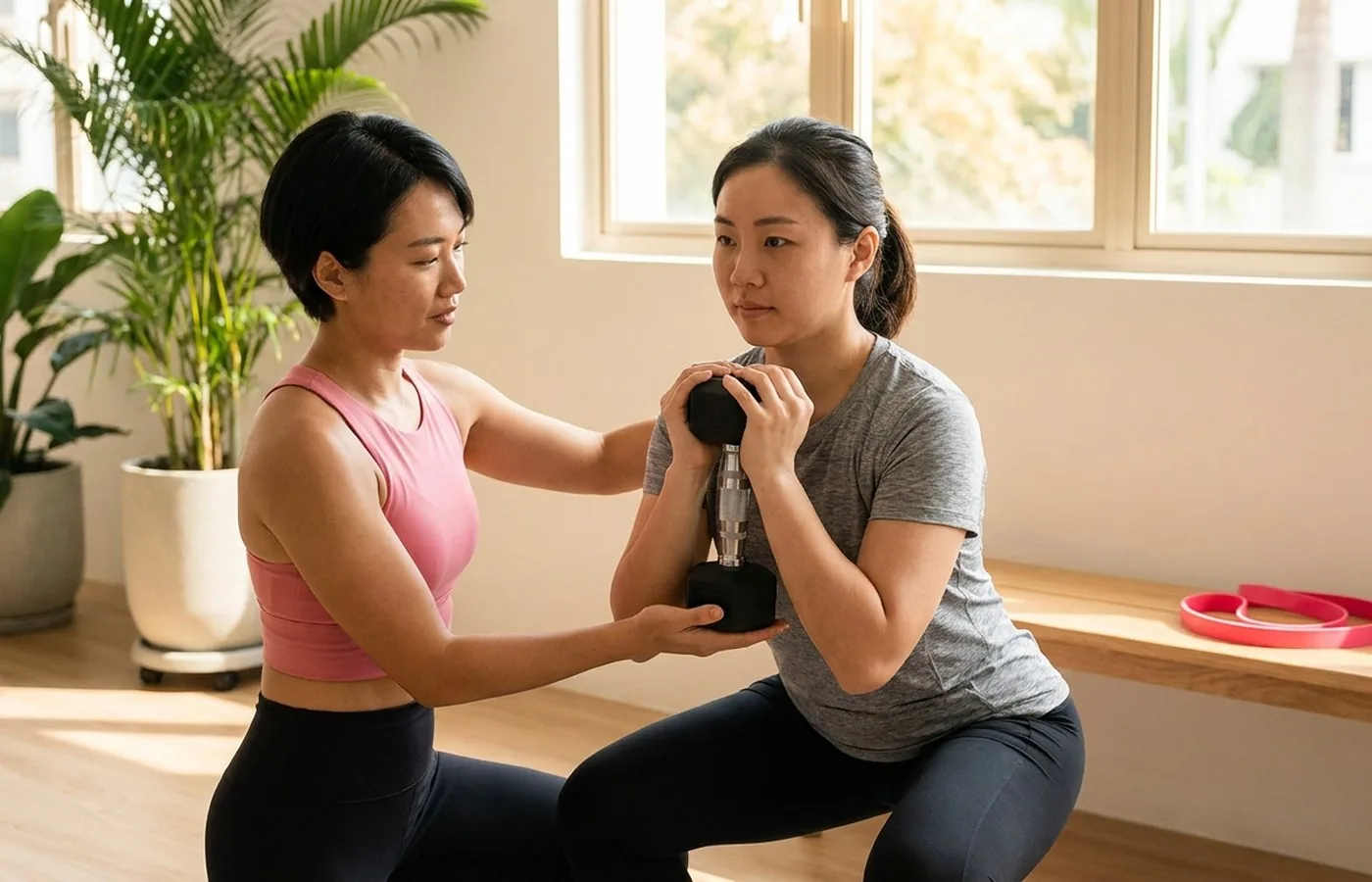
Ask a handful of trainers what strength moves they rely on for women's programmes, and the same short list tends to come up over and over. Not because it is trendy, but because these movements train the most muscle at once, transfer well into daily life, and give a solid return on the time and effort you put into them.
Key points
- Compound movements that use multiple muscle groups tend to top most trainers' lists.
- Strength training for women does not need a different rulebook from strength training in general.
- Progressive overload, gradually increasing the challenge, matters more than any single exercise choice.
- Recovery and nutrition support the results of these exercises as much as the training itself.
Why trainers keep coming back to the same core movements
Trainers tend to favour compound exercises, moves that work several muscle groups and joints at once, because they build strength efficiently and carry over into daily movement far better than isolation exercises alone. A squat trains your legs, hips, and core together in a pattern you use every time you sit down or pick something up off the floor.
Despite decades of marketing built around separate "toning" workouts for women, the actual training principles are not different from strength training in general. If you are new to lifting, our beginner strength guide covers the basics that apply here regardless of gender.
Trainers also point out that women often come to strength training carrying some worry about bulking up, which usually holds people back from lifting heavy enough to see real results. That concern rarely matches how bodies respond, since building significant muscle size takes considerable time, effort, and often a deliberate approach to food that most casual lifters are not pursuing anyway. Letting go of that worry tends to be the biggest early shift trainers describe seeing in new clients.
The strength exercises trainers recommend most
- Squats: A foundational lower-body move that builds strength through the legs, hips, and core together.
- Deadlifts: Trains the whole posterior chain, the muscles along your back, glutes, and hamstrings, in one efficient movement.
- Push-ups or bench press: Builds upper-body pressing strength that supports everyday tasks like carrying and pushing.
- Rows: Balances out pressing movements by training the back muscles, which supports better posture.
- Overhead press: Builds shoulder strength and stability, an area many routines under-train.
- Hip thrusts: A direct, effective way to build glute strength without loading the lower back heavily.
- Farmer's carries: Simply walking while holding weight, a surprisingly effective full-body and grip exercise.
Trainers typically build a weekly plan around a rotation of these, adjusted for load and reps based on the person's experience level. If you want a structured version of this kind of plan, the Workout Builder can help you set one up around your own schedule. Two full-body sessions a week covering most of this list is already enough to see real progress for someone just starting out.
Use this as a starting point, then adjust for your body, conditions and professional advice. A plan is useful only when it responds to you.
Why the extras matter almost as much as the exercises
None of these movements deliver much without enough protein to support muscle repair and enough recovery time between sessions. Trainers often see clients hit a plateau not because their exercise selection is wrong, but because food or sleep is quietly undermining the training. Our guide to protein needs for active women is worth reading if you are lifting seriously and want your nutrition to support it.
Progressive overload, the gradual increase in weight, reps, or difficulty over time, matters more than chasing a "perfect" exercise list. A trainer would rather see you slowly add weight to a basic squat over months than jump between trendy exercises every few weeks without ever building real strength in any of them.
How these trainer-recommended exercises build real strength for women
These moves show up on so many trainers' lists because they work, not because of any special "women's training" formula. Squats, deadlifts, presses, and rows, done consistently and progressed sensibly, build strength that carries over into daily tasks, sport, and general resilience against injury.
Start with a manageable version of each, add difficulty gradually, and give the plan months rather than weeks before judging results. If you want more restored strength content built around this kind of straightforward, evidence-based approach, the fitness hub is where we keep adding it. Ask any trainer which single change made the biggest difference for their clients, and most will point back to this same short list of basics, done consistently, long before anything fancier gets added.
How often should I do these strength exercises?
Two to four sessions a week, allowing recovery between sessions targeting the same muscle groups, works well for most people.
Choose a shorter session you can repeat
A simple adjustable workout can help when a full class does not fit.
- Try the 20-minute home workoutUse a short, adjustable session when a full class does not fit.
More on this topic from the archive: The Most Scenic Running Routes Singapore Has to Offer, Bodyweight Exercises That Build Core Strength and A Workout for the Muffin Top Area That Skips the Spot-Reduction Myth.
This article provides general education and is not a diagnosis or a substitute for personalised medical care. Stop exercise and seek appropriate help for severe, sudden or concerning symptoms.
The Strength Exercises Trainers Recommend Most Often for Women: questions answered
Do women need different strength exercises from men?
+
No. The core movement patterns are the same, though programming details like load and volume can vary by individual.
Will these exercises make me bulky?
+
Building significant muscle size takes deliberate, sustained effort and time. Most women who strength train see strength and tone gains rather than sudden bulk.
