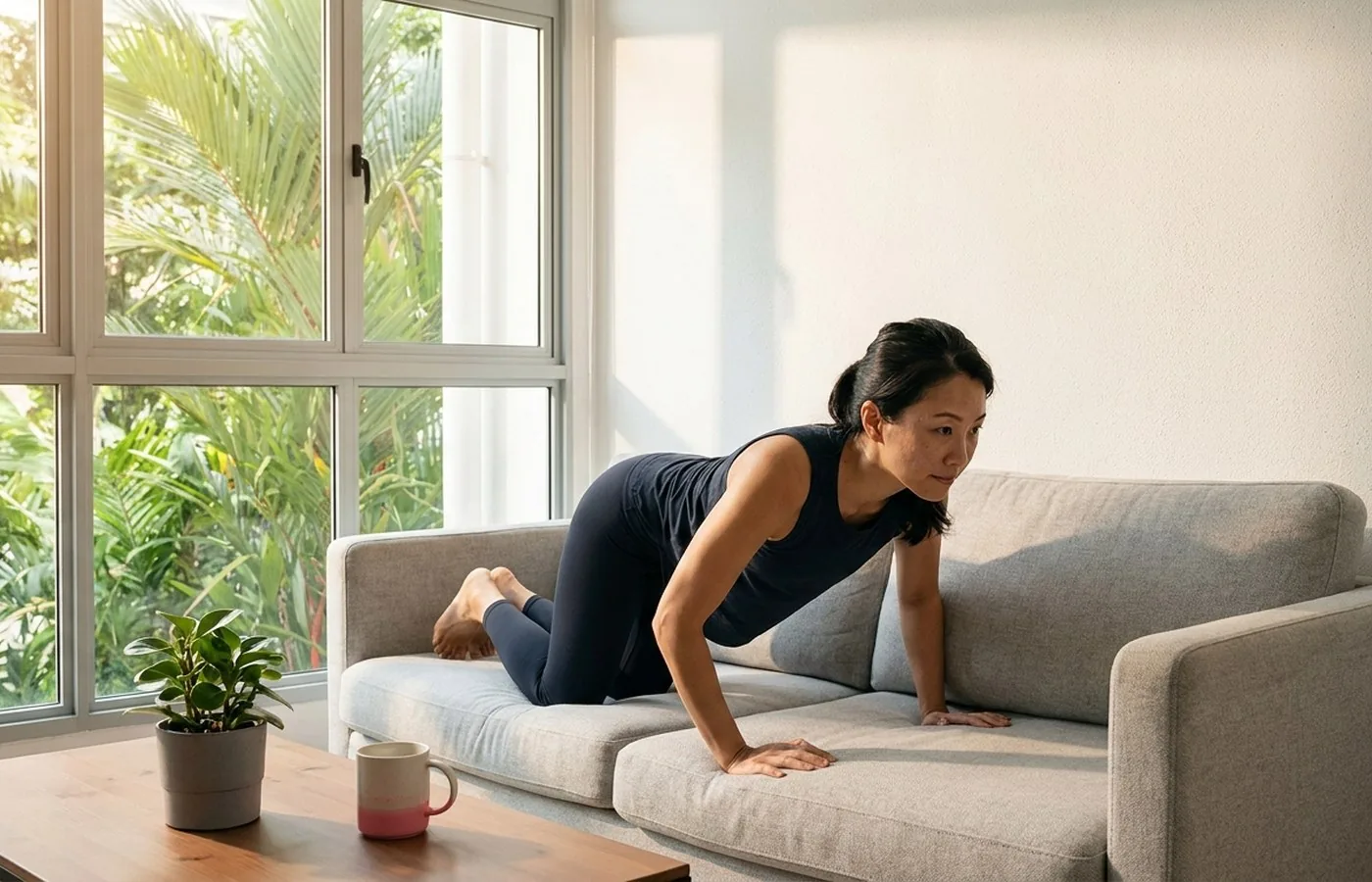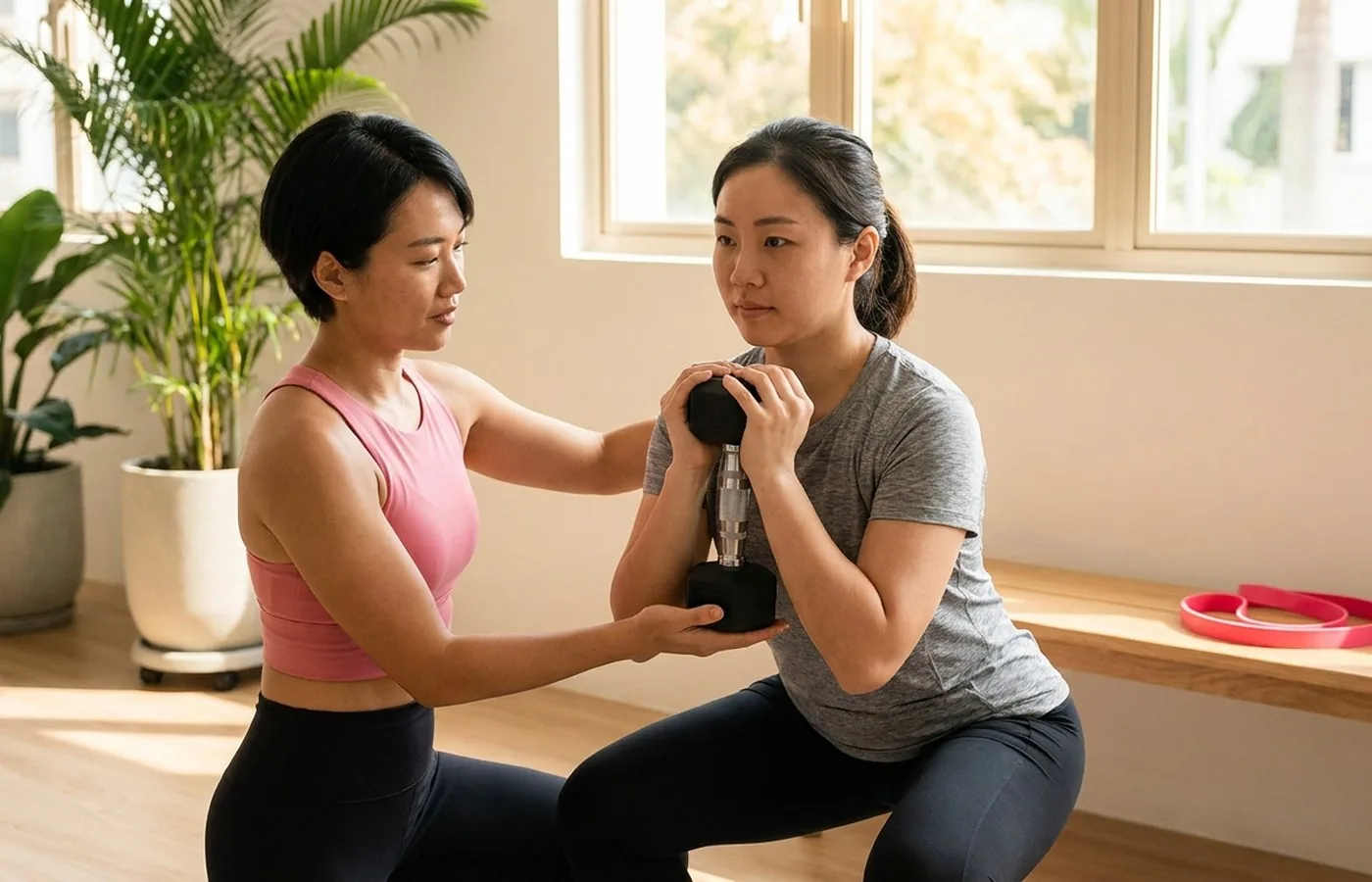
A reformer machine can look like something out of a strange gym experiment the first time you see one, all springs, straps, and sliding carriage. Once you know a handful of basic moves, though, it stops feeling mysterious and starts feeling like a genuinely useful full-body tool that most beginners can pick up in a single class.
Key points
- The reformer uses spring resistance and a sliding carriage to challenge strength and control together.
- A few foundational exercises cover legs, core, arms, and back in one short circuit.
- Form and control matter more here than speed or heavy resistance.
- Most studios expect first-timers and build beginner classes around exactly that.
What the reformer does
A Pilates reformer is a sliding platform, called the carriage, attached to a frame by a set of springs. You push or pull the carriage using your legs, arms, or whole body, and the springs provide resistance in both directions, meaning the movement out and the movement back both take real control. That two-way resistance is a big part of why reformer work feels different from a typical bodyweight or free-weight session.
Because the springs can be adjusted lighter or heavier, the same machine works for a first-timer and a seasoned regular, just at different resistance settings. If you are new to structured strength training in general, our beginner strength guide covers some of the same control-focused principles that make reformer work click faster.
The carriage itself also teaches a kind of body awareness that is hard to get from a static bench or mat. Because it moves under you, small mistakes in alignment or control show up immediately as wobble or lost tension, which gives you fast feedback on your form in a way that flat-ground exercises rarely offer so directly.
Basic reformer exercises worth learning first
- Footwork: Lying on your back, pushing the carriage out and in with your feet on the bar, working the legs and core together.
- The hundred: A classic Pilates core move adapted to the carriage, pumping the arms while holding a curled-up position.
- Rowing series: Seated, pulling straps toward you to work the back, shoulders, and core stability.
- Long stretch: A plank-like position pushing the carriage out and in, testing full-body control.
- Leg circles: Lying down, tracing circles with one leg in straps to challenge hip control and core stability.
- Side splits or side-lying leg work: Targeting the outer hips and inner thighs, an area many other workouts skip.
This short list already touches legs, core, back, and arms, which is exactly the whole-body reputation reformer Pilates has earned. A beginner class usually spends most of its time on exactly these moves before adding anything more advanced, and most instructors will happily lower the spring tension further if any move feels like too much on your first try.
Use this as a starting point, then adjust for your body, conditions and professional advice. A plan is useful only when it responds to you.
What makes reformer Pilates different from a regular gym session
The pace tends to be slower and more deliberate than a typical strength or cardio class, which can feel strange if you are used to chasing a heavier weight or a faster rep count. That slowness is intentional. The spring resistance rewards control far more than it rewards speed, and rushing through the moves usually just means your form falls apart and the exercise stops doing its job.
If you already have a regular training week built around the Workout Builder, reformer Pilates can slot in as a lower-impact session on a recovery day, since it builds strength without the joint pounding of heavier lifting or high-impact cardio.
How basic reformer exercises tone the whole body over time
No single class will dramatically reshape your body, and reformer studios that promise otherwise are overselling it. What consistent reformer training does deliver is steadier full-body strength, better core control, and often noticeably better posture, since so many of the exercises train the deep stabilising muscles that a normal gym routine can miss.
It can also complement other kinds of training rather than replace them. Someone who lifts heavier weights elsewhere in the week may find reformer sessions useful for recovery days, since the movements build control and stability without adding the same fatigue as another hard strength session.
Give it a few weeks of regular sessions before judging whether it is for you. Most people need at least four or five classes before the moves stop feeling foreign and start feeling like a workout they are doing well. If you want more restored training guides like this one, the fitness hub is where we keep them.
How often should I do reformer Pilates?
One to three sessions a week is a common starting point, often alongside other types of training.
Choose a shorter session you can repeat
A simple adjustable workout can help when a full class does not fit.
- Try the 20-minute home workoutUse a short, adjustable session when a full class does not fit.
More on this topic from the archive: Full-Body Exercises Built Around the High Plank, What to Expect From Pilates Reformer Classes in Singapore and 12 Dynamic Warm Up Exercises To Make You Run Faster Fitness Video.
This article provides general education and is not a diagnosis or a substitute for personalised medical care. Stop exercise and seek appropriate help for severe, sudden or concerning symptoms.
Basic Pilates Reformer Exercises That Work the Whole Body: questions answered
Is reformer Pilates good for beginners?
+
Yes. Most studios build beginner classes around foundational moves and adjust spring resistance to match your level.
Will reformer Pilates build visible muscle?
+
It can improve tone and strength, especially in the core and stabilising muscles, though it works differently from heavy weight training.