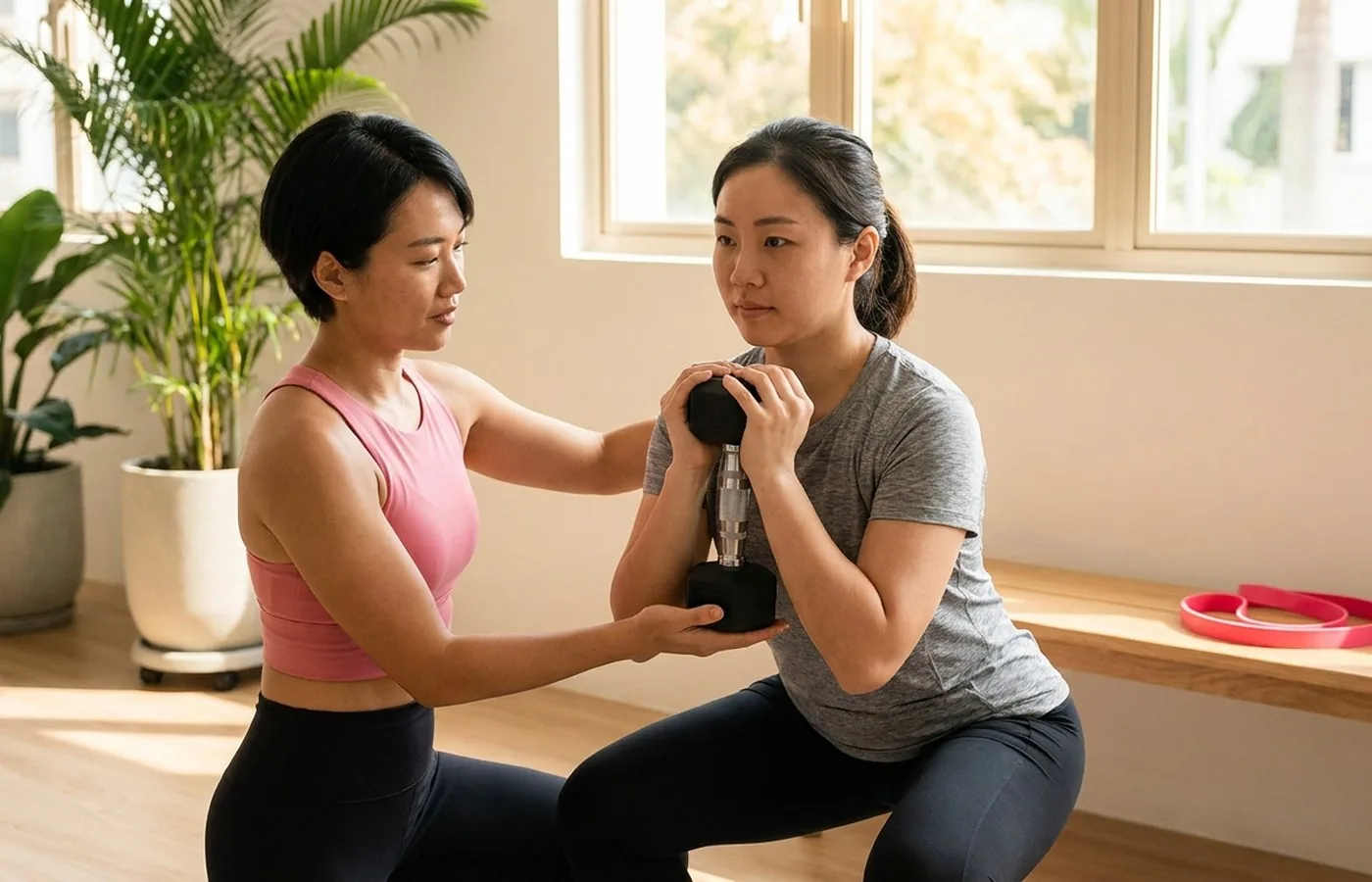
Working out with a partner is not about matching outfits or turning every date into a gym session. It is about building one more shared habit that supports both of you, especially on weeks when motivation for either person is running low. Here is what tends to change when couples train together, and where it can go wrong if you are not careful.
Key points
- Shared workouts can add accountability that solo training often lacks.
- Training together works best when both people's fitness levels and goals are respected, not matched exactly.
- It can become a source of tension if competition or criticism creeps in, so keep it supportive.
- Even one shared session a week can be enough to count as a real habit.
The accountability that shows up almost immediately
The most obvious benefit of training with a partner is that skipping a workout now affects two people, not one. On the days when you would normally talk yourself out of a session, having someone else expecting you to show up can be the nudge that gets you moving. This works both ways, which is the real value: some weeks you will be the one dragging your partner along, and other weeks it will be the reverse.
This only works if the accountability stays kind rather than becoming pressure. A quick text saying "still on for tonight?" does a lot more good than guilt over a missed session. If consistency has been the bigger issue in your training generally, our guide to building a fitness habit covers ways to make any new routine, including a shared one, more likely to stick.
Five reasons this habit is worth trying
- Built-in accountability. A scheduled session with someone else is much harder to cancel on a whim than a solo one.
- Shared time that is not just sitting on the couch. Active time together can feel more connected than a lot of passive time does.
- You learn how the other person handles effort and stress. That can be genuinely useful information about a person, in a low-stakes setting.
- It gives you a shared project outside of work and chores. Training goals are a nice thing to plan and talk about together.
- You can split the planning load. One person picks the workout this week, the other picks next week, so nobody carries the whole routine alone.
None of this requires matching fitness levels. A stronger runner and a newer one can still train the same days, at different paces, and get the same accountability benefit without either person being held back.
Use this as a starting point, then adjust for your body, conditions and professional advice. A plan is useful only when it responds to you.
Where couples' workouts can go wrong
Competition is the most common way this backfires. If one partner is naturally stronger or fitter, turning every session into a contest can make the other person dread it instead of look forward to it. The goal of training together is support, not a scoreboard. If you notice one of you keeps comparing reps or times in a way that stings, it is worth naming that out loud before it quietly kills the habit.
Unsolicited coaching is another common friction point. Correcting your partner's form uninvited, mid-set, tends to land differently than the same feedback from a coach or trainer would. If form needs work, the beginner strength training guide is a neutral resource you can both read separately, rather than one partner lecturing the other in the middle of a set.
It also helps to have some workouts that are just yours. Training together should add to your routine, not replace every solo session either of you enjoys doing alone.
Making shared workouts a habit that lasts
Start small. One shared session a week, like a Saturday morning walk-run or a Sunday strength circuit, is enough to count as a real habit and is far easier to protect than five ambitious sessions that quietly get skipped. Pick something both of you can do without one person constantly waiting on the other, at least for the warm-up and cool-down portions.
If you want a plan that adjusts for two different fitness levels, the Workout Builder can help you structure sessions where both people are working, just not necessarily at the same intensity. For more restored content on building routines that fit real life and real relationships, the fitness hub is worth a browse.
The point of working out with your significant other is not to become a matching fitness couple. It is to add one more shared reason to move, on a schedule you both want to keep.
More on this topic from the archive: 7 Fun Partner Yoga Poses to Improve Flexibility and Your Relationship.
This article provides general education and is not a diagnosis or a substitute for personalised medical care. Stop exercise and seek appropriate help for severe, sudden or concerning symptoms.
5 Reasons to Start Working Out With Your Significant Other: questions answered
What if our fitness levels are very different?
+
That is fine. Pick activities where you can both work at your own pace within the same session, like a run-walk or a shared strength circuit with individual loads.
How often should couples work out together?
+
Even once a week is enough to count as a real shared habit. You do not need to train together every session.
What if working out together causes arguments?
+
Watch for competition or unsolicited coaching creeping in. If it happens, talk about it directly rather than letting the habit quietly fade.