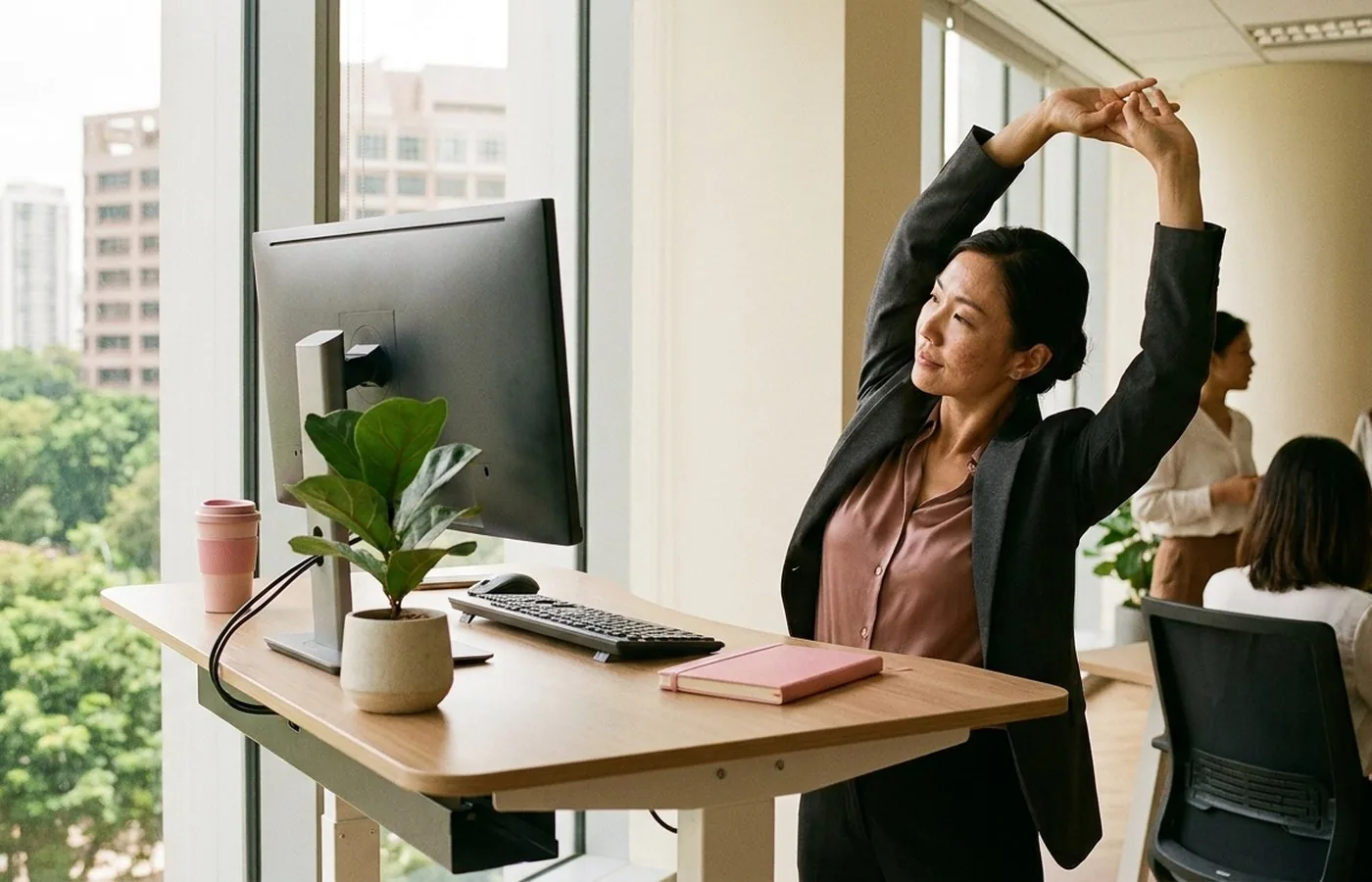
Working from home sounded like a dream to a lot of people before they tried it for months on end. The novelty wears off fast once the kitchen, the sofa, and the laptop all blur into one long, shapeless workday. Success at working from home has less to do with a fancy desk setup and more to do with a few boring boundaries that most people only figure out through trial and error.
Key points
- A dedicated workspace, even a small one, helps your brain switch into and out of work mode.
- Clear start and stop times matter more at home than in an office, where the commute used to do that job.
- Regular movement breaks prevent the all-day sitting that home setups quietly encourage.
- Social contact needs to be built in on purpose when it is not built into your day automatically.
Why working from home is harder to sustain than it first seems
An office naturally builds in structure: a commute that marks the start and end of the day, colleagues nearby for quick questions, and a physical separation between the desk and the sofa. Remove all of that, and a home workday can quietly lose its shape. Meetings run into lunch, laundry becomes a five-minute distraction that eats twenty minutes, and the workday can stretch into the evening without a clear line marking when it ended.
None of this means working from home is a bad setup. It means it needs deliberate structure that used to come for free from an office. Sitting for most of the day is also easy to fall into without the natural movement a commute and office layout used to provide. Our guide to desk posture and mobility covers some of the physical side of this that home workers often overlook.
The habits that separate a sustainable home setup from a chaotic one
- Keep a dedicated work spot, even if it is just one corner of a room, rather than working from bed or the sofa.
- Set a rough start and stop time and stick close to it most days.
- Get dressed for the day, at least a little, rather than working in sleepwear every single day.
- Build in at least one short walk or movement break, ideally away from your screen entirely.
- Plan actual social contact, whether a call, a coffee with a friend, or a co-working day, since home working can get isolating fast.
- Close the laptop at a set time rather than letting work quietly stretch into the evening.
None of these habits require special equipment. They mostly require deciding on a boundary in advance, since it is much harder to hold a line once you are already mid-distraction at 2pm.
Use this as a starting point, then adjust for your body, conditions and professional advice. A plan is useful only when it responds to you.
What tends to quietly wreck a work-from-home routine
Working from the same spot you relax in is one of the most common issues, since it makes it hard for your brain to fully switch off, even after the laptop closes. Skipping movement entirely is another, since a home day can genuinely involve less walking than an office day used to, once the commute, the walk to a meeting room, and the trip to lunch all disappear. If your fitness routine has fallen apart since working from home, the Workout Builder can help you rebuild something short and repeatable.
Working through lunch is another quiet habit that builds resentment over time, even if it feels productive in the moment. A short, proper break tends to make the rest of the afternoon go better, not worse. If your meals have become an afterthought squeezed between calls, the Balanced Meal Builder can help you set up something simple you can repeat without much thought.
Isolation is the one people underestimate most. Going days without real conversation beyond messaging apps can affect mood more than people expect, especially for anyone who used to draw a lot of daily energy from office chatter.
What working from home successfully looks like day to day
A sustainable home workday has a clear start, a clear end, at least one proper break, and some movement built in rather than left to chance. It is not about a perfectly styled desk setup or an inspiring view. It is about the same boring boundaries repeated on most days, which is exactly what makes them hold up over the long run.
If you want more restored lifestyle content on this kind of everyday routine, the lifestyle hub is where older SHAPE pages are being rebuilt with practical detail like this. Working from home successfully is rarely about the setup. It is about the boundaries you keep once the novelty wears off.
How do I stop work from bleeding into my evenings?
Set a rough stop time in advance and treat closing the laptop as a real signal, similar to how leaving an office used to mark the end of the day.
Why do I feel lonelier working from home even though I am busier?
Home working removes a lot of casual daily conversation that offices provide automatically, so social contact often needs to be planned on purpose instead.
More on this topic from the archive: What Makes Activewear Sustainable? A Practical Buyer's Guide.
This article provides general education and is not a diagnosis or a substitute for personalised medical care. Stop exercise and seek appropriate help for severe, sudden or concerning symptoms.
What Makes Working From Home Sustainable Long-Term: questions answered
Do I need a full home office to work from home successfully?
+
No. A consistent spot, even a small corner, matters more than an elaborate setup.