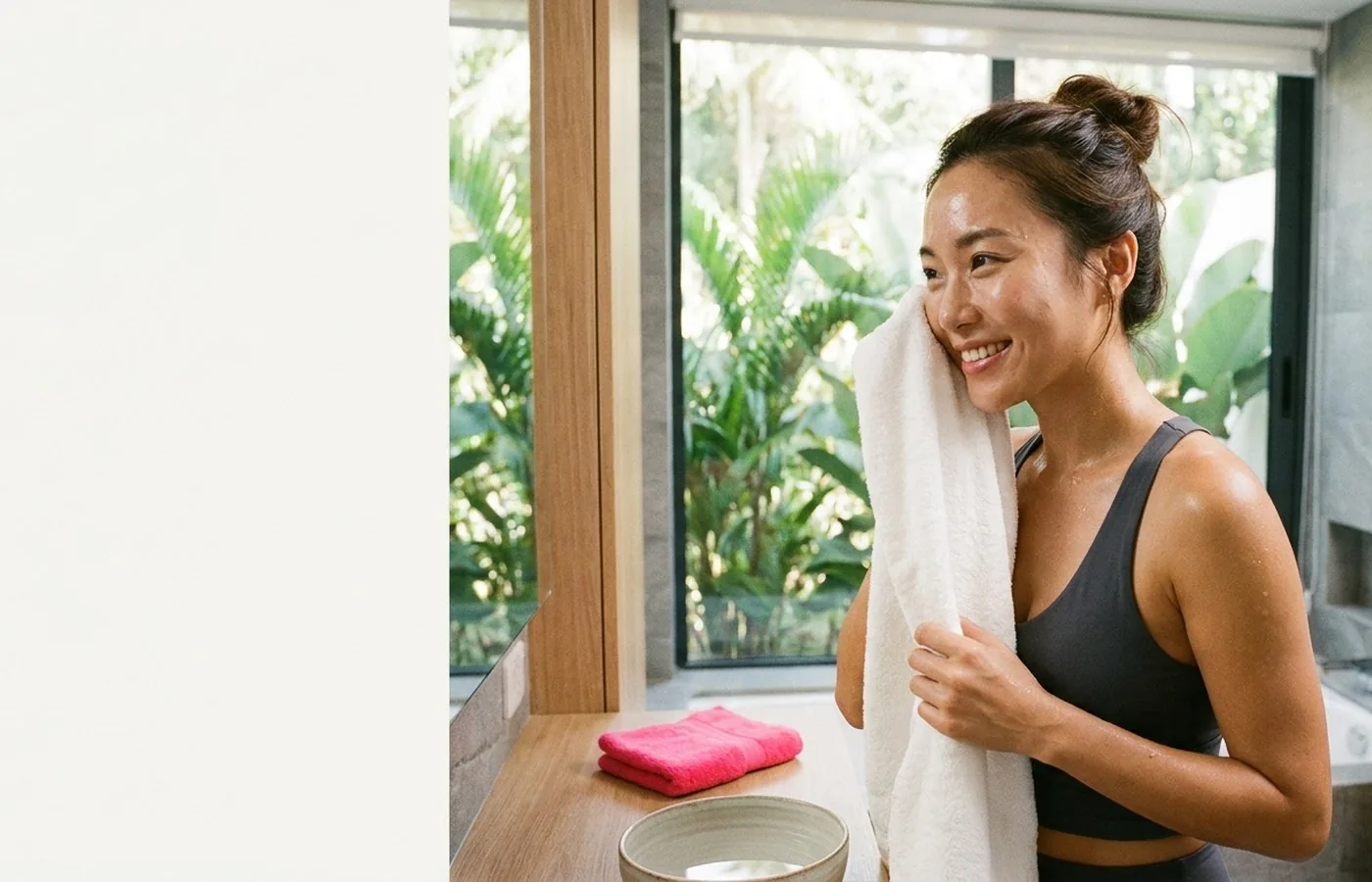
Tea tree oil has a long reputation as a natural spot treatment, and it's genuinely one of the more studied natural ingredients for mild acne. That doesn't make it a cure-all. Used the right way, diluted and applied with some patience, it can be a reasonable addition to a routine. Used the wrong way, straight from the bottle onto bare skin, it's more likely to irritate than help.
Key points
- Tea tree oil has mild antibacterial properties that may help with some mild, non-cystic acne.
- It must be diluted before touching skin. Undiluted oil can cause burns and irritation.
- It works slowly, over weeks, not as an overnight spot fix.
- It's unlikely to be enough on its own for hormonal or cystic acne.
What tea tree oil is and why it gets linked to acne
Tea tree oil comes from the leaves of the Melaleuca alternifolia plant, native to Australia, and has been used for generations as a general antiseptic. Some of its natural compounds have mild antibacterial and anti-inflammatory properties, which is the main reason it gets recommended for acne-prone skin specifically. Several small studies have found that diluted tea tree oil can reduce mild acne lesions over a period of weeks, though the effect tends to be gentler and slower than stronger prescription treatments.
That's an important distinction. Tea tree oil is not positioned as a replacement for medical acne treatment when acne is moderate to severe. It sits more comfortably as a mild, natural option for occasional breakouts or as a supporting step alongside a broader skincare routine.
If your skin issues are tied to sweat and workouts specifically, our guide to sweat and skincare covers some of the daily habits that matter alongside any spot treatment you're using.
How to use it safely on your skin
- Never apply tea tree oil directly to skin undiluted. It's strong enough to cause burns and irritation on its own.
- Mix a small amount, roughly a few drops, into a carrier oil or an unscented moisturiser before applying.
- Patch test on a small area, like your inner arm, for a day or two before using it on your face.
- Apply it as a spot treatment on active breakouts rather than across your whole face.
- Give it several weeks of consistent use before deciding whether it's making a difference.
- Stop immediately if you notice redness, stinging that doesn't fade, or increased dryness.
Consistency matters more than concentration here. A weaker, well-diluted mix used steadily over weeks tends to work better and cause fewer problems than a strong mix used impatiently for a few days and then abandoned.
Use this as a starting point, then adjust for your body, conditions and professional advice. A plan is useful only when it responds to you.
When tea tree oil probably won't be enough
Mild, occasional breakouts are the realistic target for tea tree oil. Deeper, cystic, or hormonal acne, the kind that shows up as painful bumps under the skin rather than surface pimples, usually needs more than a natural spot treatment can offer. In those cases, a dermatologist can offer options that work faster and more reliably.
It's also worth being realistic about timelines. Tea tree oil is not a same-day fix for a breakout before an event. If you need something for a single visible spot tonight, a targeted over-the-counter treatment is more likely to help in the short term, with tea tree oil playing more of a supporting role over the following weeks.
Sensitive skin should be extra cautious here too. Even properly diluted tea tree oil can be too strong for some skin types, especially if it's combined with other active ingredients like retinol or strong acids in the same routine.
Making tea tree oil part of a realistic acne routine
Tea tree oil works best as one small piece of a routine that already includes gentle cleansing, a suitable moisturiser, and daily sunscreen, not as a stand-alone acne fix. Think of it as a mild, natural option for mild acne, with realistic expectations about how much it can do on its own.
If your acne seems connected to stress or poor sleep as much as anything topical, the health hub has broader context on how those factors interact with skin. For more restored beauty content like this, the lifestyle archive is where older SHAPE skincare pages are being rebuilt with a more grounded take on what natural remedies can and can't promise.
Used patiently and diluted properly, tea tree oil can be a reasonable part of a mild acne routine. Used as a miracle fix straight from the bottle, it's more likely to leave your skin irritated than clear.
How long before tea tree oil shows results on acne?
Give it several weeks of consistent, diluted use. It works gradually rather than overnight.
Is tea tree oil safe for all skin types?
Not necessarily. Sensitive skin can still react even to diluted tea tree oil, so patch testing first matters.
More on this topic from the archive: 4 Acne Spot Treatments That Work (and How to Use Them Right), A Practical Guide to Treating Every Type of Acne and What Helps With Adult Acne (No Miracle Product Required).
This article provides general education and is not a diagnosis or a substitute for personalised medical care. Stop exercise and seek appropriate help for severe, sudden or concerning symptoms.
Does Tea Tree Oil Help With Acne?: questions answered
Can I put tea tree oil directly on a pimple?
+
No, not undiluted. Always mix it into a carrier oil or moisturiser first to avoid burns and irritation.