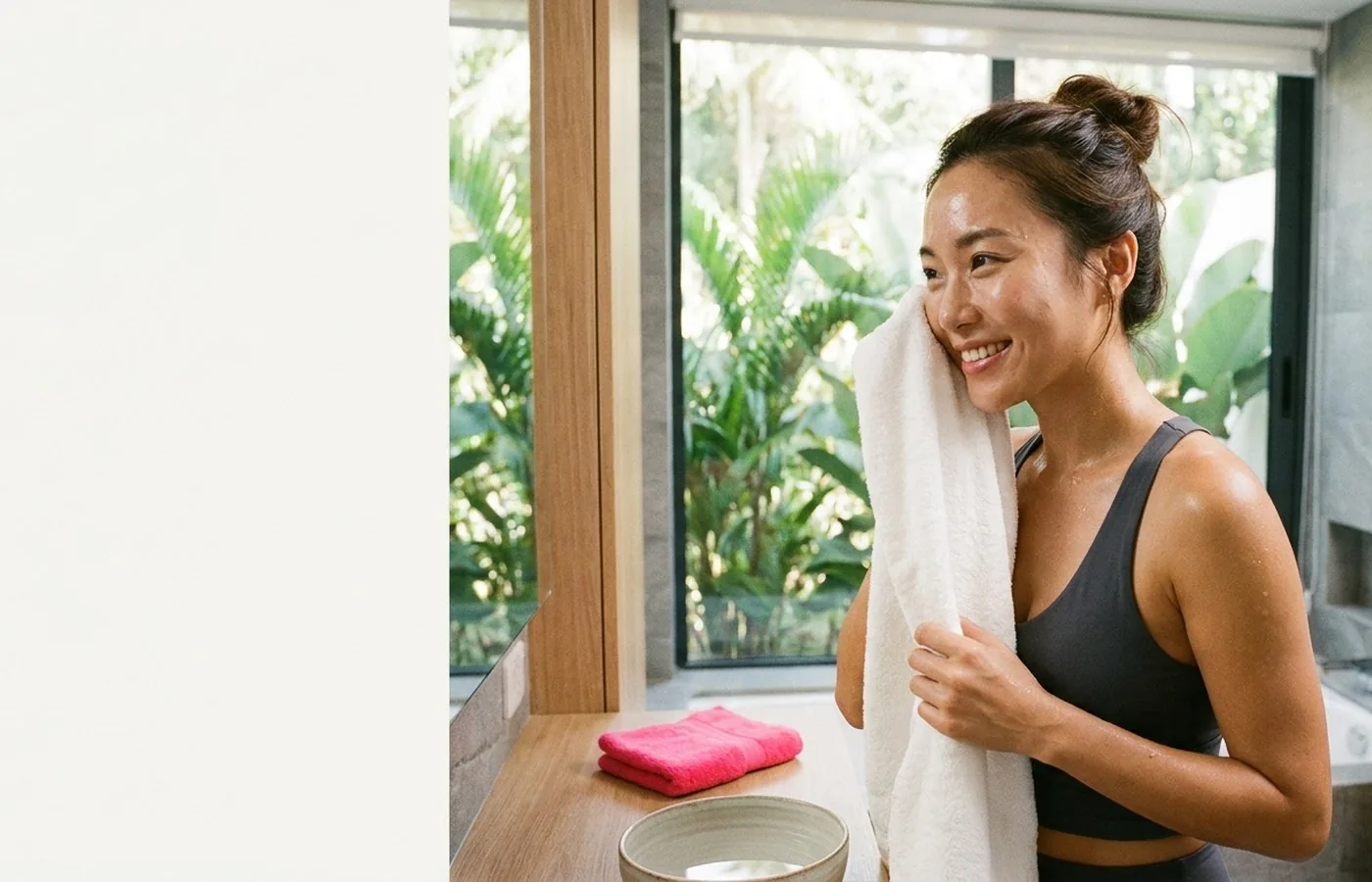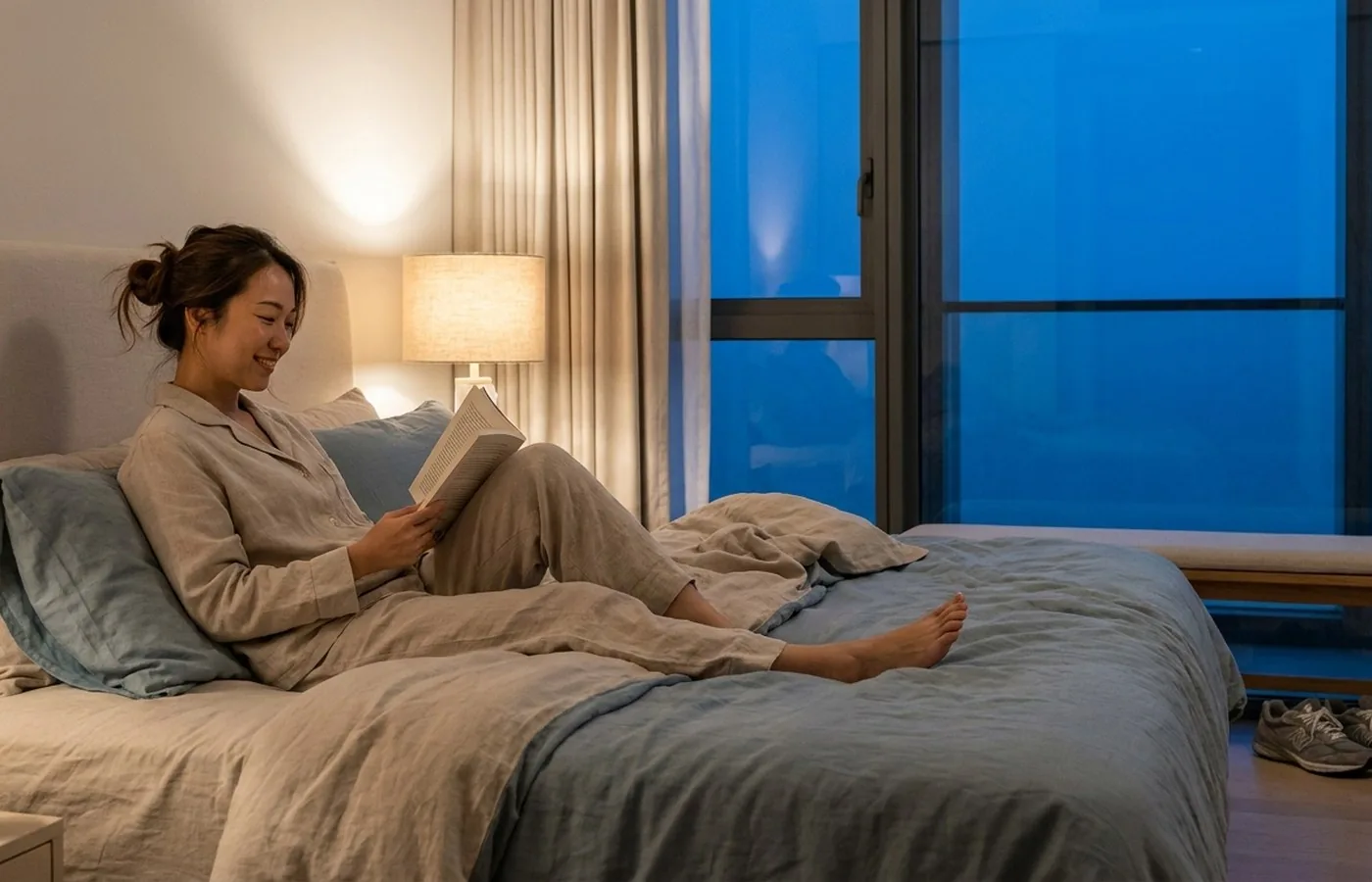
Getting home and sitting down isn't the same as relaxing. Plenty of people collapse onto the couch, scroll for two hours, and stand up feeling just as wound up as when they walked through the door. Real relaxation usually needs a small transition, not just a change of location. These three things help make that transition happen instead of hoping it happens on its own.
Key points
- A short wind-down routine works better than expecting to relax the instant you sit down.
- Screens right before rest keep your brain in the same alert mode as work.
- A calmer physical space changes how quickly your body settles.
Why "just relaxing" at home often doesn't work
Your body doesn't switch from alert to calm the moment you're physically home. Stress hormones and mental load from the day don't disappear just because you've changed rooms. If you go straight from a stressful commute or a full inbox into scrolling on the couch, you're often just swapping one source of stimulation for another, not winding down.
That's why a lot of people feel like they "relaxed" all evening and still feel tired and tense by bedtime. The fix isn't doing less. It's giving your body a clearer signal that the day's demands are over, which takes a small routine rather than just proximity to your sofa.
Thing one: build a short wind-down routine instead of collapsing
A five to fifteen minute routine, done the same way most days, teaches your body to recognise "we're done for the day" faster than randomly sitting down does. That could be changing out of work clothes, making a specific drink, stretching for a few minutes, or writing down tomorrow's top three tasks so your brain can stop holding onto them.
The specific activity matters less than the repetition. Once it's a habit, your body starts to relax as soon as the routine starts, not just once it finishes. If stress is a bigger, ongoing issue for you rather than just an evening thing, our guide to movement for stress covers ways to work on it beyond the wind-down window.
Try to keep the routine identical for at least two weeks before judging whether it's working. A habit needs enough repetition to become an actual cue, and switching the routine every few days undoes exactly the signal you're trying to build.
Use this as a starting point, then adjust for your body, conditions and professional advice. A plan is useful only when it responds to you.
Thing two and three: manage your screens, and tidy the one space you unwind in
Bright screens and fast-moving content, whether it's a group chat, short videos, or work email, keep your brain in the same reactive mode it was in all day. That's the opposite of what you're trying to do. Setting even one screen-free stretch before bed, or switching to something slower like a book or a podcast, helps your nervous system downshift instead of staying on alert with better lighting.
The space itself matters more than people expect too. A cluttered coffee table, unfolded laundry, or a pile of mail sitting in your eyeline keeps low-level "to-do" stress running in the background, even if you're not consciously thinking about it. You don't need a spotless home. You need the one spot you unwind in to feel calm enough that your brain stops flagging it as unfinished business.
A ten-minute tidy of just one corner, the couch, the coffee table, the spot near your favourite chair, before you sit down for the evening often does more for how settled you feel than an hour of full house cleaning done on a weekend you're already exhausted for.
How these three habits help you relax better at home
None of this requires a big lifestyle change. A short, repeated wind-down routine, a bit less screen stimulation right before rest, and a tidier spot to sit in are all small enough to start tonight. Together they send your body a clearer signal that the day is genuinely over, which is what real relaxation depends on.
If poor sleep is part of what's keeping your evenings tense, our sleep and recovery guide covers the habits that support both. For more on managing stress and everyday wellbeing, our mind hub and lifestyle archive both have more to dig into.
Give it a full week before deciding whether it's working. Most people notice the difference not in one dramatic evening but in a gradual sense that weekday evenings feel less like an extension of the workday and more like actual rest.
Is it bad to scroll on my phone to relax?
Not always, but fast-moving content can keep your brain alert rather than calm. Slower activities usually help you settle faster.
Do I need to declutter my whole home to relax better?
No. Focusing on the one space you unwind in is usually enough to make a real difference.
More on this topic from the archive: How to Relax When Stress Will Not Switch Off.
This article provides general education and is not a diagnosis or a substitute for personalised medical care. Stop exercise and seek appropriate help for severe, sudden or concerning symptoms.
3 Simple Things That Help You Relax at Home: questions answered
How long should a wind-down routine be?
+
Even five to ten minutes helps if it's consistent. The repetition matters more than the length.