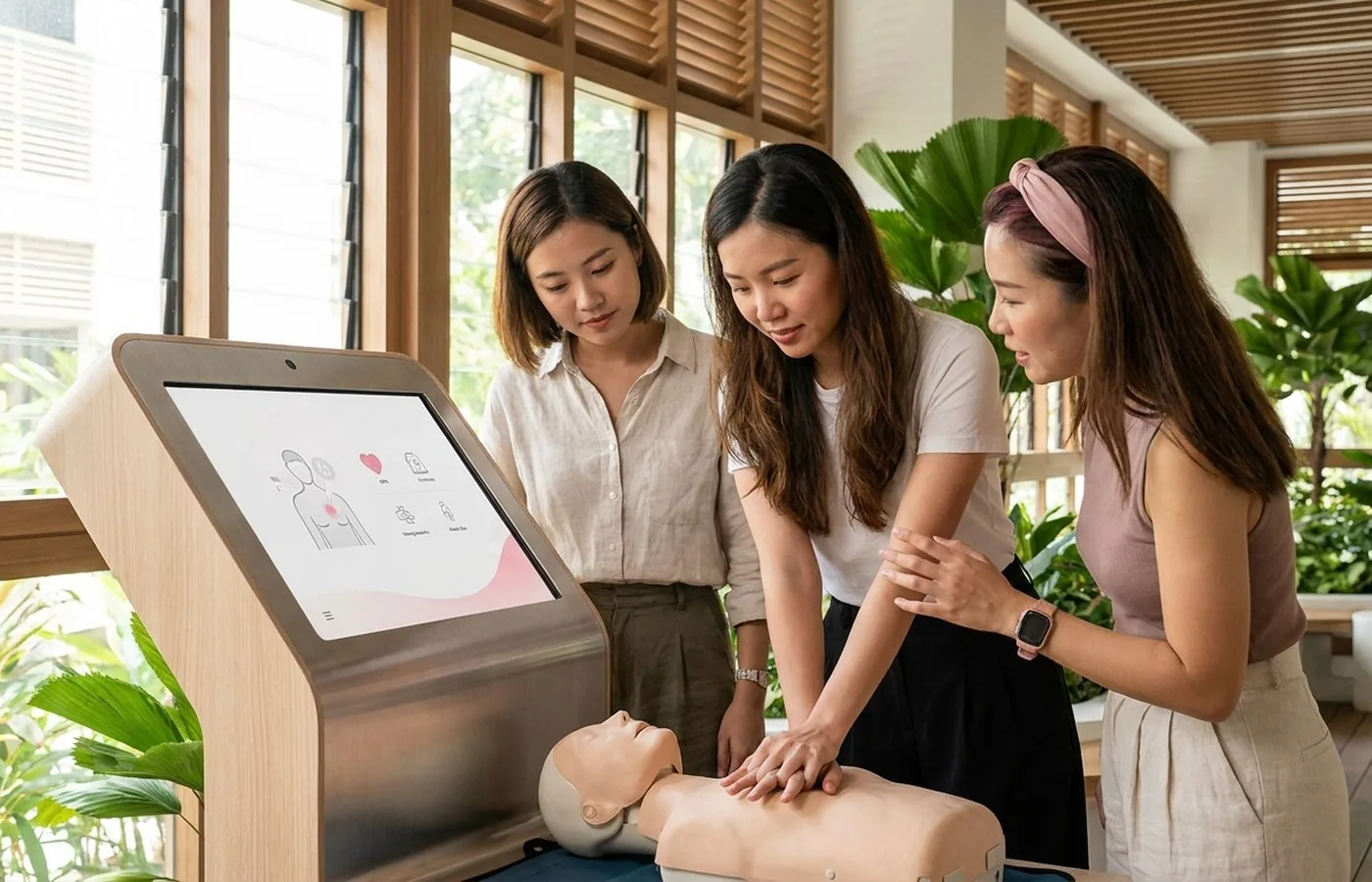
The idea of learning CPR at a kiosk in five minutes is exciting because it lowers the barrier. People can walk up, try it, and leave with less fear than they had before. That matters. A lot of people do nothing in an emergency because they are scared of doing it wrong. A simple kiosk can help turn that fear into action. But it is also important to keep expectations real. Five minutes can build awareness and confidence. It does not replace full practice or proper training.
Key points
- A CPR kiosk can teach the basics fast and help more people feel ready to respond.
- Quick training is better than no training, but it is still a starting point rather than the whole skill.
- In a cardiac emergency, calling for help and starting action quickly matter a lot.
- If you can, a fuller CPR course still gives better depth and practice than a very short demo.
Why a five-minute CPR kiosk is still a useful idea
Most people do not wake up planning to sign up for a first-aid class. Life is busy, and emergency skills often stay on the “I should learn that someday” list. A kiosk helps because it meets people where they already are. They can try a short lesson in a public place without booking a class or clearing half a day.
That small access point matters. If more people understand that CPR is something ordinary people can begin, not just medical staff, that alone can save time in a real emergency. The hardest part is often getting past the freeze.
It also fits modern life better. On a busy Tuesday, August 4, 2026, many people are more likely to give five minutes to a kiosk than five hours to a course. That does not make the short version complete. It just makes it practical enough to reach more people.
What the kiosk can teach and what it cannot
A short CPR kiosk can usually show the main steps: check the person, call emergency help, start chest compressions, and keep going until trained help arrives or an AED is ready. That simple sequence is already valuable because panic often comes from not knowing what to do first.
What a kiosk cannot do as well is give detailed feedback, build real stamina, or cover the wider range of first-aid situations that come up in proper classes. CPR sounds simple when you read it, but doing it under stress is very different from watching a screen for a few minutes.
That is why a kiosk should be seen as a gateway, not the finish line. If you want a habit-based way to remember important learning goals, the 7-Day Habit Planner can help you turn “I should book a real course” into an actual next step instead of a vague good intention.
Use this as a starting point, then adjust for your body, conditions and professional advice. A plan is useful only when it responds to you.
Why confidence matters so much in real emergencies
In a sudden collapse, bystanders often lose time because they doubt themselves. They worry about hurting the person. They wait for someone else. They hope the situation is not that serious. A short practice session can help cut through that hesitation by making the first steps feel less foreign.
That is one reason public health tools like this can matter even if they are brief. They do not need to turn everyone into an expert to be useful. They just need to increase the number of people willing to act quickly enough to help.
Stress control matters here too. A calmer body often thinks more clearly under pressure. Our movement-for-stress guide is not a CPR lesson, of course, but it does speak to the wider skill of not freezing when the nervous system is under strain.
How to think about learn to perform CPR at this kiosk in five minutes
The best way to read a headline like this is with both appreciation and honesty. Yes, it is a good thing if a kiosk gets more people interested in CPR and less afraid of it. That is real progress. But no, five minutes does not make someone fully trained in every part of emergency response.
If you pass one of these kiosks, trying it is worth your time. Then, if you can, take the next step and do a fuller course. That gives you more realistic practice and more confidence if a real crisis ever happens. The point is not perfection. It is being more ready than you were before.
The health archive links emergency skills with other practical health decisions. Learn to perform CPR at this kiosk in five minutes is a strong invitation, but the deeper message is better: even a short lesson can matter when it helps one more person act instead of stand still.
This article provides general education and is not a diagnosis or a substitute for personalised medical care. Stop exercise and seek appropriate help for severe, sudden or concerning symptoms.
Learn to Perform CPR at This Kiosk in Five Minutes: questions answered
Can you really learn CPR in five minutes?
+
You can learn basic awareness and first steps, but full confidence usually needs more practice and training.
Is a CPR kiosk still worth trying?
+
Yes. Quick public learning is better than knowing nothing at all.
Should I still take a proper CPR class?
+
If you can, yes. A full class gives better depth, practice, and feedback.