A ketogenic diet asks you to keep carbs very low and let fat and protein carry most of your energy for the day. That sounds tricky in a food culture built around rice, noodles, and roti, but Singapore has more keto-friendly options hiding in plain sight than most people expect. The trick is knowing which dishes already fit and which ones just need one small change.
Key points
- Keto means keeping carbs very low, which rules out rice, noodles, and most bread as regular staples.
- Several hawker and restaurant dishes already fit a keto pattern once you drop the rice or sugar-heavy sauce.
- Sauces, marinades, and gravies are where hidden carbs usually sneak in, not just obvious starches.
- A sustainable keto routine in Singapore usually means picking a handful of repeatable go-to meals.
What keto requires, in plain terms
A standard ketogenic diet keeps daily carbs low enough that your body shifts toward using fat for fuel instead of carbohydrates. In practice, that usually means skipping rice, noodles, bread, and sugary drinks almost entirely, and building meals around protein, non-starchy vegetables, and fat from things like oil, coconut milk, or fattier cuts of meat and fish.
This is a strict way of eating, and it isn't necessary or appropriate for everyone. If you're simply trying to eat with more structure without going fully keto, the Balanced Meal Builder can help you build a more moderate low-carb plate without cutting carbs out completely.
It's also worth knowing that the adjustment period can feel rough for the first week or two, with some people reporting headaches, tiredness, or irritability while their body gets used to running on less carbohydrate. That phase usually passes, but it's a normal part of the process rather than a sign something is wrong.
Local dishes that already fit a keto pattern
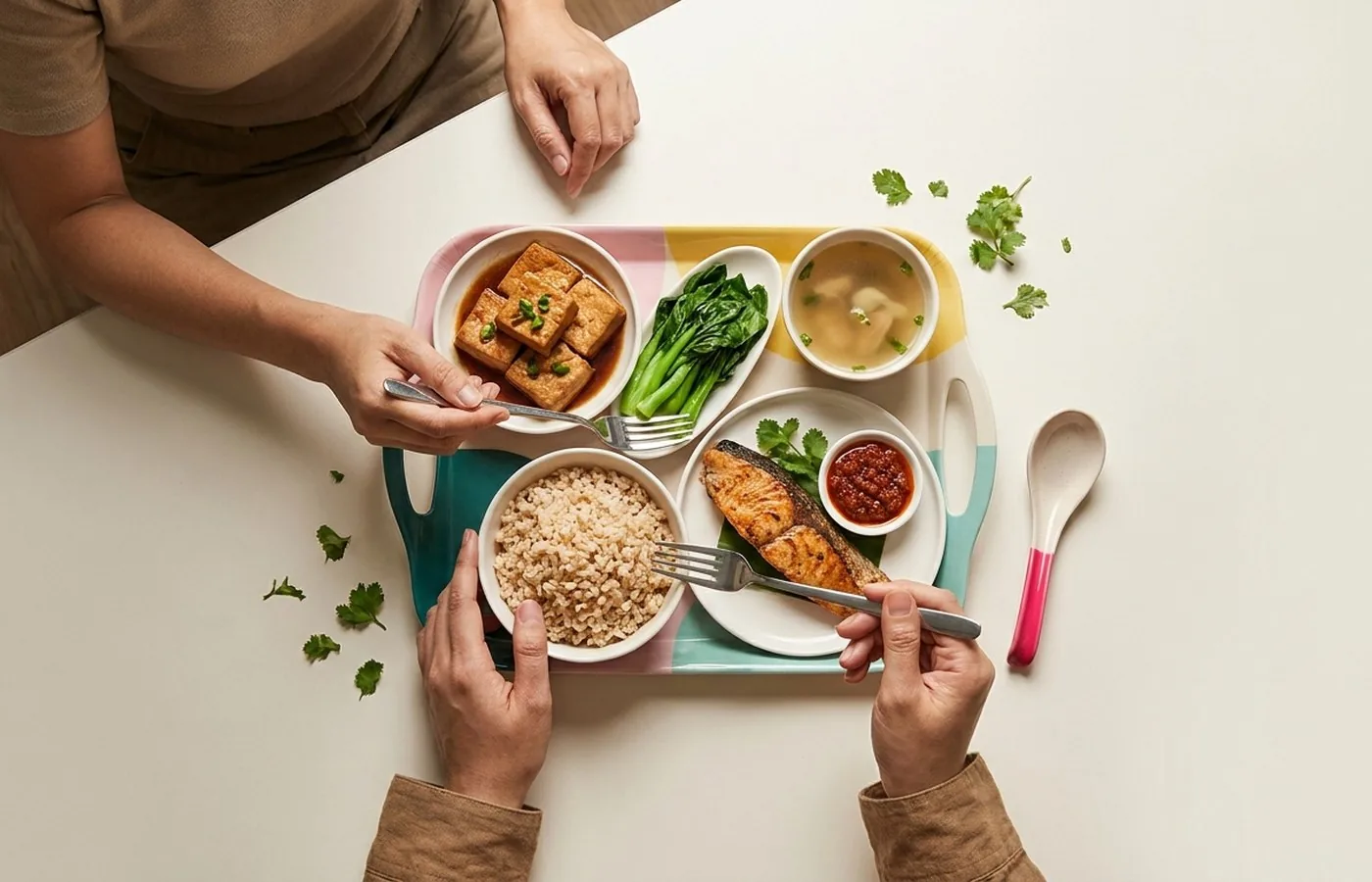
- Sambal stingray or grilled fish, minus the rice, with extra vegetables on the side.
- Char siu or roast meats from a zi char stall, ordered without the rice portion.
- Satay without the peanut sauce, or with a small amount if you're tracking carbs loosely.
- Sashimi and grilled seafood from Japanese restaurants, skipping the rice in a set.
- Tau kwa (firm beancurd) stir-fried with vegetables and a protein.
- Clear soup-based dishes like bak kut teh, focusing on the meat and skipping the rice or you tiao.
- Grilled or steamed chicken from a chicken rice stall, minus the rice.
None of these need special ingredients — they're mostly about dropping the starchy side that usually comes with the dish. Our hawker-centre guide covers more ways to build a balanced plate from everyday stalls, whether or not you're going strictly keto.
Use this as a starting point, then adjust for your body, conditions and professional advice. A plan is useful only when it responds to you.
Hawker and restaurant traps that quietly add carbs
The rice and noodles are the obvious carb sources, but the bigger surprise for a lot of people trying keto locally is how much sugar hides in sauces and marinades. Sweet chilli sauce, char siu glaze, many curry pastes, and thickened gravies often carry a fair amount of sugar or cornstarch, even on dishes that look purely savoury or spicy.
Batter is another quiet trap — anything deep-fried in a flour coating adds carbs you might not notice, since the dish still reads as "meat" or "fish" at a glance. If you're serious about keeping carbs low, it's worth asking how a sauce or marinade is made, or simply choosing grilled, steamed, or plain stir-fried options over battered or heavily glazed ones when you can.
Drinks deserve a mention too. Kopi and teh with condensed milk, bottled iced lemon tea, and most bubble tea options all carry meaningful amounts of sugar, even when the food on your plate is carefully chosen. Switching to black coffee, plain tea, or water alongside a carefully picked meal closes one of the last easy gaps.
Making keto work long-term in a rice-and-noodle food culture
The hardest part of keto in Singapore usually isn't finding any low-carb food — it's finding a small rotation of meals you can order or cook without overthinking every outing. Once you've identified three or four go-to dishes at your usual hawker centre, coffee shop, or a couple of restaurants, keto stops feeling like a constant negotiation and starts feeling like a normal routine.
If you're doing this alongside training, keep an eye on protein specifically, since it plays a bigger role in a low-carb diet than most people realise at first. Our guide to protein needs for active women is a useful reference even if you're not tracking macros formally. The goal isn't to eat perfectly keto every single meal — it's to build a pattern flexible enough to survive real life here, which is exactly what the food section is trying to help with more broadly.
This article provides general education and is not a diagnosis or a substitute for personalised medical care. Stop exercise and seek appropriate help for severe, sudden or concerning symptoms.
Eating Keto in Singapore: What Works Here: questions answered
Can I really do keto with hawker food?
+
Yes, with some adjustments. Many dishes work well once you drop the rice or noodles and watch for sugary sauces.
What hawker dish is hardest to make keto-friendly?
+
Anything built around rice or noodles as the main component, like char kway teow or nasi lemak, is difficult to adapt without losing the dish entirely.
Is keto a good long-term way to eat in Singapore?
+
It can work for some people short to medium term, but many find a more moderate low-carb approach easier to sustain given how central rice and noodles are here.