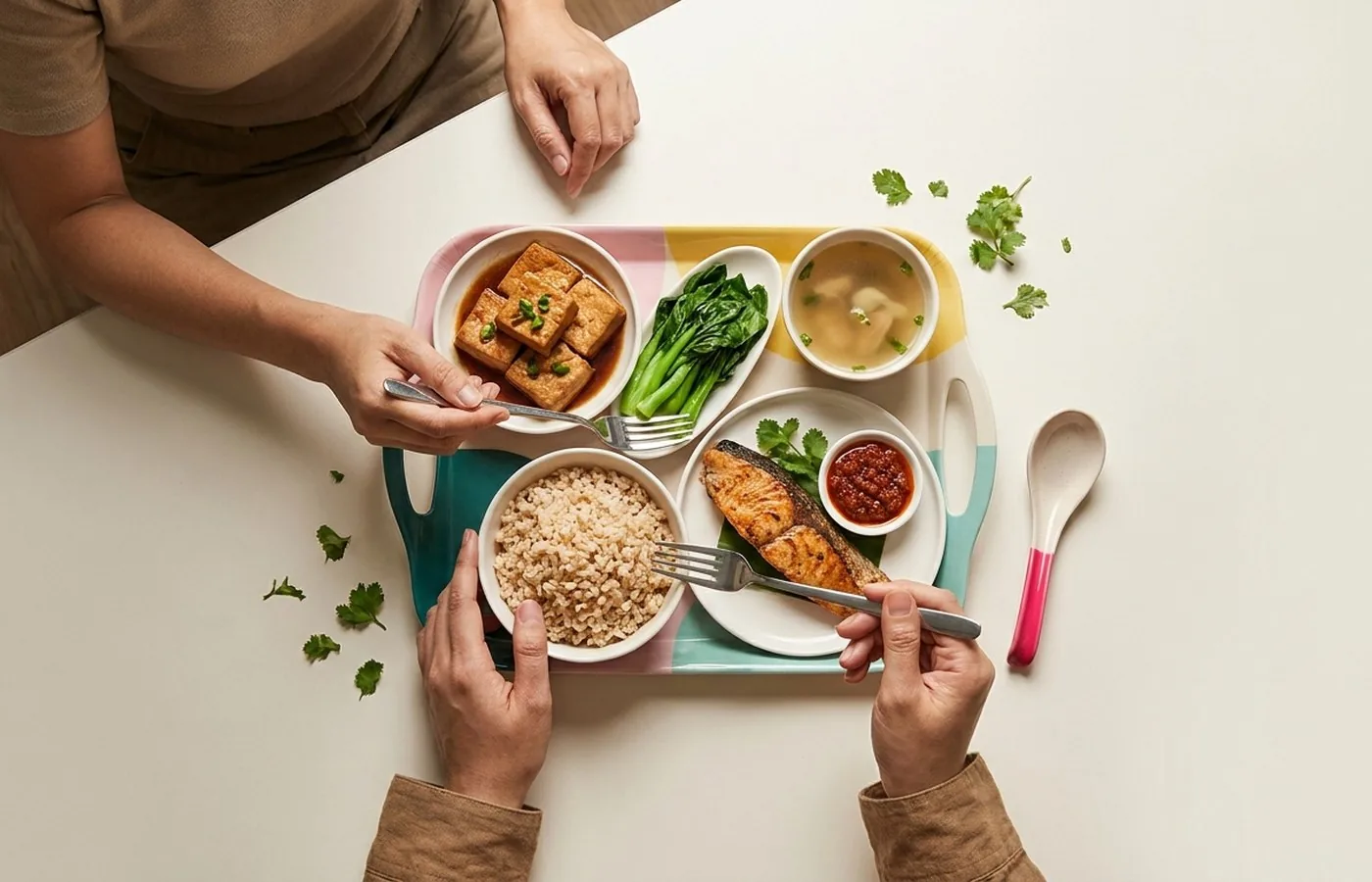
Protein bowls have taken off across Singapore for a good reason: they are easy to customise, easy to make filling, and easy to find almost anywhere from hawker stalls to health-focused cafes. The trick to making a bowl work for you is building it around a real protein source and enough fibre, rather than letting it become a pile of toppings with very little substance underneath.
Key points
- A good protein bowl needs a real protein source, not just a scattering of toppings.
- Fibre from vegetables, grains, or legumes helps a bowl keep you full.
- Singapore makes it easy to build protein bowls from both hawker food and cafe menus.
- Sauce and portion size can quietly turn a light bowl into a very heavy one.
What makes a protein bowl worth eating
A protein bowl sounds healthy by default, but the format can go two very different ways. A bowl built around grilled chicken, tofu, or fish, a solid serving of vegetables, a smart carb source, and a modest amount of sauce is a genuinely balanced meal. A bowl piled with fried toppings, heavy mayo-based sauces, and only a token piece of protein is closer to a regular indulgent meal wearing a healthy costume.
The good news is that Singapore makes it fairly easy to build the first kind. Between grain bowl cafes, poke-style counters, and even hawker stalls that will happily add extra protein and vegetables to a plate, you have more control than the menu photo suggests.
If you want a simple structure to judge any bowl against, the Balanced Meal Builder is a useful reference before you order.
Eleven protein bowl combinations worth trying
- Grilled chicken, brown rice, edamame, and a light sesame dressing.
- Salmon sashimi, quinoa, cucumber, and avocado.
- Tofu, soba noodles, seaweed, and a soy-ginger dressing.
- Grilled prawns, cauliflower rice, roasted vegetables, and lemon.
- Egg, sweet potato, spinach, and a yoghurt-based dressing.
- Beef strips, rice, kimchi, and a soft egg.
- Chickpeas, couscous, roasted vegetables, and tahini.
- Grilled fish, brown rice, mango, and chilli lime dressing.
- Tempeh, quinoa, pickled vegetables, and peanut sauce in a small portion.
- Shredded chicken, glass noodles, herbs, and a light fish sauce dressing.
- Cottage cheese, roasted chickpeas, tomato, and cucumber for a lighter lunch bowl.
Most of these can be built from a supermarket run or found in some form across cafes and hawker stalls in Singapore. Our hawker-centre guide is useful if you want to build something similar from a mixed rice stall instead of a specialty cafe.
Use this as a starting point, then adjust for your body, conditions and professional advice. A plan is useful only when it responds to you.
How to build a good protein bowl without overthinking it
Start with the protein, since that is the part most bowls skimp on. A palm-sized portion of chicken, fish, tofu, or egg is a reasonable target for most people. From there, add a fist-sized portion of a carb source like rice, noodles, or a starchy vegetable, and fill the rest of the bowl with vegetables or salad.
Sauce is where a lot of bowls quietly gain calories. Creamy dressings, heavy peanut sauces, and mayo-based toppings can turn a light bowl into a very rich one fast. Ask for sauce on the side when you can, or use a smaller portion than the default, and you will usually still enjoy the flavour without the extra load. Our guide to protein needs for active women is a useful read if you are trying to figure out how much protein you need across a full day, not just in one bowl.
Active weekends are a good excuse to build one of these bowls at home too, especially after a workout when a proper protein source helps recovery along.
Making these protein bowls a normal part of eating in Singapore
The appeal of a protein bowl is that it adapts to almost any craving while still giving you a real, filling meal. You can lean Japanese with sashimi and rice, Korean with kimchi and beef, or local with a mixed rice base and extra vegetables. The format is flexible enough to fit most weeks without feeling repetitive.
If you want more restored Singapore-specific food content like this, the food hub is where more of these guides are being rebuilt. Eleven healthy and delicious protein bowls to try in Singapore is really just a starting list. Once you understand the basic structure, protein, carbs, vegetables, and a sensible amount of sauce, you can build your own version from almost any cuisine the city has to offer.
More on this topic from the archive: 5 Delicious Acai Bowls in Singapore Worth Trying, Salmon Four Ways: Burger, Wrap, Soup, and Poke Bowl and 9 Asian Fish Worth Adding to Your Weekly Menu.
This article provides general education and is not a diagnosis or a substitute for personalised medical care. Stop exercise and seek appropriate help for severe, sudden or concerning symptoms.
11 Healthy and Delicious Protein Bowls to Try in Singapore: questions answered
What makes a protein bowl healthy?
+
A real protein source, enough fibre from vegetables, and a sensible amount of sauce, rather than just a healthy-sounding name.
Can I build a protein bowl from a hawker stall?
+
Yes. Many mixed rice and noodle stalls will let you add extra protein and vegetables to build a similar structure.
How much protein should be in one bowl?
+
A palm-sized portion is a reasonable starting point for most adults, adjusted for your own needs and activity level.