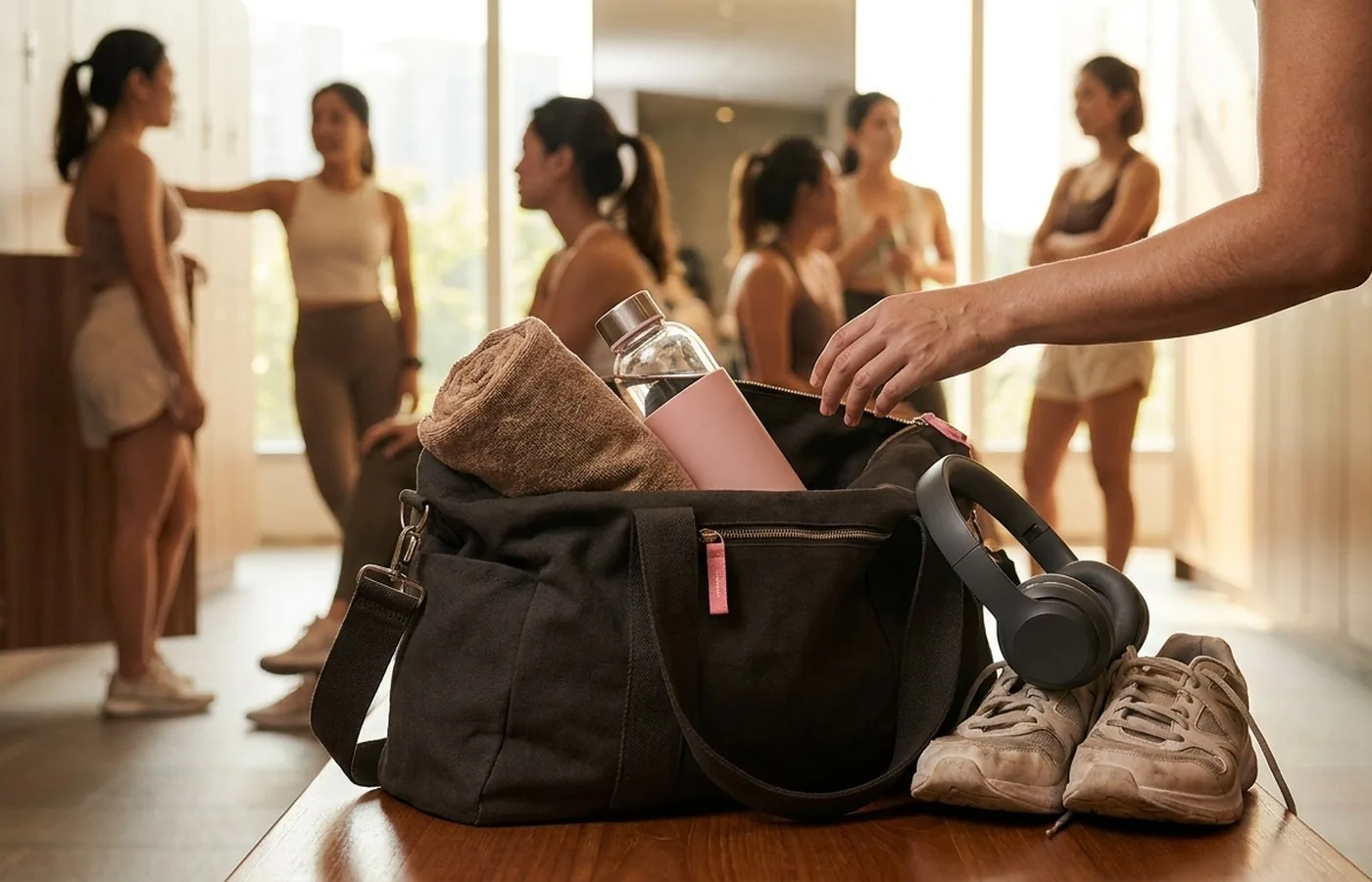
Walk around any gym in Singapore for a few weeks and you will notice patterns. The same person taking the same locker every visit. The same playlist queued up before the same warm-up. The same order of exercises, almost like a checklist nobody wrote down. These are not superstitions exactly. They are small structures that make showing up feel automatic instead of like a negotiation with yourself.
Key points
- Small pre- and post-workout rituals often help consistency more than motivation alone.
- Rituals work by removing decisions, not by having magical power.
- A ritual can become unhelpful if it turns into anxiety when it gets disrupted.
- The best gym ritual is one that gets you moving, not one you cannot function without.
Why so many gym-goers have a ritual
Walk around any gym in Singapore for a few weeks and you will notice patterns. The same person taking the same locker every visit. The same playlist queued up before the same warm-up. The same order of exercises, almost like a checklist nobody wrote down. These are not superstitions exactly. They are small structures that make showing up feel automatic instead of like a decision you have to negotiate with yourself every single time.
Rituals reduce the number of choices standing between you and starting your workout. That matters more than it sounds, especially on a tired evening after a long day at work, when one extra decision can be the difference between training and going straight home.
This is not unique to gyms either. Runners often have a favourite loop they return to, and swimmers frequently claim a particular lane without ever writing the preference down anywhere. Gyms simply make the pattern easier to spot because so many people are doing their own version of it in the same shared space at the same time.
The common rituals we see around gyms here
- A fixed pre-workout snack or coffee at roughly the same time before every session.
- The same warm-up sequence, done almost on autopilot before the real workout starts.
- A specific playlist or podcast reserved only for training, which primes the brain to switch modes.
- Training with the same partner or at the same time slot each week, which adds light social pressure to turn up.
- A short post-workout habit, like a particular stretch, shake, or shower routine that signals the session is officially done.
None of these need to be elaborate to work. The value comes from repetition, not complexity. If you are still building your own version of this, the Habit Planner can help you test a small ritual for a couple of weeks before deciding if it earns a permanent spot in your routine.
Use this as a starting point, then adjust for your body, conditions and professional advice. A plan is useful only when it responds to you.
When a ritual helps versus when it becomes a superstition
A ritual is doing its job when it lowers friction and gets you into the workout with less internal negotiation. It becomes a problem when missing it causes real anxiety, or when you convince yourself a session does not count without the exact playlist, locker, or pre-workout drink. At that point, the ritual has quietly become a rule you are scared to break, which is the opposite of what it was supposed to do.
A useful test is to occasionally train without your usual ritual on purpose, just to prove to yourself the workout still counts. If that feels genuinely impossible, it may be worth loosening your grip on the ritual before it starts running your training instead of supporting it.
It can help to ask a simple question after a disrupted session: did the workout still get done, even if it felt slightly off. If the honest answer is yes, the ritual was doing its job as a nice-to-have, not running the show as a strict requirement.
How a good gym ritual makes your Singapore workout routine stick
The gyms and rituals differ from person to person, but the underlying job is the same everywhere: make the decision to train feel smaller than it is. A locker you always use, a warm-up you know by heart, a playlist that flips a switch in your head, these are not magic. They are just consistent cues that tell your brain it is time to work.
If you are new to a gym and still figuring out what your version of this looks like, our guide to your first gym visit in Singapore can help you settle in faster. And if consistency is still the real challenge underneath all of this, our guide to building a fitness habit goes deeper into keeping any routine alive past the first exciting month. More reflections like this one on real gym life sit on the fitness hub.
This article provides general education and is not a diagnosis or a substitute for personalised medical care. Stop exercise and seek appropriate help for severe, sudden or concerning symptoms.
What Your Gym Ritual in Singapore Says About Your Training: questions answered
Are gym rituals helpful or just habit?
+
They are genuinely helpful because they reduce the number of decisions needed before training starts.
Is it bad to feel attached to a workout ritual?
+
Not usually, unless skipping it causes real anxiety or makes you feel a session does not count.
How do I build my own gym ritual?
+
Start small, like a fixed warm-up or pre-workout routine, and repeat it consistently for a few weeks.