A lot of the internet's most popular quick-stretch routines come from home workout creators who built their following teaching exactly this kind of thing: short, doable stretches for people stuck at a screen all day. Cassey Ho, the fitness instructor behind the Blogilates brand, is one of the better known names in that space, and her whole appeal has always been making movement feel less intimidating for people who do not think of themselves as gym people. In that same spirit, here are five stretches worth keeping in your own routine for a stiff neck and a stressed-out afternoon.
Key points
- A stiff neck after work is usually about static posture, not a real injury.
- Slow, held stretches work better here than quick bouncy ones.
- You do not need a mat or gym clothes to do any of these.
- Consistency across a week beats one long stretch session.
Why your neck gets so stiff after a normal workday
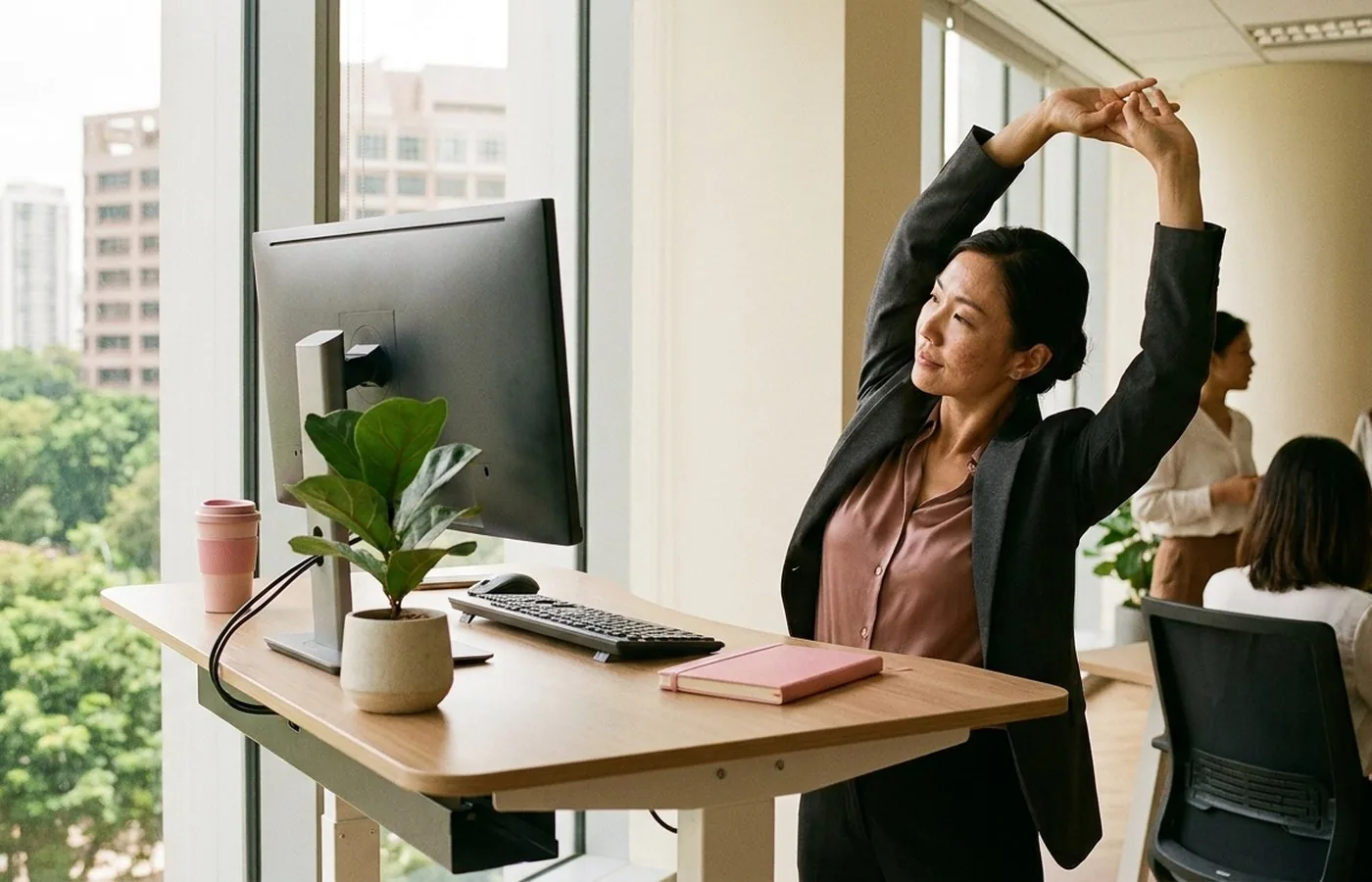
Most neck stiffness after work is not dramatic. It is the slow result of hours spent in one position: shoulders rounded forward, chin poking toward the screen, and almost no variation in how your head sits on your spine. The muscles along the back and sides of your neck end up working overtime just to hold your head up in that forward position.
Stress adds another layer. Many people carry tension straight into their shoulders and neck without noticing, especially during a demanding call or a tight deadline. By the evening, that low-grade clenching feels like actual stiffness, even though nothing is technically wrong with the joint itself.
If your day is mostly seated, our desk posture and mobility guide covers the bigger picture beyond just the neck, including hips and lower back, which often tighten up for the same reasons.
None of this means your desk setup is the enemy. It just means your neck rarely gets asked to move through its full range during a normal workday, and muscles that do not move much tend to shorten and tighten over time. A short, deliberate stretch break is really just giving your neck permission to do the movement your job never asks for.
Five stretches to try tonight
- Chin tucks: Gently draw your chin straight back, like making a small double chin, and hold for five seconds. Repeat eight to ten times to retrain your head position.
- Upper trapezius stretch: Tilt your right ear toward your right shoulder, use your hand for a light extra pull, and hold thirty seconds each side.
- Levator scapulae stretch: Turn your head slightly toward one armpit and look down, then gently pull with your hand on the same side. Hold thirty seconds each side.
- Doorway chest stretch: Place your forearm on a doorframe and step forward slightly to open the front of your shoulders, which often eases the pull on your neck too.
- Seated thoracic rotation: Sit tall, cross your arms over your chest, and rotate slowly side to side to loosen your upper back.
Move slowly into each one and stop at a gentle pull, never sharp pain. These take less than five minutes combined, which is exactly why they are realistic to do at the end of a long day.
Use this as a starting point, then adjust for your body, conditions and professional advice. A plan is useful only when it responds to you.
How to fit these stretches into a busy workday
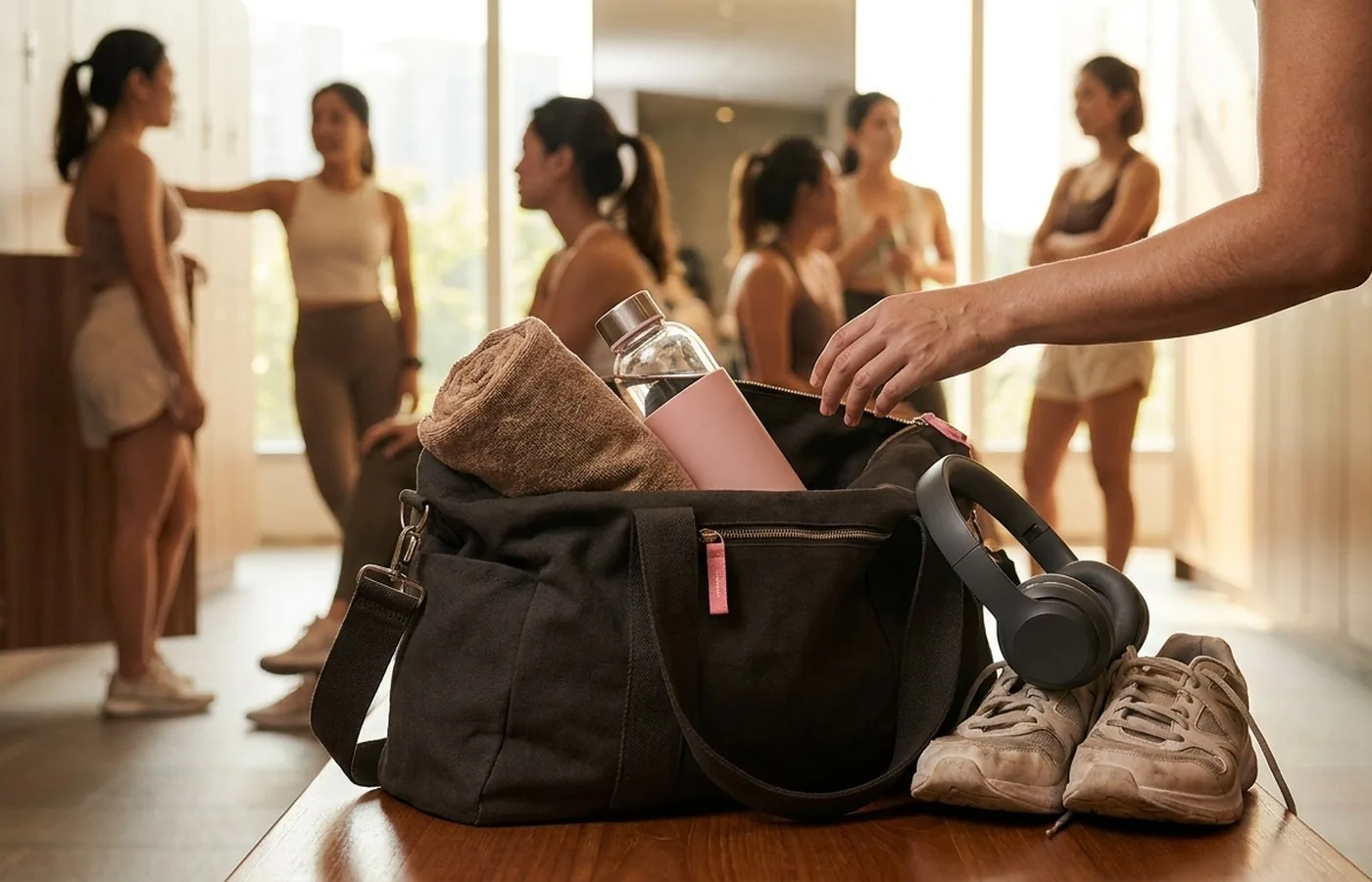
You do not need a studio or special clothes for any of this. Chin tucks and trap stretches work fine at your desk between calls. The doorway stretch takes ten seconds on the way to the pantry. If stress is a bigger driver of your tension than posture, pairing these stretches with a short walk can help even more. Our guide to movement for stress covers why a change of scenery does more for tension than people expect.
If you want to build this into an actual daily habit rather than something you remember once a month, the Habit Planner can help you set a small reminder, like doing the five stretches right after you close your laptop.
How these five stretches help you de-stress after work
None of these stretches are complicated, and that is the point. The people who keep up with a routine like this are usually the ones who kept it simple enough to do without thinking too hard about it, which is a big part of why short, approachable stretch routines have found such a wide audience online in the first place.
Give this five-stretch sequence a real week before deciding if it helps. Most people notice less stiffness within a few days, especially if they pair it with occasionally standing up during the workday. If you want more simple routines like this, the fitness hub has other short sessions built for exactly this kind of tired-at-the-desk moment.
It also helps to notice which part of your day makes your neck feel worst. Some people find it is the long morning call, others notice it more after an afternoon of typing with their shoulders creeping up toward their ears. Once you know your own pattern, you can place the stretch break where it does the most good, instead of only doing it once you already feel stiff.
More on this topic from the archive: Yoga Poses for a Stiff Back and Tight Shoulders.
This article provides general education and is not a diagnosis or a substitute for personalised medical care. Stop exercise and seek appropriate help for severe, sudden or concerning symptoms.
5 Stretches to Relieve a Stiff Neck and De-Stress After Work: questions answered
Do I need any equipment for these neck stretches?
+
No. All five can be done at a desk or on the floor with no equipment at all.
How often should I do this stretch routine?
+
Once a day is a good starting point, especially right after a long stretch of screen time.
What if a stretch causes sharp pain?
+
Stop. A gentle pull is normal, but sharp pain means you should ease off and consider seeing a physiotherapist.