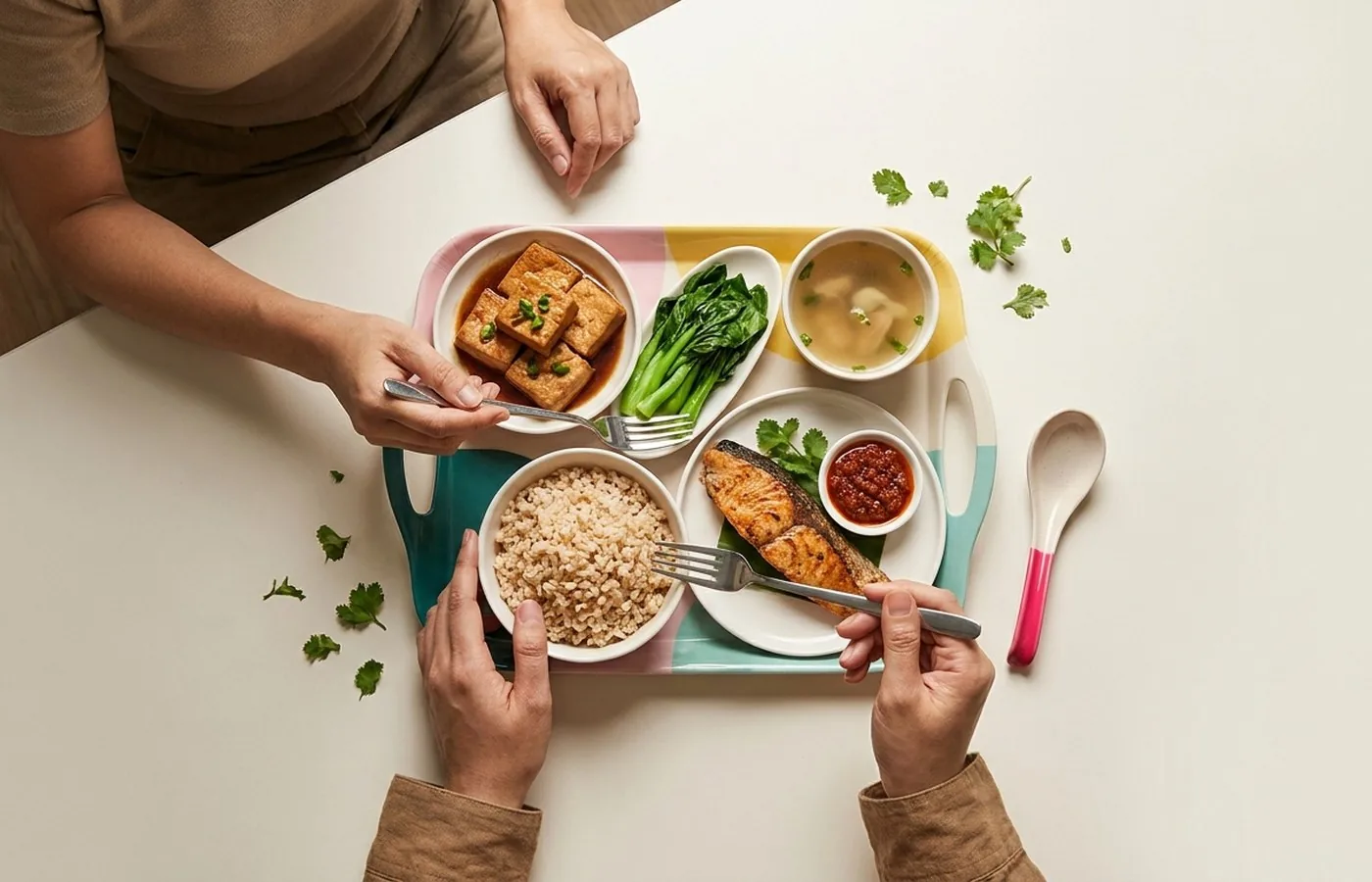
Sushi has a healthy image, and a lot of that is fair, but not every roll on the menu deserves it. Between the rice, the sauces, and the sometimes-fried fillings, a sushi meal can carry a lot more calories than the light, clean picture in most people's heads.
Key points
- Rice is often the biggest calorie contributor in a sushi meal, more than the fish itself.
- Rolls with mayo, cream cheese, tempura bits, or sauces carry significantly more calories than simple nigiri or maki.
- A sushi meal of six to eight pieces can range from a light lunch to a very heavy one, depending on the rolls chosen.
- Simple choices like sashimi or plain nigiri keep a meal lighter without needing to skip sushi altogether.
Where sushi calories come from
Fish itself is lean and reasonably low in calories, so it is easy to assume sushi as a whole must be light too. But most sushi is built around a base of vinegared rice, and rice makes up a large portion of the actual bite. A single piece of nigiri can be roughly half rice by volume, and that adds up quickly across a full meal.
Beyond the rice, many popular rolls include ingredients that push calories up further: cream cheese, spicy mayo, tempura flakes, unagi sauce, or deep-fried fillings like soft-shell crab. None of these are bad foods on their own, but they change a roll from a lean bite into something closer to a rich snack.
It helps to think of a sushi roll the same way you would a sandwich. The filling gets all the attention, but the bread, or in this case the rice, is doing a lot of the calorie work quietly in the background. Once you notice that, the calorie gap between a plain roll and a heavily dressed one makes a lot more sense, and it is much easier to guess roughly what you are eating before the bill even arrives.
Comparing common sushi choices
| Sushi type (per piece or roll) | Approx. calories |
|---|---|
| Plain salmon or tuna nigiri (1 piece) | 40 - 60 |
| Cucumber or avocado maki (6 pieces) | 140 - 180 |
| California roll (6-8 pieces) | 250 - 300 |
| Spicy tuna roll with mayo (6-8 pieces) | 300 - 350 |
| Tempura roll (6-8 pieces) | 350 - 450+ |
| Unagi roll with sauce (6-8 pieces) | 320 - 380 |
The jump from a plain roll to a tempura or heavily sauced roll can be a few hundred calories, which is easy to overlook when everything on the conveyor belt looks similarly bite-sized and innocent.
Use this as a starting point, then adjust for your body, conditions and professional advice. A plan is useful only when it responds to you.
How to build a sushi meal that stays reasonable
You do not need to give up rolls entirely to keep a sushi meal in check. Mixing in a few pieces of plain nigiri or sashimi alongside one or two richer rolls gives you flavour variety without every single bite carrying sauce and tempura bits. Ordering a side of edamame or a simple seaweed salad can also add fibre and protein without much extra calorie load.
Watch the extras too, since soy sauce is manageable, but excess mayo-based dips, extra unagi sauce, and fried side dishes like gyoza or agedashi tofu can quietly turn a light sushi lunch into a heavier one. If sushi is a regular part of your week, thinking about the whole meal rather than just counting rolls is more useful. The Balanced Meal Builder is a helpful way to picture that fuller plate.
If you eat sushi as a regular lunch option and want a broader sense of how it fits into your protein needs across the week, our protein needs guide is a useful reference point, even outside a specifically active-lifestyle context.
How many calories your sushi really has, in the end
Sushi can absolutely be a light, balanced meal, but it depends heavily on which pieces you choose. Rice is the quiet calorie contributor in almost every piece, and rich sauces or fried elements can push a seemingly light meal much higher than expected. Simple nigiri, sashimi, and vegetable maki tend to sit at the lighter end, while tempura and heavily sauced specialty rolls sit at the heavier end.
Enjoy sushi with a clearer sense of what is in each roll, and balance a rich choice with a few lighter pieces alongside it. If you want more practical, no-nonsense food content like this, the food hub is where older SHAPE nutrition guides are being rebuilt.
This article provides general education and is not a diagnosis or a substitute for personalised medical care. Stop exercise and seek appropriate help for severe, sudden or concerning symptoms.
How Many Calories Does Your Sushi Really Have?: questions answered
Is sushi a good choice for weight loss?
+
It can be, especially with plain nigiri, sashimi, and vegetable rolls. Heavily sauced or fried rolls are better treated as an occasional choice.
Why is rice such a big part of the calorie count?
+
Because rice makes up a large share of each piece by volume, even though the fish gets most of the attention.
Are vegetarian rolls automatically lower in calories?
+
Often, but not always. Rolls with avocado, cream cheese, or fried tempura vegetables can still be calorie-dense.